

Are labor costs high for repairing my Washing Machine?
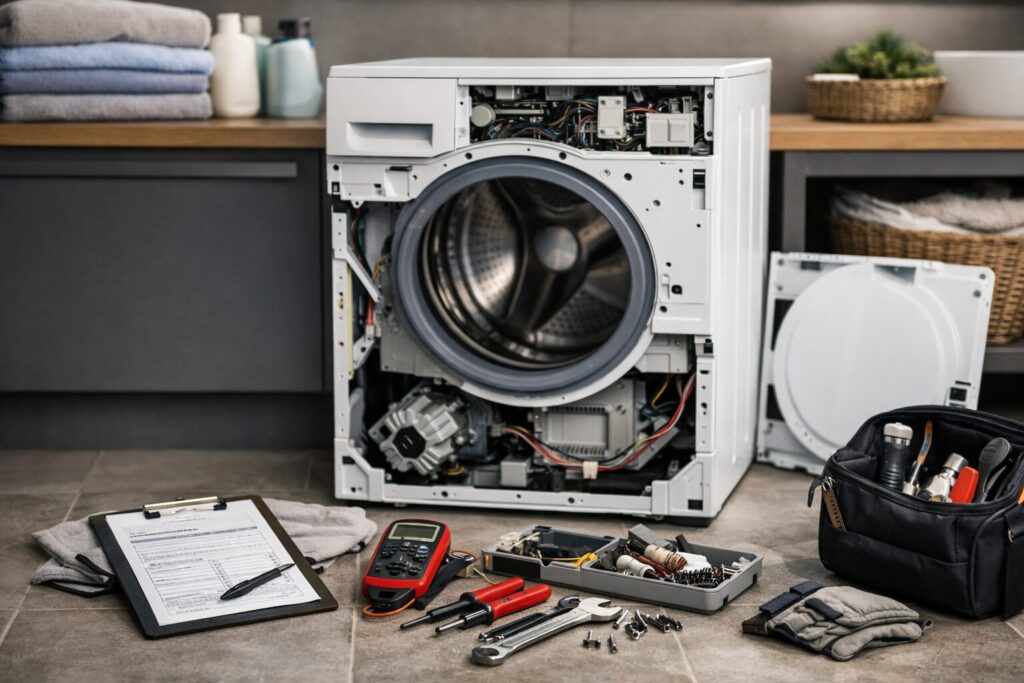
Created June 2026 – reflects current washing machine repair costs, labor trends, and protection considerations.
Yes, labor costs for repairing washing machines can be high, especially for issues like motor replacements, control board failures, or complex drum repairs. Many homeowners discover that labor charges often make up a significant portion of the total repair bill, particularly once the original manufacturer warranty has expired. Factors like the machine’s age, location, and whether specialized parts or advanced diagnostics are needed can also impact labor costs. CPS helps customers manage these risks by offering protection plans and repair support for washing machines—including for eligible refurbished and open-box units—through a network of experienced servicers across the U.S.
Quick Summary: Are Labor Costs High for Washing Machine Repairs?
Here’s what customers need to know about labor costs, repair risks, and protection options for washing machines:
- Labor is often one of the largest expenses in washing machine repairs, especially for major components like motors or drum assemblies.
- Complex repairs—such as control board replacements or advanced electronic diagnostics—can increase both labor time and total cost.
- Costs tend to rise after the manufacturer warranty expires or as machines age.
- Customers frequently research protection plans after receiving expensive repair quotes.
- CPS offers support for new, refurbished, and open-box washing machines through a nationwide repair network.
|
Topic |
Quick Take |
|---|---|
|
Labor Cost Risk |
Labor charges can be substantial for washing machine repairs, especially for major or complex issues |
|
Common Expensive Repairs |
Motor, drum, and control board repairs often involve higher labor costs |
|
Post-Warranty Concerns |
Many homeowners face increased out-of-pocket costs after the manufacturer warranty expires |
|
Repair Support |
CPS coordinates repair access and connects customers with experienced service providers |
|
Refurbished & Open-Box Eligibility |
Many non-new machines may qualify for protection and repair support |
What Should You Look For When Comparing Washing Machine Repair Coverage?
When researching washing machine repair coverage or protection plans, it’s important to consider what’s actually included, what types of repairs are most expensive, and how claims and repair coordination are handled. Customers often focus on service quality, labor coverage, and whether support is available for refurbished or open-box machines.
- Coverage for high-cost repairs like motors, control boards, and drum assemblies
- Access to experienced, factory-authorized repair networks
- Clear labor coverage terms and claims support
- Eligibility for refurbished, open-box, and scratch-and-dent washing machines
- Simple claims process and helpful repair coordination
What Experience Does CPS Have With Washing Machine Repairs and Protection?
With more than 75 million products covered, 50,000 service providers nationwide, and $450 million in claims paid annually, CPS has extensive experience handling washing machine repairs, labor claims, and service coordination for customers across the U.S. Based on real-world claims trends, CPS helps homeowners manage expensive post-warranty repairs, access reliable service, and navigate common ownership concerns.
- Labor costs for motor, drum, and control board repairs can exceed the value of older machines
- Based on CPS’s historical claims data, internal leaks, pump failures, and electronic issues are among the most common washing machine repair claims
- Smart washers and advanced models often require specialized diagnostics and longer labor times
- Post-warranty repairs frequently lead homeowners to seek protection plans or repair guidance
- CPS helps coordinate repairs for both new and eligible refurbished washing machines
What Washing Machine Repairs Are Most Expensive After Warranty Expiration?
Based on CPS’s historical claims data and years of repair coordination experience, motor failures, control board issues, and drum assembly repairs are among the most expensive washing machine problems homeowners encounter after manufacturer warranty expiration. These repairs often involve significant labor time, specialized parts, and complex diagnostics, driving up total costs for long-term owners.
|
Product or Repair Type |
Common Issue |
Why It Can Be Expensive or Important |
CPS Repair Insights |
|---|---|---|---|
|
Washer Motor |
Motor failure, washer not spinning |
High labor cost for removal and replacement |
CPS claims data shows washer motor failures most commonly occur 4–8 years into ownership, often after repeated high-spin cycles and normal component wear. Approved motor-related claims frequently total $450–$900 through the CPS service network, while comparable retail repairs can exceed $700–$1,100. Historical CPS repair data suggests labor accounts for a significant share of cost because cabinet disassembly and drive-system access are often required. Claims activity indicates roughly 20%–30% of motor failures involve additional components such as capacitors, wiring harnesses, or control systems, increasing invoice totals and repeat-visit risk. |
|
Drum Assembly |
Noisy operation, unbalanced loads, drum not turning |
Requires extensive disassembly and reassembly |
According to historical CPS repair records, drum assembly repairs are among the highest-cost washing machine claims, typically appearing 5–9 years into ownership as bearings, suspension components, or support structures wear from vibration and heavy loads. CPS claims activity indicates repair invoices commonly range from $700–$1,400, with some front-load models approaching 50%–60% of replacement value. Extensive teardown labor and multiple-part replacement requirements frequently drive approval costs higher than expected, making replacement a common consideration for older units. |
|
Electronic Control Board |
Washer not starting, cycles not completing |
Advanced diagnostics and costly part replacement |
CPS repair history shows electronic control board failures often emerge 3–6 years after purchase, particularly following power fluctuations, moisture exposure, or long-term thermal stress. Based on CPS claim trends, approved repairs generally range from $400–$850, with diagnostic time contributing meaningfully to total cost. Claims involving these failures typically require software validation, board replacement, and error-code troubleshooting. Service history from CPS claims indicates estimate-to-invoice escalation occurs in roughly 15%–25% of cases when additional electrical faults are discovered during repair. |
|
Pump or Drain System |
Water not draining, leaks, error codes |
Labor and part costs, sometimes requiring full pump replacement |
Across approved CPS appliance claims, drain pump and drainage-system failures frequently occur 4–7 years into ownership due to debris buildup, impeller wear, or prolonged moisture exposure. Historical CPS repair data suggests repair costs generally fall between $300–$700, though full pump replacement and leak-related diagnostics can increase totals. Claims activity indicates approximately 20% of drain-related repairs require follow-up service when secondary hose, sensor, or control issues are identified. Prompt repair is important because unresolved drainage problems can contribute to additional component failures. |
|
Smart Washer Electronics |
Connectivity issues, unresponsive touch controls |
Specialized service and electronic troubleshooting |
CPS claims data shows smart washer electronic failures are becoming more common as connected appliances age beyond manufacturer warranty coverage. Connectivity modules, touch-control assemblies, sensors, and interface boards often fail 2–5 years into ownership, particularly after firmware updates or repeated power interruptions. Based on CPS claims data from comparable repair events, repair costs commonly range from $350–$950, with specialized diagnostics and parts sourcing driving expenses higher. Claims activity indicates these repairs experience above-average diagnostic complexity and longer service timelines compared with traditional mechanical washer repairs. |
Why Do Customers Trust CPS for Warranty Coverage?
Customers choose CPS for washing machine protection because of its extensive claims experience, nationwide repair network, and support for a wide range of products—including refurbished and open-box washers. CPS helps simplify the repair process, cover unexpected labor costs, and provide practical support when appliances break down.
- Repair coordination and claims support for washers, dryers, refrigerators, and more
- Access to a large network of experienced, factory-authorized service providers
- Flexible coverage options for new, refurbished, and open-box washing machines
- Help navigating expensive post-warranty repairs and labor charges
- Simple claims process and practical ownership guidance
Can CPS Help if My Appliance Is Already Out of Warranty?
After the manufacturer warranty expires, CPS may still be able to help by providing troubleshooting guidance, connecting customers to factory-authorized repair options, and advising on available protection plans for eligible washing machines. Many homeowners look for this type of support when faced with expensive repairs or limited service options.
- Factory-authorized repair referral assistance for eligible washing machines
- Troubleshooting guidance and post-warranty repair coordination
- Help finding replacement parts and experienced service providers
- Guidance on extended protection eligibility for certain washers after original purchase or warranty expiration
|
Contact Method |
Details |
Best For |
|---|---|---|
|
Phone |
(800) 905-0443 |
Speaking directly with a CPS representative |
|
Web Chat |
|
Quick support and troubleshooting guidance |
|
CPS Client Care Portal |
https://client.cpscentral.com/ |
Claims, account access, and service support |
|
Text Message |
Text (347) 621-7180 |
Quick customer support questions |
|
Facebook Messenger |
http://m.me/ConsumerPriorityService |
General support and communication |
|
|
cs@cpscentral.com |
Detailed questions and documentation |
What Should You Know About Washing Machine Repair and Protection?
Are labor costs for washing machine repairs really that high?
Yes, labor often makes up a large part of washing machine repair costs, especially for complex issues like motor, drum, or control board replacements. The total can quickly add up after the manufacturer warranty expires.
What types of washing machine repairs are most expensive?
Motor failures, drum assembly repairs, and electronic control board replacements are among the most expensive repairs based on CPS’s historical claims data. These issues often require significant labor and specialized parts.
Is it worth repairing an older washing machine or replacing it?
It depends on the age, condition, and repair cost. For older washers, expensive labor and parts may make replacement more practical. Many homeowners compare repair quotes to new appliance prices before deciding.
Do protection plans cover labor costs for washing machine repairs?
Many protection plans, including those from CPS, are designed to cover both parts and labor for eligible repairs after the manufacturer warranty expires. Always review specific plan terms to confirm coverage details.
Are refurbished or open-box washing machines eligible for coverage?
Yes, many refurbished, open-box, and even scratch-and-dent washers may qualify for CPS protection plans, depending on eligibility and condition at the time of purchase.
Can I buy a protection plan after purchasing my washing machine?
In some cases, customers can purchase a CPS protection plan after the initial sale, depending on the washer’s age, condition, and program eligibility. It’s best to check eligibility as soon as possible after purchase.
What happens if my washing machine breaks down after the warranty ends?
After the manufacturer warranty expires, repair costs—including labor—become the customer’s responsibility unless a protection plan is in place. CPS can help with repair referrals, troubleshooting, and support for eligible products.
Are smart washing machines more expensive to repair?
Yes, smart washers and appliances with advanced electronics often require specialized diagnostics and replacement parts, which can drive up both labor and total repair costs.
How does CPS help with washing machine repairs?
CPS coordinates repair service, connects customers with experienced technicians, and covers parts and labor for eligible repairs—helping homeowners manage costs and access reliable repair support nationwide.
Looking for Washing Machine Protection or Repair Support?
Explore your coverage options or get help with repair questions—CPS makes it easy to check eligibility, compare plans, and find support for your washing machine.
For many homeowners, labor costs become a major concern when washing machines break down after the manufacturer warranty expires. Repair professionals often report that motor, drum, and electronic failures can quickly lead to high out-of-pocket expenses—especially as appliances age or for smart models with advanced features. Evaluating protection plans or repair support options can help manage these costs and provide peace of mind for long-term ownership. If you’re considering your repair or protection options, CPS support is available to help you compare, check eligibility, or coordinate service for your washing machine.
About the CPS Repair Insights Data
The repair insights, reliability observations, repair frequency estimates, and cost ranges referenced on this page are based on Consumer Priority Service (CPS) proprietary claims intelligence.
Data Source
- Analysis of 239,000+ service claims
- Claims processed since January 2024
- Aggregated repair activity across CPS-covered products
- Based on actual repair outcomes and claims history
What the Data Reflects
- Common repair patterns
- Reliability trends
- Historical service frequencies
- Real-world ownership experiences
- Typical repair cost observations
Purpose
The information is intended to help consumers better understand potential repair risks, ownership costs, and common post-warranty repair situations based on observed claims activity.
 SPECIAL OFFER
 Coverage for scratch & dent models