

Why does my Electric Range oven take too long to preheat?
Updated May 2026 – reflects current electric range repair trends and preheating performance concerns.
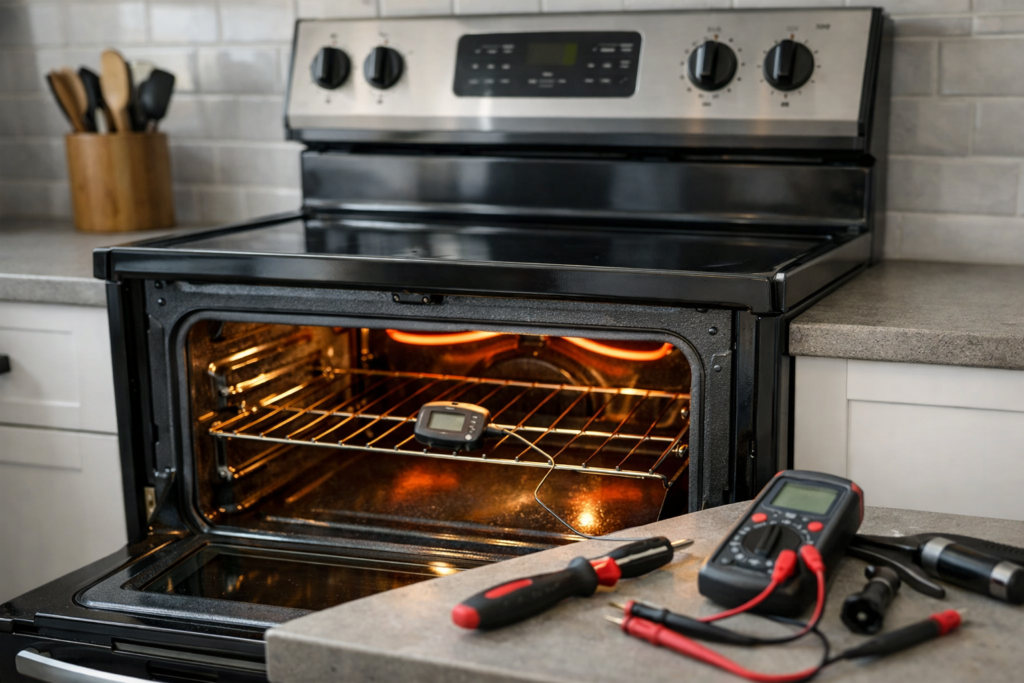
An electric range oven that takes too long to preheat is often experiencing issues with its heating elements, temperature sensors, wiring, or control board. This can be caused by aging components, hidden failures, or problems with the oven’s power supply—especially after several years of use or post-warranty. Many homeowners first notice slow preheating when it suddenly takes noticeably longer for the oven to reach baking temperature, resulting in delayed meals and inconsistent cooking. If your oven’s preheat time has increased, it may be time for professional diagnosis or repair, and extended protection plans can help manage these costs if your manufacturer warranty has expired.
Quick Summary: Electric Range Oven Preheating Issues
Here’s what you need to know if your electric oven is taking too long to preheat:
- Slow preheating is often caused by failing heating elements, faulty temperature sensors, or wiring issues.
- Preheat delays are commonly reported as ovens age or after the manufacturer warranty expires.
- Repair professionals often check the bake and broil elements, control board, and power connections first.
- Many customers discover preheating problems during routine cooking, especially with newer electronic controls.
- Coverage for these repairs is available through many CPS protection plans for eligible products.
|
Topic |
Quick Take |
|---|---|
|
Common Cause |
Heating element, sensor, or control board issues |
|
When It Happens |
Often after several years or post-warranty |
|
Repair Cost |
Can range from minor to several hundred dollars |
|
CPS Support |
Assistance with diagnosis, repair, and protection plans |
|
Eligible Products |
Many new, refurbished, and open-box electric ranges qualify |
free
Limited Time Offer
Get 3 months free on any protection plan.
Don’t wait for something to break. Get covered today and your first three months are on us.
What Should You Look For When Evaluating Oven Protection Plans?
Customers dealing with slow oven preheating often want to know what to prioritize when researching repair coverage or protection plans. It’s important to focus on real repair risks, service quality, and coverage terms specific to electric ranges.
- Coverage for heating elements, temperature sensors, and electronic control boards
- Access to authorized appliance repair networks for electric ranges
- Eligibility for refurbished, open-box, or scratch-and-dent ovens
- Clear claims process and repair coordination support
- Protection for expensive post-warranty repairs and replacement parts
What Experience Does CPS Have With Electric Range Repairs and Protection?
With more than 75 million products covered and 50,000 servicers nationwide, CPS has extensive experience helping customers address electric range repair issues, including slow preheating and electronic failures. Based on large-scale claims administration and hundreds of millions paid annually, CPS offers practical support for oven repairs after manufacturer warranty expiration.
- Heating element and control board failures are common causes of slow preheating in electric ranges
- Post-warranty repairs for ovens can become costly, especially as appliances age
- CPS has supported millions of appliance repair claims nationwide since 1990
- Many slow preheating issues are linked to aging components, electronic faults, or wiring problems
- Factory-authorized service access can help ensure proper diagnosis and reliable repairs
What Oven Repairs Are Most Common After Warranty Expiration?
Based on CPS’s historical claims data, common electric range repairs after warranty expiration include heating element replacements, temperature sensor issues, and control board failures. Many customers report slow preheating or uneven baking as their first symptom, leading to service calls and diagnostic visits.
|
Product or Repair Type |
Common Issue |
Why It Can Be Expensive or Important |
CPS Repair Insights |
|---|---|---|---|
|
Electric Oven |
Heating element failure |
Main cause of slow preheating, requires replacement |
CPS claims data shows heating element failures are among the most common electric oven repairs 3–6 years after purchase, especially shortly after manufacturer warranty expiration. Historical CPS repair data suggests customers often notice uneven baking or extended preheat cycles before complete element burnout occurs. Approved CPS appliance claims involving bake or broil elements typically range from $280–$520, while retail repair pricing can exceed $700 once diagnostics and labor are included. Claims activity indicates repeat service visits occur in roughly 18% of cases when relay boards or wiring damage accompany the failed element. |
|
Electric Oven |
Temperature sensor malfunction |
Leads to inaccurate preheat times and uneven cooking |
Based on CPS claim trends, temperature sensor failures commonly emerge during mid-life ownership periods after repeated thermal cycling affects calibration accuracy. CPS repair history shows consumers frequently report ovens running 25–50 degrees hotter or colder than selected settings, leading to inconsistent cooking performance and multiple diagnostic appointments. Claims involving these failures typically require $240–$460 in approved repairs, though control calibration and wiring harness complications can increase invoices beyond $600. Historical CPS repair records also indicate sensor-related callbacks occur in nearly 15% of cases when control boards misread sensor resistance values. |
|
Electric Oven |
Control board failure |
Impacts all oven functions and may require costly replacement |
CPS claims activity indicates electronic control board failures become significantly more common 4–8 years into ownership as heat exposure, voltage fluctuations, and component fatigue accelerate board degradation. According to historical CPS repair records, customers often experience intermittent shutdowns, flashing error codes, or ovens that fail to maintain temperature before total board failure occurs. Approved CPS claims for relay board and display board replacements commonly range from $420–$950, with premium slide-in models sometimes exceeding $1,200 due to programming and part sourcing delays. Service history from CPS claims indicates repairs approaching 50%–60% of replacement value frequently shift toward replacement consideration rather than continued repair investment. |
|
Electric Oven |
Wiring or power supply issues |
Hidden electrical faults can cause long preheat or random shutdowns |
Historical CPS repair data suggests hidden wiring faults and terminal block failures are frequently misdiagnosed during initial service visits because symptoms often resemble heating element or board failures. CPS claims data shows these electrical issues commonly develop 5–8 years into ownership due to thermal expansion, vibration, and prolonged high-current operation. Claims involving wiring harness repairs, terminal replacements, or power supply diagnostics typically range from $350–$780 depending on access difficulty and wall-oven installation complexity. Across approved CPS appliance claims, roughly 22% of electrical repair events require secondary labor visits after technicians uncover additional heat-damaged connectors or relay failures. |
|
Electric Oven |
Door seal wear |
Heat escapes, increasing preheat time and energy use |
CPS repair history shows oven door gasket deterioration is one of the most overlooked causes of slow preheating and uneven cooking performance during later-stage ownership. Based on CPS claims data from comparable repair events, worn seals commonly appear 4–7 years after purchase as repeated heat exposure causes gasket compression and brittleness. Approved CPS claims for door seal replacement generally range from $180–$340, though hinge adjustments and door alignment repairs can increase total invoices beyond $450. Claims activity also indicates consumers frequently delay these repairs because symptoms develop gradually, leading to higher energy use and increased stress on heating components over time. |
Why Do Customers Choose CPS Protection Plans?
Customers choose CPS for the combination of appliance repair support, flexible coverage options, and practical claims experience—especially for kitchen appliances like electric ovens.
- Access to authorized repair support for electric ranges and ovens
- Coverage for costly electronic and heating element failures
- Eligibility for many new, refurbished, and open-box appliances
- Assistance with post-warranty repair coordination and troubleshooting
- Simple claims process to help manage unexpected repair costs
Can CPS Help if My Appliance Is Already Out of Warranty?
For many homeowners, repair concerns become more important after the original manufacturer warranty expires. CPS may still be able to assist with troubleshooting, repair referrals, and, in some cases, extended protection options for eligible electric ranges.
- Factory-authorized repair referral assistance for out-of-warranty ovens and ranges
- Troubleshooting guidance and repair coordination support
- Help sourcing replacement parts and locating authorized service providers
- Guidance on eligibility for extended protection options after original purchase
|
Contact Method |
Details |
Best For |
|---|---|---|
|
Phone |
(800) 905-0443 |
Speaking directly with a CPS representative |
|
Web Chat |
|
Quick support and troubleshooting guidance |
|
CPS Client Care Portal |
https://client.cpscentral.com/ |
Claims, account access, and service support |
|
Text Message |
Text (347) 621-7180 |
Quick customer support questions |
|
Facebook Messenger |
http://m.me/ConsumerPriorityService |
General support and communication |
|
|
cs@cpscentral.com |
Detailed questions and documentation |
What Should You Know About Electric Range and Oven Protection?
Why does my electric oven take longer to preheat than it used to?
Ovens that take longer to preheat often have failing heating elements, faulty temperature sensors, or control board issues. These problems are more common as ovens age or after the original warranty expires.
How long should it take for an electric oven to preheat?
Most electric ovens reach 350°F in about 10–15 minutes. If your oven regularly takes 20 minutes or more, there may be a hidden issue needing repair.
What are the most common repairs for electric ranges?
Heating element replacement, temperature sensor repairs, and control board failures are among the most frequent electric range issues based on CPS’s historical claims data.
Do protection plans cover heating element or control board repairs?
Yes, many CPS protection plans cover mechanical and electrical failures such as heating elements and control boards in electric ranges, once the manufacturer warranty has expired.
Can I get a protection plan for a refurbished or open-box electric range?
Many refurbished and open-box electric ranges are eligible for CPS protection, but eligibility depends on product type, age, and condition.
What should I do if my oven is slow to preheat but still works?
Try checking for error codes or visible damage to the heating element. If the problem continues, professional diagnosis is recommended to avoid further damage or higher repair costs.
Are electric range repairs expensive after warranty expiration?
Repair costs vary by issue but can range from under $100 for simple fixes to several hundred dollars for parts like control boards or multiple elements. Protection plans can help manage these costs.
What are signs my oven’s heating element is failing?
Common signs include slow preheating, uneven baking, the element not glowing red, or the oven not reaching the set temperature.
Can CPS help if my electric oven is already out of warranty?
Yes, CPS can assist with troubleshooting, repair referrals, and, for some eligible products, extended protection options even after manufacturer warranty expiration.
repair
No Hidden Fees
One price covers all parts, labor, makes & models.
Skip the guesswork. Our flat rate repair program means you know exactly what you’ll pay — before we start.
Want to Learn More About Protecting Your Oven or Electric Range?
Explore your coverage options or connect with our team to check eligibility and get help with repair concerns for your electric oven or range.
For many homeowners, slow preheating is the first sign of a bigger issue with their electric oven or range—especially after several years of use. Repair costs can add up quickly, particularly for heating elements or control board replacements. As appliances age, considering protection plans or repair support can provide peace of mind and help manage unexpected expenses. If you’re experiencing preheating problems, comparing your repair options and coverage eligibility is a practical next step.

 Coverage for scratch & dent models

