

3 Appliance Filters You Should be Cleaning Regularly
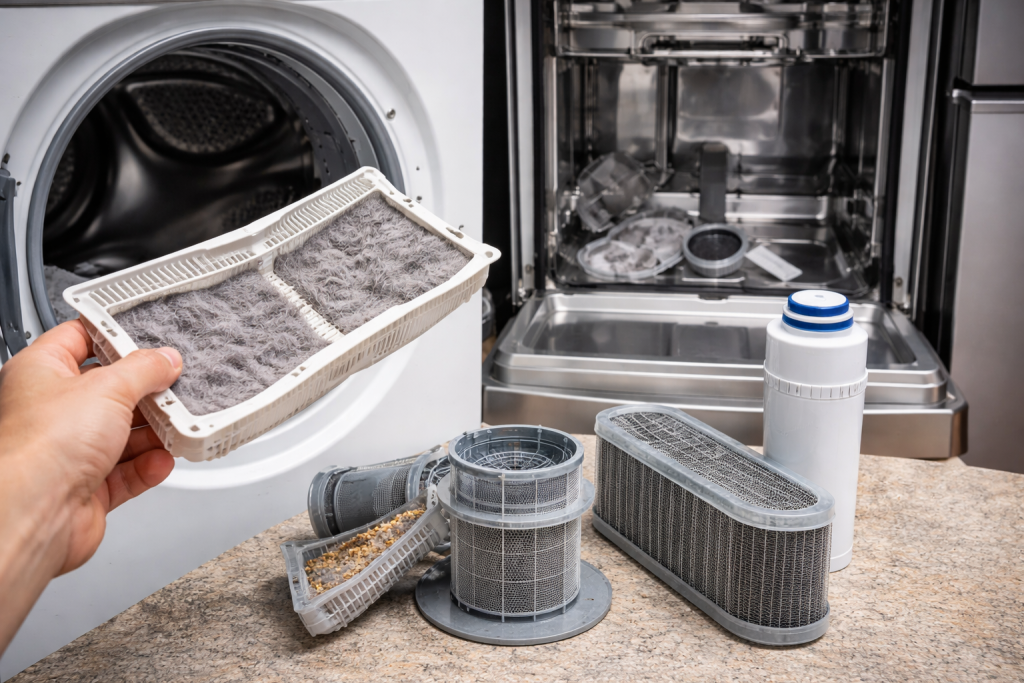
It’s easy to overlook the filters inside our most-used home appliances — until a clogged filter causes a headache. Whether you’re dealing with a suddenly inefficient dryer, a dishwasher that leaves dishes less than sparkling, or a refrigerator working overtime, dirty filters can lead to higher energy bills, poor performance, and avoidable repairs. Many homeowners don’t realize how much regular filter cleaning matters, or how it can impact not just appliance longevity but also warranty coverage and repair costs.
This guide highlights three critical appliance filters you should be cleaning regularly. We’ll explain why each filter matters, what can go wrong if they’re neglected, and how proper filter care connects with warranty protection and repair eligibility. If you want to keep your appliances running smoothly and avoid unnecessary expenses, understanding filter maintenance is essential.
Quick Facts: Appliance Filters You Should Be Cleaning
- Clogged filters are a leading cause of appliance breakdowns — and many are preventable with simple cleaning.
- The three most overlooked filters: dryer lint filter, dishwasher filter, and refrigerator water/air filters.
- Neglecting filter maintenance can void manufacturer or extended warranty coverage for related failures.
- Replacing a damaged appliance part due to filter neglect can cost $150–$500 or more, depending on the appliance.
- Regular filter cleaning can improve performance, efficiency, and appliance lifespan.
Three Appliance Filters You Should Clean Regularly
1. Dryer Lint Filter
Why it matters: The lint filter in your dryer traps fibers and debris from clothing. If neglected, lint buildup can restrict airflow, reduce efficiency, increase drying times, and even pose a fire risk. Blocked lint filters are a leading cause of dryer overheating and premature failure.
What to do: Clean the lint filter before or after every load. For deeper cleaning, wash it with warm, soapy water monthly to remove residue from fabric softeners or dryer sheets. Let it dry completely before reinserting.
2. Dishwasher Filter
Why it matters: Located at the bottom of most dishwashers, this filter traps food particles and prevents them from redepositing on your dishes or clogging the drain. If the filter is clogged, you may notice dirty dishes, foul odors, or standing water in the appliance.
What to do: Remove and rinse the filter under running water every two to four weeks, or more often if you notice buildup. Scrub gently with a soft brush if needed. Always reinstall the filter correctly to avoid leaks or damage.
3. Refrigerator Water and Air Filters
Why it matters: Water filters remove contaminants from your drinking water and ice, while air filters control odors inside the fridge. Over time, both can become clogged and less effective, leading to poor water quality, unpleasant smells, or strain on the refrigerator’s cooling system.
What to do: Replace water filters every 6 months (or as recommended by your appliance manual). Air filters should be checked and changed regularly — typically twice a year. Mark your calendar or set reminders to stay on schedule.
What Happens If You Neglect Appliance Filter Cleaning?
- Performance drops: Appliances become less efficient, using more energy and taking longer to work.
- Risk of breakdowns: Dirty filters are a common cause of costly repairs, such as dryer heating element failures (which can cost $150–$300 to fix).
- Shorter lifespan: Appliances forced to work harder due to clogged filters tend to wear out faster.
- Potential warranty issues: Both manufacturer and extended warranties may exclude repairs caused by lack of maintenance, including filter neglect.
Common Misconceptions About Appliance Filters
- “Filters only need cleaning when there’s a problem.” — Waiting for a performance issue can lead to damage that’s already done. Regular cleaning is preventive, not just corrective.
- “Replacing filters isn’t necessary if I clean them.” — Some filters (like refrigerator water filters) must be replaced on schedule for optimal safety and function.
- “Filter maintenance doesn’t affect my warranty.” — Many warranties require proof of regular maintenance, and filter neglect can be grounds for claim denial.
When Should You Call a Professional or Warranty Provider?
If you notice persistent issues after cleaning filters—like a dryer that won’t heat, a dishwasher that won’t drain, or poor refrigerator cooling—it may indicate a mechanical failure beyond normal maintenance. At this point, involving a professional or utilizing your extended warranty plan can help address repairs that go beyond DIY fixes. Extended warranty coverage is designed to offset the high cost of unexpected appliance failures, especially those not caused by neglect or lack of maintenance.
How Consumer Priority Service (CPS) Can Help
Consumer Priority Service connects homeowners to authorized repair networks for covered appliance breakdowns, providing extended warranty coverage that begins after the manufacturer’s warranty ends. With protection options for major appliances, electronics, and more, CPS helps safeguard your investment against future mechanical failures — as long as regular maintenance is performed. Learn more about appliance extended warranty plans or get a free quote today.
Frequently Asked Questions (FAQ)
Q: How often should I clean my appliance filters?
A: Dryer lint filters should be cleaned after every use. Dishwasher filters should be rinsed every 2–4 weeks, and refrigerator water/air filters should be replaced every 6 months or as recommended by your appliance manufacturer.
Q: Will skipping filter cleaning void my appliance warranty?
A: In many cases, yes. Both manufacturer and extended warranties may deny claims related to breakdowns caused by lack of routine maintenance, including filter neglect. Always keep records of filter cleaning and replacements.
Q: What are signs that an appliance filter needs cleaning?
A: Look for longer cycle times, persistent odors, poor cleaning or drying results, or unusual noises. These are often signs of clogged filters.
Q: Are replacement filters covered by an extended warranty?
A: Typically, consumable items like filters are not covered. Extended warranties usually cover repairs to mechanical or electrical parts, not routine maintenance or filter replacements.
Q: Can I file a warranty claim if I forgot to clean my filter?
A: If neglecting filter maintenance caused the failure, your claim may not be approved. Regular filter cleaning is considered a homeowner’s responsibility under most warranty plans.
Conclusion
Keeping your appliance filters clean is a simple step that can prevent breakdowns, extend the life of your appliances, and protect your warranty coverage. Neglecting this basic maintenance can lead to costly repairs and even denied claims. By staying proactive with filter care and understanding how it fits into your protection plan, you’ll save money and avoid unnecessary stress. Explore CPS extended warranty options to ensure you’re covered when problems arise — and enjoy peace of mind long after your manufacturer’s warranty expires.

Still need help with your appliance?
If you’ve gone through the troubleshooting steps and the problem isn’t resolved, it may be time to think about protecting your appliance before the next issue appears. Our extended warranty plans continue coverage after the manufacturer’s warranty ends, helping cover repairs, parts, and service when unexpected breakdowns happen. With simple claims and dedicated support, protecting your appliance is easy.
Get Flat Rate Repair Program