

Refrigerator not Making Ice
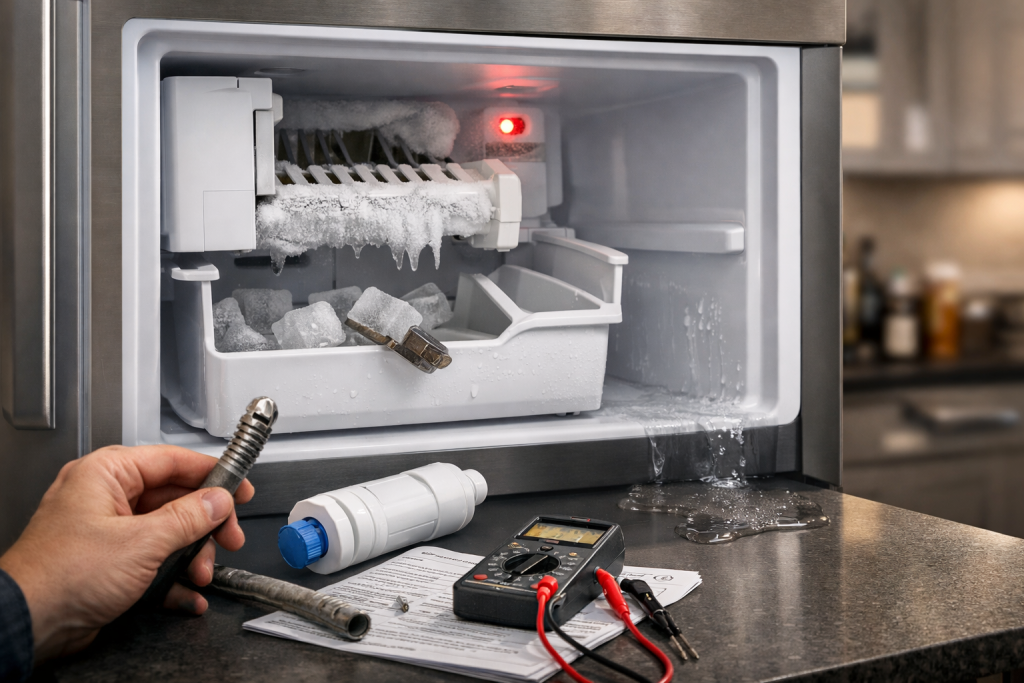
If your refrigerator has stopped making ice, you’re not alone—this is a common problem that can disrupt your daily routine. The most frequent causes are blockages in the ice maker, water supply interruptions, or internal component failures. Many of these issues can be solved with basic cleaning and inspection, but if problems persist, professional repair may be necessary to restore full functionality.
Why is my refrigerator not making ice?
Short answer: Most refrigerators stop making ice due to a mechanical blockage (such as jammed ice cubes), an interrupted water supply, or a failed component like the water inlet valve or ice maker assembly.
The Most Common Causes
- Ice maker blocked by frozen or jammed cubes
- Clogged or kinked water supply line
- Faulty water inlet valve or ice maker motor
- Incorrect freezer temperature or overfilled compartment
Don’t ignore an ice maker that isn’t working—addressing the problem promptly can help prevent more serious appliance issues and unexpected repair costs.
Need Professional Refrigerator Repair? CPS Connects You to Factory-Authorized Service
Short answer: If basic steps do not restore ice production, professional service may be required to accurately diagnose and repair the issue.
CPS makes it easy to connect with factory-authorized technicians for refrigerator repairs that meet manufacturer standards.
- Brand-trained technicians
- OEM manufacturer-approved parts
- Repairs performed to manufacturer standards
- Nationwide authorized repair access
Schedule Factory-Authorized Refrigerator Repair
Why a Refrigerator That Won’t Make Ice Should Not Be Ignored
Short answer: Unresolved ice maker issues can lead to more extensive refrigerator damage, water leaks, or increased repair expenses.
- Secondary component damage
- Electrical strain
- Higher repair cost risk
- Potential for water leaks or freezer temperature fluctuations
Early action can help protect your refrigerator and avoid more complex service needs.
Try These Fixes First
Short answer: Start by inspecting the ice maker for blockages, cleaning the area, and checking the water supply line for any signs of obstruction or kinks.
How to Fix a Refrigerator That Is Not Making Ice
- Confirm the ice maker is switched on and the freezer is set to 0°F (-18°C).
- Empty the ice bin and clear away any stuck or jammed cubes.
- Check the water supply line for clogs or kinks; straighten as needed.
- Replace the water filter if it is old or clogged.
- Remove frost buildup from around the ice maker with a soft cloth.
- If your model has a reset button, press it to restart the ice maker cycle.
- Allow several hours to see if ice production resumes.
If ice production returns after clearing a blockage, the issue was likely minor. If ice is still not being made, further troubleshooting or professional repair may be needed.
How to Identify the Type of Failure
Short answer: The specific symptoms your refrigerator shows—such as no ice at all, water in the ice bin, or unusual noises—can indicate the root cause of the problem.
If the refrigerator isn’t dispensing any ice
This often means there’s a jam or mechanical failure in the ice maker. Check for stuck ice cubes or an obstructed ejector arm.
If there’s no water in the ice tray
This suggests a water supply issue—possibly a closed valve, kinked line, or faulty inlet valve.
If you hear the ice maker running but no ice appears
This could be an electrical or motor fault, often requiring professional diagnosis.
If frost or condensation builds up near the ice maker
This may indicate a freezer temperature problem or a compromised door seal allowing excess moisture.
Repair Cost: What Should You Expect?
Short answer: Typical repair costs for a refrigerator that is not making ice range from $100 to $400, depending on the cause and parts needed.
- Service visit: $100–$150
- Minor component replacement: $125–$250
- Major component replacement (ice maker assembly): $250–$400
- Costs vary by brand, model, and region.
Can I Buy a Warranty to Fix This Current Issue?
Short answer: No, warranty coverage applies only to future mechanical failures, not to pre-existing or currently active issues.
Your refrigerator must be fully operational at the time coverage is purchased. After repair and verification of proper function, extended protection options may be available for ongoing peace of mind.
Why Factory-Authorized Service Matters
Short answer: Factory-authorized service ensures that your refrigerator is repaired using correct parts and procedures, helping to preserve both performance and warranty status.
- OEM parts
- Brand-specific training
- Proper diagnostic standards
- Aftermarket components (risk)
- Misdiagnosis (risk)
- Repeat failure risk
After Repair: Protect Against Future Breakdowns
Short answer: Once your refrigerator is fully functional, an extended warranty can help minimize the risk of future repair costs due to covered failures.
- Motors
- Pumps
- Heating elements
- Control boards
- Mechanical failure due to normal use
Refrigerator Not Making Ice FAQs
Why did my refrigerator suddenly stop making ice?
Common reasons include mechanical blockages, failed water valves, or control module malfunctions.
How do I reset my ice maker?
Refer to your manual; most have a reset button to restart the ice making process.
Can a clogged water filter prevent ice production?
Yes, a blocked filter can restrict water flow to the ice maker.
Should I turn off the ice maker if it’s not used often?
Turning it off can help prevent jams and unnecessary wear.
Is it safe to use hot water to clear ice jams?
No, allow ice to melt naturally or gently dislodge with a plastic utensil to avoid damage.
Why is my freezer cold but the ice maker not working?
This could be an electrical or control issue that may require a professional assessment.
How often should my refrigerator’s water filter be replaced?
Generally every 6 months, or as recommended by the manufacturer.
Will an extended warranty cover ice maker repairs?
Yes, if purchased while the refrigerator is working and before the failure occurs.
Can I repair my ice maker myself?
Simple blockages or filter changes can be DIY, but internal failures often require a technician.
Does CPS protection cover future ice maker issues?
Yes, once your appliance is functioning, CPS extended coverage can help protect against future breakdowns.

Still need help with your appliance?
If you’ve gone through the troubleshooting steps and the problem isn’t resolved, it may be time to think about protecting your appliance before the next issue appears. Our extended warranty plans continue coverage after the manufacturer’s warranty ends, helping cover repairs, parts, and service when unexpected breakdowns happen. With simple claims and dedicated support, protecting your appliance is easy.
Get Flat Rate Repair Program