

Why won’t my Gas Range burners ignite properly?
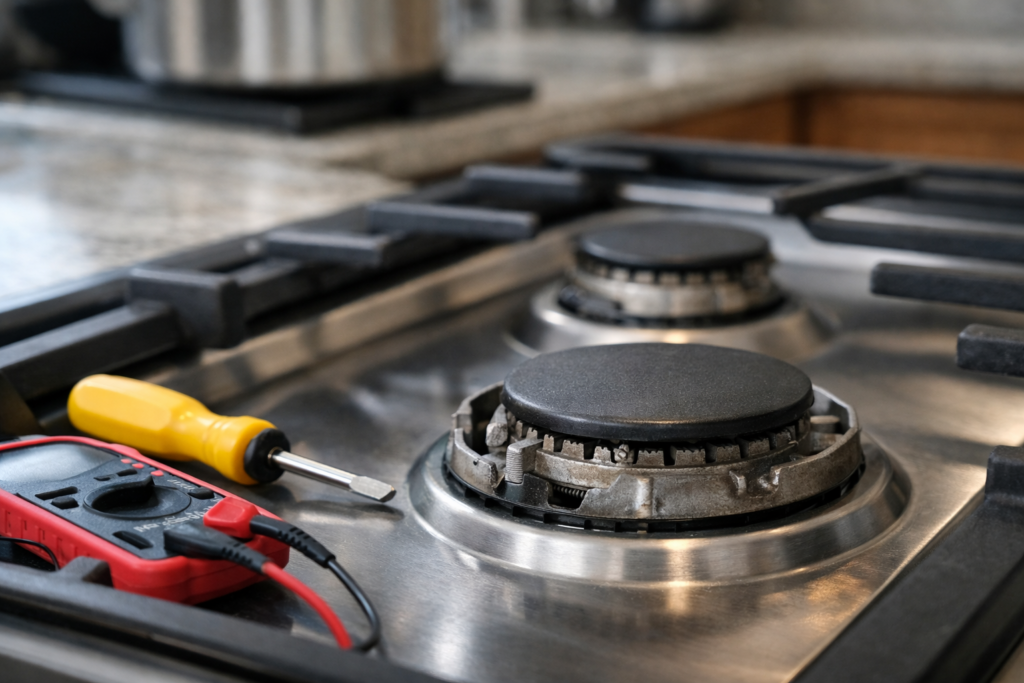
Updated May 2026 – reflects current gas range repair trends, ignition issues, and post-warranty ownership concerns.
Gas range burners may not ignite properly due to common issues like dirty burner caps, clogged ignition ports, faulty igniters, or problems with the gas supply. Many homeowners notice clicking sounds without a flame, delayed ignition, or no ignition at all—especially as ranges age or after heavy use. Troubleshooting often starts with cleaning the burners and checking for visible debris, but persistent ignition problems may require professional diagnosis and repair. If your gas range is out of warranty, CPS can help with repair referrals, service coordination, and protection options for eligible products.
Quick Summary: Why Gas Range Burners Won’t Ignite
Here’s what you need to know if your gas range burners aren’t lighting:
- Clogged burner caps or ignition ports are a leading cause of ignition failure
- Faulty igniters or worn spark modules commonly cause repeated clicking or no spark
- Gas supply issues, such as closed valves or kinked lines, can prevent burners from lighting
- Problems often surface after years of use or following heavy cleaning
- Professional repair may be needed if cleaning and simple troubleshooting don’t resolve the issue
|
Topic |
Quick Take |
|---|---|
|
Common Causes |
Dirty burners, clogged ignition ports, faulty igniters, or gas supply issues |
|
Symptoms |
Clicking without ignition, slow flame, or no response |
|
Easy Fixes |
Clean burners and ignition ports, check gas supply |
|
When to Call for Help |
If cleaning doesn’t work or you suspect part failure |
|
Post-Warranty Support |
CPS can help with repair referrals and protection options |
free
Limited Time Offer
Get 3 months free on any protection plan.
Don’t wait for something to break. Get covered today and your first three months are on us.
What Should You Look For When Troubleshooting Gas Range Ignition Problems?
When your gas range burners won’t ignite, it’s important to focus on the most common causes and practical repair options before considering replacement or professional service. Here are the key factors to check and questions to ask as you troubleshoot the issue.
- Cleanliness of burner caps and ignition ports
- Condition of the igniter and spark module
- Gas supply valve position and line condition
- Signs of moisture or residue after cleaning
- Eligibility for repair support or protection coverage if the problem persists
What Experience Does CPS Have With Gas Range Repairs and Protection?
With more than 75 million products covered, 60 million customers supported, and 50,000 servicers nationwide, CPS brings decades of claims administration and repair coordination experience to appliance issues like gas range ignition failure. Based on historical claims data, CPS has managed thousands of gas range repair situations, helping customers address both common and complex ignition problems.
- Repeated ignition failures are often traced to clogged burners or faulty igniters
- Gas supply interruptions and valve issues are common in older ranges
- Moisture left after cleaning frequently causes temporary ignition problems
- Repairs may require replacement of spark modules or ignition switches
- Professional service is often needed when DIY troubleshooting doesn’t resolve the issue
What Gas Range Repairs Are Most Common After Warranty Expiration?
Based on CPS’s historical claims data and long-term repair trends, ignition problems, burner cleaning, and igniter replacements are among the most common gas range repairs homeowners face after manufacturer warranty expiration. Repair professionals often report these issues become more frequent as ranges age, especially in high-use kitchens or after heavy cleaning.
|
Product or Repair Type |
Common Issue |
Why It Can Be Expensive or Important |
CPS Repair Insights |
|---|---|---|---|
|
Gas Range Burner |
Igniter failure |
May require replacement parts and labor |
Igniter-related claims are among the most common gas range service calls once units age beyond manufacturer coverage. CPS claims data shows repairs often escalate because technicians must disassemble burner assemblies, verify gas flow, and rule out spark module or control-switch failures before replacing parts, which increases labor time and repeat-visit potential. |
|
Burner Assembly |
Clogged or dirty burner caps |
Prevents ignition and even flame distribution |
Burner cleaning appears simple to homeowners, but repair history shows corrosion, grease buildup, and warped burner caps can create recurring ignition complaints that require full burner disassembly and calibration. Claims activity commonly increases after heavy cleaning cycles where moisture affects ignition pathways and delays accurate diagnostics. |
|
Spark Module |
No spark or repeated clicking |
Replacement of electronic components needed |
Spark module failures frequently require electrical troubleshooting across multiple burners because symptoms can mimic switch harness or moisture-related faults. CPS repair history shows electronic ignition repairs often become labor-intensive due to hidden component access behind sealed cooktop surfaces and the need to isolate intermittent failures before replacement. |
|
Gas Supply Line |
Supply interruption or valve issue |
Professional repair may be required for safety |
Gas supply and valve-related claims typically require licensed service due to leak testing, regulator inspection, and safety verification requirements. Repairs often involve multiple visits when shutoff valves, regulators, or flexible gas connectors are difficult to access behind built-in cabinetry or slide-in range installations. |
|
Control Switch |
Ignition switch failure |
May require specialized parts and service |
Ignition switch failures can become unexpectedly expensive because modern gas ranges route multiple burner controls through shared electronic harnesses and switch assemblies. Based on CPS claim trends, technicians frequently spend significant diagnostic time distinguishing between failed switches, spark modules, and wiring faults before ordering model-specific replacement parts. |
Why Do Customers Choose CPS Protection Plans?
Customers choose CPS for repair support, flexible coverage options, and reliable service coordination—especially when faced with unexpected appliance failures like gas range ignition problems.
- Access to authorized servicers for gas ranges and other major appliances
- Flexible coverage for new, refurbished, and open-box products
- Assistance coordinating repairs after manufacturer warranty expiration
- Support for expensive ignition, control board, and electronic repairs
- Easy claims process and nationwide repair network access
Can CPS Help if My Gas Range Is Already Out of Warranty?
For many homeowners, ignition problems with gas ranges become more urgent after the manufacturer warranty expires. CPS may still be able to help with troubleshooting support, repair referrals, and, for certain eligible products, extended protection options even after the original warranty period.
- Factory-authorized repair and troubleshooting referrals for out-of-warranty gas ranges
- Guidance on sourcing replacement igniters, spark modules, and other parts
- Assistance coordinating service with nationwide repair providers
- Eligibility review for extended protection options after original purchase, when available
|
Contact Method |
Details |
Best For |
|---|---|---|
|
Phone |
(800) 905-0443 |
Speaking directly with a CPS representative |
|
Web Chat |
|
Quick support and troubleshooting guidance |
|
CPS Client Care Portal |
https://client.cpscentral.com/ |
Claims, account access, and service support |
|
Text Message |
Text (347) 621-7180 |
Quick customer support questions |
|
Facebook Messenger |
http://m.me/ConsumerPriorityService |
General support and communication |
|
|
cs@cpscentral.com |
Detailed questions and documentation |
What Should You Know About Gas Range Warranty and Repair Coverage?
Why do my gas range burners click but not ignite?
Clicking without ignition usually means the igniter is working but the burner cap or ignition port may be clogged with debris or moisture. Cleaning these parts often restores proper ignition.
What are the most common causes of gas range ignition problems?
Dirty burner caps, clogged ignition ports, faulty igniters, and gas supply issues are the most common reasons burners won’t light.
Can I fix gas range ignition issues myself?
Many ignition problems can be solved by cleaning burner parts and ensuring they’re dry. If the issue persists, the igniter or spark module may need replacement by a professional.
How do I know if my gas range igniter is bad?
If you hear no clicking at all, or the igniter glows but doesn’t spark, it may be faulty or worn out and require replacement.
Is it safe to troubleshoot gas burner ignition problems?
Basic cleaning is usually safe, but if you suspect a gas leak or can’t identify the problem, it’s best to contact a qualified technician to avoid safety risks.
Are ignition repairs covered by appliance protection plans?
Many appliance protection plans, including those offered by CPS, cover mechanical and electrical failures such as igniter and spark module problems after the manufacturer warranty expires.
Can I get support for a refurbished or open-box gas range?
Yes, CPS supports many new, refurbished, and open-box gas ranges, depending on product eligibility and plan terms.
What should I do if cleaning doesn’t solve my gas range ignition problem?
If basic cleaning and troubleshooting don’t work, it’s a good idea to contact a repair professional or your warranty provider for further assistance.
Does CPS offer help if my gas range is already out of warranty?
Yes, CPS may still assist with troubleshooting guidance, repair referrals, and, for eligible products, extended protection options after the original warranty period.
repair
No Hidden Fees
One price covers all parts, labor, makes & models.
Skip the guesswork. Our flat rate repair program means you know exactly what you’ll pay — before we start.
Want to Learn More About Gas Range Protection and Repair Support?
If you’re concerned about gas range ignition problems or want to explore coverage options, CPS can help you understand your repair and protection choices.
For many homeowners, gas range ignition issues become more common as appliances age or after repeated cleaning. Addressing these problems early can help avoid more expensive repairs down the road. Whether you’re looking for troubleshooting help, repair support, or long-term protection, CPS offers resources and coverage options to help you make informed decisions about your appliance ownership and repair needs.
About the CPS Repair Insights Data
The repair insights, reliability observations, repair frequency estimates, and cost ranges referenced on this page are based on Consumer Priority Service (CPS) proprietary claims intelligence.
Data Source
- Analysis of 239,000+ service claims
- Claims processed since January 2024
- Aggregated repair activity across CPS-covered products
- Based on actual repair outcomes and claims history
What the Data Reflects
- Common repair patterns
- Reliability trends
- Historical service frequencies
- Real-world ownership experiences
- Typical repair cost observations
Purpose
The information is intended to help consumers better understand potential repair risks, ownership costs, and common post-warranty repair situations based on observed claims activity.
 SPECIAL OFFER
 Coverage for scratch & dent models