

Are scratch and dent appliances inspected before resale?
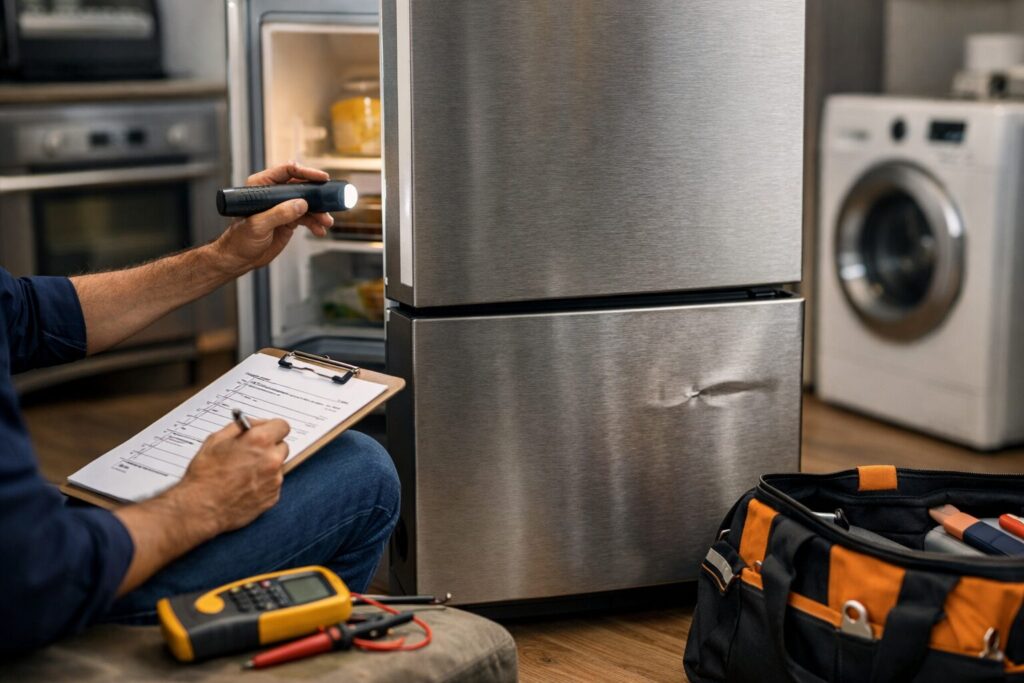
Updated May 2026 – reflects current appliance inspection standards and post-warranty repair concerns.
Yes. Most scratch and dent appliances are inspected for basic functionality and safety before being resold, but the level of inspection can vary depending on the retailer, manufacturer, or outlet. Inspections typically focus on ensuring that major mechanical and electrical components function as intended, though cosmetic flaws like dents or scratches remain. Customers should carefully review the inspection details and any included warranty or protection options, as coverage and repair support for scratch and dent appliances may differ from new or factory-refurbished models. CPS offers protection plans for many scratch and dent appliances, helping owners manage unexpected post-warranty repair risks.
Quick Summary
Here’s what you need to know about scratch and dent appliance inspections and protection:
- Most scratch and dent appliances undergo a basic functionality and safety inspection before resale
- Inspections generally focus on core mechanical and electrical operation, not cosmetic appearance
- Inspection standards can vary by store, outlet, or manufacturer
- Warranty and protection options may differ from new or factory-refurbished appliances
- Coverage for scratch and dent appliances is available from select providers like CPS, including post-warranty repair support
|
Topic |
Quick Take |
|---|---|
|
Inspection Process |
Most scratch and dent appliances receive a basic functionality check before resale |
|
What’s Checked |
Core electrical, mechanical, and safety functions—cosmetic flaws remain |
|
Inspection Standards |
Vary by retailer, outlet, or manufacturer |
|
Warranty Options |
Coverage for scratch and dent appliances may differ from new units |
|
CPS Support |
Protection plans available for many eligible scratch and dent appliances |
free
Limited Time Offer
Get 3 months free on any protection plan.
Don’t wait for something to break. Get covered today and your first three months are on us.
What Should You Look For When Buying a Scratch and Dent Appliance?
When shopping for a scratch and dent appliance, it’s important to look beyond the price tag and consider how the inspection process, included warranty, and available protection plans address potential repair risks and long-term reliability.
- Verification of a basic functionality and safety inspection before purchase
- Clear documentation on what was inspected and what cosmetic flaws are present
- Eligibility for extended protection or repair coverage, including scratch and dent models
- Details on what post-warranty repairs and support are available
- Access to authorized repair networks if issues arise after purchase
What Experience Does CPS Have With Scratch and Dent Appliance Protection?
For many customers considering scratch and dent appliances, understanding real-world repair costs and long-term reliability is essential. With over 75 million products covered, 50,000 service providers nationwide, and hundreds of millions in claims paid annually, CPS brings extensive experience supporting owners of new, refurbished, and scratch and dent appliances through a wide range of post-warranty repair situations.
- Based on CPS’s historical claims data, scratch and dent appliances can experience similar mechanical and electrical failures as new units
- Repair costs for major components like compressors, control boards, and pumps can be significant after warranty expiration
- Many scratch and dent appliances are eligible for the same protection plans and repair support as new or refurbished products
- Access to a large network of service providers helps ensure repair coordination, even for non-standard or discontinued models
- Long-term ownership concerns often center on reliability, repair costs, and post-warranty service availability
What Appliance Repairs Are Most Common With Scratch and Dent Models?
Based on CPS’s historical claims data and long-term repair experience, scratch and dent appliances often encounter the same types of mechanical and electrical issues as new units, especially as they age or if they’ve experienced prior handling. Key concerns include compressor failures, control board issues, and pump or motor problems—many of which can become expensive to repair after warranty expiration.
|
Product or Repair Type |
Common Issue |
Why It Can Be Expensive or Important |
CPS Repair Insights |
|---|---|---|---|
|
Refrigerator |
Compressor or sealed system failure |
High cost for sealed system parts and specialized labor |
CPS claims data shows sealed-system and compressor failures are among the highest-cost refrigerator repairs, especially 4–8 years into ownership or shortly after manufacturer compressor coverage changes. Historical CPS repair data suggests approved repairs commonly range from $950–$1,850 through authorized networks, while comparable retail invoices often exceed $2,100 due to refrigerant handling, evaporator access, and multi-visit diagnostics. Claims involving these failures typically require compressor replacement, leak testing, and refrigerant recharge labor, with replacement approvals increasing once repair estimates approach 50%–60% of replacement value. |
|
Washer |
Pump or motor malfunction |
Internal component replacement and labor costs |
Based on CPS claim trends, drain pump and drive motor failures frequently emerge 3–6 years into ownership after repeated vibration exposure, overloading, and moisture intrusion. CPS claims activity indicates front-load washers experience elevated repeat-service rates when bearing wear or wiring harness issues accompany motor failures. Authorized CPS repairs commonly fall between $420–$980, while retail consumer repairs can run $200 higher once labor escalation and secondary diagnostics are added. Service history from CPS claims indicates delayed repairs often lead to additional tub, suspension, or control-board stress that increases total invoice exposure. |
|
Dishwasher |
Electronic control board failure |
Advanced diagnostics and electronic part replacement |
Historical CPS repair records show electronic control board failures commonly occur 2–5 years into ownership, especially in smart-enabled dishwashers exposed to power fluctuations, steam intrusion, and repeated thermal cycling. Across approved CPS appliance claims, board-related repairs often require firmware validation, wiring diagnostics, and multiple service visits before full resolution. Repair invoices typically range from $480–$1,050 depending on board availability and user-interface integration, with claims showing repair approval hesitation increases once costs near half the appliance replacement value. |
|
Oven/Range |
Heating element or controller issue |
Repair costs rise with complex or smart features |
CPS repair history shows heating-element failures and relay-board issues become more common during mid-life ownership periods, particularly in convection and smart-enabled ranges with heavier cooking cycles. Based on CPS claims data from comparable repair events, repair costs generally range from $350–$1,200 depending on whether ignition systems, touch controls, spark modules, or relay boards require replacement. Claims activity indicates labor escalates significantly when technicians must disassemble glass-top surfaces or recalibrate smart control systems, leading to higher approval rates for replacement once repeated service visits occur. |
|
Dryer |
Drive motor or sensor failure |
Mechanical and electrical repair costs after warranty ends |
According to historical CPS repair records, drive motor failures and moisture-sensor issues frequently appear 4–7 years into ownership as lint buildup, heat exposure, and airflow restrictions accelerate component fatigue. CPS claims data shows repairs involving motors, rollers, and electronic sensor assemblies commonly total $400–$950 through authorized service networks, with retail pricing often materially higher due to labor-intensive drum access. Service history from CPS claims indicates approximately 20%–30% of dryer motor repairs require follow-up visits because belt wear, blower-wheel damage, or wiring faults are discovered during teardown. |
Why Do Customers Choose CPS Protection Plans?
Customers looking for extra peace of mind with scratch and dent appliances often choose CPS for its practical repair support, flexible coverage options, and experience supporting a wide range of products beyond just new models.
- Access to repair support for refrigerators, washers, ovens, and more—even scratch and dent or open-box
- Support for many refurbished, open-box, and scratch and dent appliances
- Assistance with repair coordination and troubleshooting after manufacturer warranty expiration
- Coverage for expensive post-warranty mechanical and electrical repairs
- Easy claims process and helpful customer service
Can CPS Help if My Appliance Is Already Out of Warranty?
For many homeowners, repair concerns become more important after the original manufacturer warranty expires. CPS may still be able to help connect customers with troubleshooting guidance, repair referrals, replacement part assistance, and in some cases, extended protection options for eligible scratch and dent appliances.
- Factory-authorized repair referral assistance for eligible scratch and dent appliances
- Troubleshooting guidance and repair coordination support for out-of-warranty products
- Help finding replacement parts, authorized service providers, and repair options
- Guidance on extended protection eligibility for certain products after the original purchase or manufacturer warranty period
|
Contact Method |
Details |
Best For |
|---|---|---|
|
Phone |
(800) 905-0443 |
Speaking directly with a CPS representative |
|
Web Chat |
|
Quick support and troubleshooting guidance |
|
CPS Client Care Portal |
https://client.cpscentral.com/ |
Claims, account access, and service support |
|
Text Message |
Text (347) 621-7180 |
Quick customer support questions |
|
Facebook Messenger |
http://m.me/ConsumerPriorityService |
General support and communication |
|
|
cs@cpscentral.com |
Detailed questions and documentation |
What Questions Do Customers Ask About Scratch and Dent Appliance Coverage?
Are scratch and dent appliances inspected before resale?
Yes. Most scratch and dent appliances are inspected for basic functionality and safety, but the thoroughness of inspections can vary by retailer or outlet. Always ask for details on what was checked and what is covered post-sale.
What does a typical scratch and dent inspection include?
Inspections usually verify that the appliance powers on, runs through basic cycles, and passes safety checks. Cosmetic damage is expected and not repaired, but core functions should be tested before resale.
Are scratch and dent appliances covered by a warranty?
Coverage can vary. Some include a limited warranty or allow you to purchase extended protection from providers like CPS. Always confirm the warranty details and eligibility before buying.
Can I get a protection plan for a scratch and dent appliance?
Yes, many scratch and dent appliances are eligible for CPS protection plans, which can help cover mechanical and electrical failures after the manufacturer warranty expires.
Do scratch and dent appliances break down more often?
Based on CPS’s historical claims data, scratch and dent appliances experience similar types of failures as new units, but long-term reliability depends on the specific appliance and how it was handled before sale.
What repairs are most expensive for scratch and dent appliances?
Compressor, control board, and sealed system failures are among the more costly repairs for refrigerators, washers, and other major appliances, regardless of cosmetic condition.
Does accidental or cosmetic damage get repaired under warranty?
No, most protection plans—including those from CPS—do not cover cosmetic damage or pre-existing dents and scratches. Coverage is focused on mechanical and electrical failures.
What should I check before buying a scratch and dent appliance?
Ask for inspection documentation, verify functionality, confirm warranty or protection plan eligibility, and understand what cosmetic flaws are present before purchasing.
Can I get support if my scratch and dent appliance breaks after the warranty?
Yes, CPS may be able to assist with troubleshooting, repair referrals, replacement part guidance, and—in some cases—offering protection plans for eligible products.
Are scratch and dent appliances a good value?
They can offer significant savings, but it’s important to consider inspection quality, warranty coverage, and potential repair costs over time. Additional protection can provide extra peace of mind.
repair
No Hidden Fees
One price covers all parts, labor, makes & models.
Skip the guesswork. Our flat rate repair program means you know exactly what you’ll pay — before we start.
Want to Learn More About Protecting Your Appliance?
Explore coverage options or contact CPS for help with scratch and dent appliance protection, repair support, and eligibility questions.
For many customers, buying a scratch and dent appliance is a smart way to save on high-quality models, but it’s important to think about long-term repair costs and reliability. Many owners discover that affordable protection plans or repair support can make a big difference, especially if a major component fails after the manufacturer warranty expires. Before making a decision, compare inspection details, warranty options, and the availability of extended coverage for your specific appliance model.
 SPECIAL OFFER
 Coverage for scratch & dent models