

Does an extended warranty cover my Range Hood after the manufacturer warranty expires?
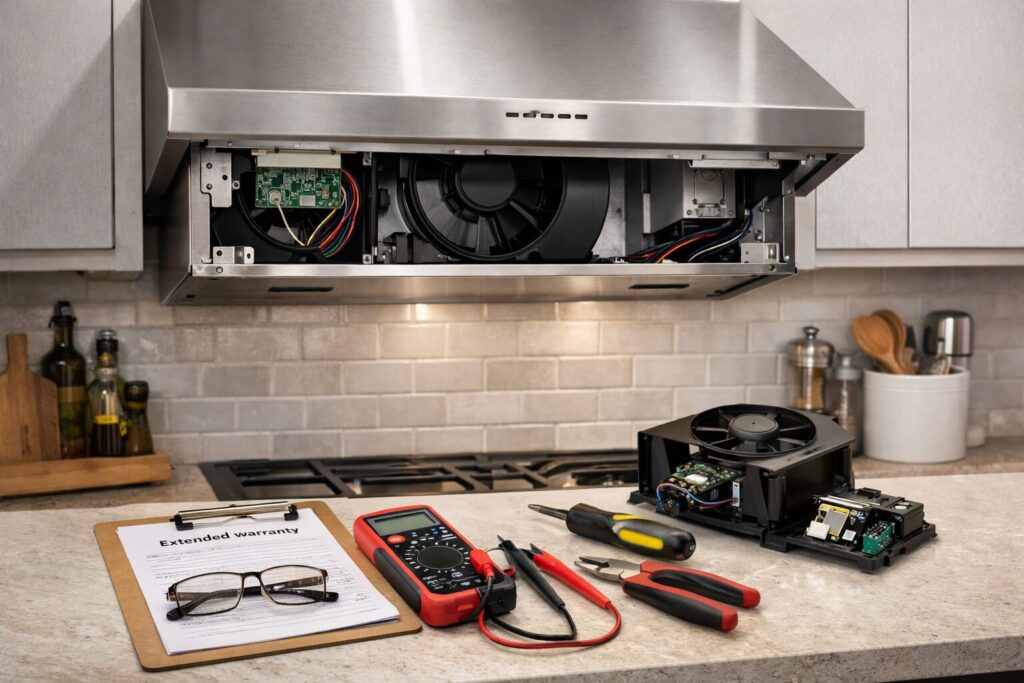
Created June 2026 – reflects current range hood repair trends and post-warranty coverage considerations.
Yes. An extended warranty can cover your range hood after the manufacturer warranty expires, helping with repairs for key components like fan motors, control panels, and electronic boards—common issues that often arise several years into ownership. Many homeowners discover that out-of-pocket repairs for range hoods can be unexpectedly costly, especially for premium or smart models with advanced features. CPS protection plans typically offer coverage for new, refurbished, and open-box range hoods, connecting customers with authorized repair networks and support across the U.S. It’s important to review coverage details, as accidental damage and routine maintenance are generally not included.
Quick Summary: Range Hood Warranty Coverage
Here’s what you need to know about protecting your range hood after the manufacturer warranty expires:
- Extended warranties can cover key range hood repairs, including fan motors, switches, and control boards
- Out-of-pocket repairs often become more expensive as range hoods age or develop electrical issues
- Coverage typically excludes accidental damage, cosmetic issues, and routine maintenance
- Many refurbished, open-box, and scratch-and-dent range hoods may be eligible for protection
- Access to authorized repair networks is especially important for premium or built-in range hoods
|
Topic |
Quick Take |
|---|---|
|
Coverage After Manufacturer Warranty |
Extended warranties can help pay for covered repairs after the original warranty ends |
|
Common Covered Repairs |
Fan motors, control panels, electronic boards, switches |
|
Best For |
Premium, built-in, or smart range hoods with higher repair costs |
|
Product Eligibility |
Covers many new, refurbished, and open-box range hoods |
|
Repair Support |
Access to authorized service networks and repair coordination |
What Should You Look For in Range Hood Protection?
When comparing range hood protection plans, it’s important to focus on the types of repairs commonly needed after the manufacturer warranty expires and the quality of the repair support provided. Customers often want to know which issues are covered, how claims are handled, and whether refurbished or open-box range hoods are eligible.
- Coverage for fan motors, control panels, and electronic failures
- Access to factory-authorized repair networks for specialized service
- Eligibility for new, refurbished, and open-box range hoods
- Clear claims process and responsive customer support
- Exclusions for accidental damage, cosmetic issues, and routine maintenance
What Experience Does CPS Have With Range Hood Repairs and Protection?
With over 75 million products covered, 50,000 service providers nationwide, and hundreds of millions in claims paid annually, CPS has extensive experience supporting customers with range hood repairs and protection. Based on CPS’s historical claims data, our team has seen a wide range of range hood failures, repair trends, and ownership concerns—helping homeowners navigate post-warranty repair situations with confidence.
- Fan motor and control board failures are among the most common range hood repair claims
- Electronic and smart range hoods often require specialized diagnostics and parts
- Repair costs for built-in or high-end range hoods can be higher due to labor and part complexity
- Based on historical claims trends, range hoods often develop issues several years into ownership
- Many customers seek protection after facing out-of-pocket repairs or expensive replacement parts
What Range Hood Repairs Are Most Common After Warranty Expiration?
Based on CPS’s historical claims data and long-term repair history, fan motor failures, control board issues, and electronic malfunctions are among the most common range hood repairs homeowners face after the manufacturer warranty ends. As range hoods age, these components can develop problems that lead many customers to research protection options and repair support.
|
Product or Repair Type |
Common Issue |
Why It Can Be Expensive or Important |
CPS Repair Insights |
|---|---|---|---|
|
Range Hood |
Fan motor failure |
Motor replacement and specialized labor |
CPS claims data shows fan motor failures are among the most common post-warranty range hood repairs, often occurring 4–7 years into ownership as grease buildup, heat exposure, and bearing wear accelerate component fatigue. Across approved CPS appliance claims, repair invoices typically range from $320–$780, with motor replacement accounting for most costs. Historical CPS repair data suggests roughly 20%–30% of cases require a follow-up visit when mounting hardware or wiring issues are discovered during service. |
|
Range Hood |
Control board or switch failure |
Advanced electronics and diagnostic costs |
Based on CPS claim trends, control board and switch failures frequently emerge 3–6 years after purchase, particularly in models exposed to frequent cooking heat and voltage fluctuations. Claims involving these failures typically require advanced diagnostics and electronic component replacement, with approved repair costs commonly reaching $350–$900. Service history from CPS claims indicates estimate-to-invoice escalation occurs in approximately 15%–25% of repairs when additional wiring or relay board faults are identified. |
|
Smart Range Hood |
Electronic or Wi-Fi module issues |
Smart component replacement and software troubleshooting |
CPS claims activity indicates smart range hood connectivity and electronic module failures often appear shortly after manufacturer warranty expiration, especially in units relying on app integrations, firmware updates, or wireless communication boards. According to historical CPS repair records, repair costs commonly range from $300–$850, while software-related diagnostics can increase labor exposure. Approximately 25%–35% of claims involve multiple troubleshooting steps before the root cause is confirmed. |
|
Range Hood (Built-in) |
Lighting or sensor problems |
Access difficulty and part compatibility |
Historical CPS repair data suggests lighting assemblies and sensor-related failures commonly occur 4–8 years into ownership as heat cycling, grease intrusion, and electrical wear affect performance. Across approved CPS appliance claims, repair invoices generally range from $220–$650, although built-in installation designs can increase labor requirements. CPS repair history shows replacement decisions become more common when sensor repairs approach 40%–50% of the unit’s replacement value. |
|
Range Hood |
Excessive noise or vibration |
Fan, mount, or internal component repairs |
Based on CPS claims data from comparable repair events, excessive noise and vibration complaints are frequently linked to worn fan assemblies, mounting hardware deterioration, or internal airflow component failures that develop during mid-life ownership periods. Approved claim costs typically range from $280–$720 depending on component access and disassembly requirements. CPS claims data shows roughly 30% of these repairs uncover secondary issues requiring additional parts, contributing to higher labor costs and repeat service visits. |
Why Do Customers Choose CPS Protection Plans?
Customers choose CPS for warranty coverage because of our experience with a wide range of appliances, flexible eligibility for new and refurbished products, and support throughout the repair process. Our large repair network and responsive claims service help homeowners manage expensive and unexpected repairs more easily.
- Repair coordination and support for range hoods and other appliances
- Access to a large network of authorized repair professionals
- Coverage for many refurbished, open-box, and new products
- Assistance after manufacturer warranty expiration
- Simple claims process and expert repair guidance
Can CPS Help if My Range Hood Is Already Out of Warranty?
After the manufacturer warranty expires, CPS may still be able to assist with troubleshooting guidance, repair referrals, and, for certain eligible range hoods, the option to purchase extended protection. Many homeowners find this support especially helpful for expensive or difficult-to-repair range hoods.
- Factory-authorized repair referrals and troubleshooting support
- Help locating replacement parts and repair options
- Repair coordination guidance for out-of-warranty range hoods
- Eligibility guidance for extended protection plans after the original warranty period
|
Contact Method |
Details |
Best For |
|---|---|---|
|
Phone |
(800) 905-0443 |
Speaking directly with a CPS representative |
|
Web Chat |
|
Quick support and troubleshooting guidance |
|
CPS Client Care Portal |
https://client.cpscentral.com/ |
Claims, account access, and service support |
|
Text Message |
Text (347) 621-7180 |
Quick customer support questions |
|
Facebook Messenger |
http://m.me/ConsumerPriorityService |
General support and communication |
|
|
cs@cpscentral.com |
Detailed questions and documentation |
What Questions Do Customers Ask About Range Hood Warranties?
Does an extended warranty really cover range hood repairs after the manufacturer warranty expires?
Yes. An extended warranty can cover common range hood repairs—such as fan motors, control panels, and electronic failures—after your manufacturer warranty ends, depending on your plan and product eligibility.
What parts of a range hood are usually covered by a protection plan?
Most plans cover mechanical and electrical failures, including fan motors, switches, control boards, and some electronic components. Routine maintenance and cosmetic issues are typically excluded.
Are repairs for smart or Wi-Fi enabled range hoods more expensive?
Repairs for smart or Wi-Fi enabled range hoods often cost more due to advanced electronics and specialized parts. Extended warranties can help offset these repair costs.
Do refurbished or open-box range hoods qualify for protection?
Yes, many refurbished, open-box, and scratch-and-dent range hoods are eligible for CPS protection plans, but eligibility may depend on the specific product and its condition at the time of plan purchase.
What repairs are most common for range hoods after the warranty expires?
Common post-warranty repairs include fan motor failures, control board issues, noisy operation, lighting problems, and electronic malfunctions, especially in older or high-use range hoods.
Does a warranty cover accidental damage or cosmetic issues for range hoods?
No, accidental damage and cosmetic issues—like dents, scratches, or discoloration—are generally not covered under appliance protection plans.
Can I buy a protection plan after my range hood’s manufacturer warranty has expired?
Sometimes. In some cases, CPS offers protection plans for eligible range hoods even after the manufacturer warranty has expired, depending on the product’s age and condition.
How does CPS handle repairs for built-in or premium range hoods?
CPS coordinates repairs through authorized service providers familiar with built-in and premium range hoods, helping ensure quality service and proper parts sourcing for complex or high-end models.
What should I do if my range hood is making loud noises or not working properly?
If your range hood is noisy or not functioning, check for visible obstructions or loose parts, then contact CPS for troubleshooting support and repair coordination—especially if your warranty is active or you’re considering coverage options.
Want to Learn More About Range Hood Protection Options?
If you’re considering coverage or want help understanding your range hood repair options, our team is here to assist. Explore coverage options or contact CPS for product eligibility and support.
For many homeowners, range hood repairs become more of a concern as these appliances age and electronic components wear out. Customers comparing protection options often weigh the cost of replacing fan motors, control boards, or smart electronics against the value of extended coverage and access to authorized repair service. Depending on your range hood’s age, type, and ownership plans, CPS can help you evaluate your options, check eligibility, and guide you through the claims and repair process if coverage makes sense for your situation.
 SPECIAL OFFER
 Coverage for scratch & dent models