

Does my Dryer have common problems after a few years?
Created June 2026 – reflects current dryer repair trends, ownership concerns, and post-warranty support insights.
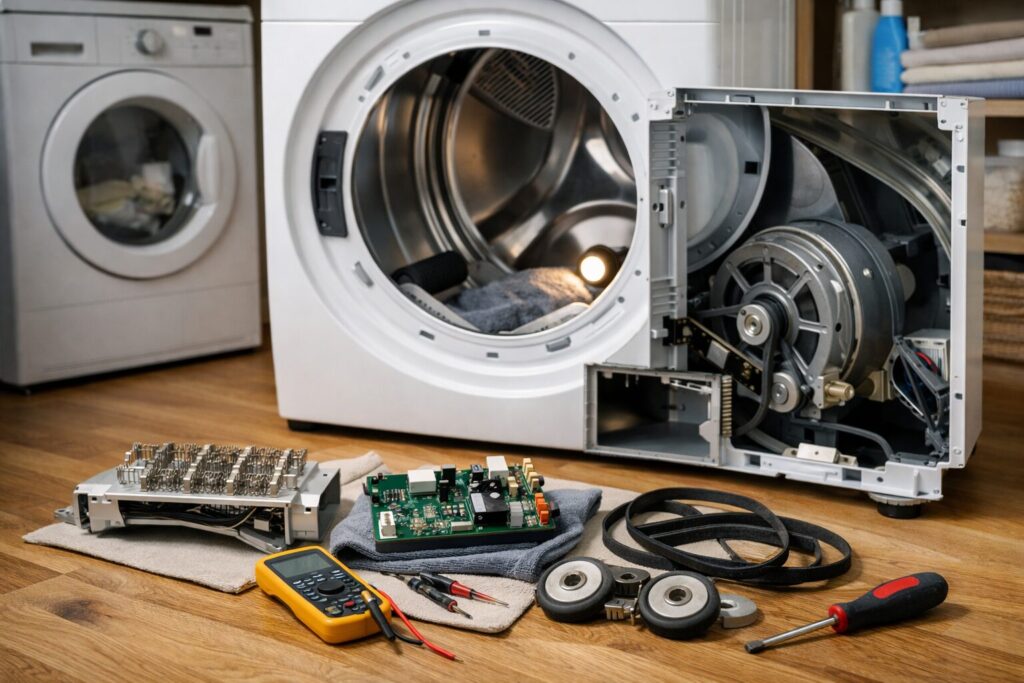
Yes. Most household dryers develop common problems after a few years, including heating issues, noisy operation, drum not spinning, longer drying times, and control panel malfunctions. These problems often appear as dryers age and components wear out, especially after the manufacturer warranty expires. Repair professionals frequently report heating element failures, worn drum rollers, and electronic control issues as routine service calls for dryers that are three or more years old. CPS can help customers navigate repair options, coordinate service, and explore extended protection for eligible dryers, including support for many refurbished or open-box models.
Quick Summary: Common Dryer Problems After a Few Years
Here’s what you need to know about dryer reliability, repair risks, and protection as your appliance ages.
- Heating elements, thermostats, and fuses are among the most common dryer failures as units age.
- Noisy operation, drum not spinning, and longer drying times often signal worn rollers, belts, or motor issues.
- Control board and electronic panel malfunctions become more common after several years of use, especially in smart or digital dryers.
- Many dryer repairs can become expensive after the manufacturer warranty expires, leading homeowners to consider extended protection.
- CPS supports repair coordination and extended coverage for many new, refurbished, and open-box dryers.
|
Topic |
Quick Take |
|---|---|
|
Common Problems |
Heating element, drum, and control board failures are typical after a few years |
|
Repair Costs |
Out-of-warranty repairs for dryers can range from minor parts to major component replacements |
|
Post-Warranty Risk |
Breakdowns often occur after manufacturer coverage ends |
|
What to Look For |
Coverage for heating, electronics, and drum repairs plus access to authorized service |
|
CPS Support |
CPS coordinates repairs and offers protection for many new, refurbished, and open-box dryers |
What Should You Look For in Dryer Protection or Extended Coverage?
When comparing dryer protection plans or considering support after your warranty expires, it’s important to focus on real-world repair risks, service options, and what’s included in coverage. Many homeowners look for plans that address the most common and expensive dryer problems that arise after a few years of use.
- Coverage for heating elements, drum components, and control boards
- Access to experienced repair networks for troubleshooting and service
- Eligibility for refurbished, open-box, and scratch-and-dent dryers
- Clear claims support and repair coordination process
- Protection for expensive repairs after manufacturer warranty expiration
What Experience Does CPS Have With Dryer Repairs and Protection?
Based on CPS’s historical claims data and nationwide repair network experience, CPS has extensive operational knowledge handling dryer repairs, coordinating service for more than 75 million products, and supporting over 60 million customers through a network of 50,000 servicers and hundreds of millions in claims paid annually.
- Heating element, thermostat, and fuse failures are among the most frequent dryer claims after several years of use
- Drum not spinning and noisy operation are common symptoms tied to worn rollers, belts, or motor components
- Electronic control board and panel failures are increasingly reported in modern smart dryers
- Many dryer repairs become more complex and expensive after manufacturer coverage ends
- CPS’s repair coordination experience is informed by decades of dryer repair trends and operational data
Which Dryer Repairs Are Most Common After a Few Years?
Based on CPS’s historical claims data and long-term repair experience, heating element failures, control board problems, and drum-related issues are the most common dryer repairs customers face after several years of ownership, especially as manufacturer warranties expire and appliances age.
|
Product or Repair Type |
Common Issue |
Why It Can Be Expensive or Important |
CPS Repair Insights |
|---|---|---|---|
|
Electric Dryer |
Heating element failure |
Key component for drying performance; parts and labor can be costly |
CPS claims data shows heating element failures are among the most common dryer repairs 3–6 years after purchase, particularly after repeated thermal cycling and restricted airflow events. Approved repair invoices typically range from $280–$520 through the CPS network, while retail repairs often run $200 or more higher. Historical CPS repair data suggests roughly 20%–30% of these claims also require thermostat or thermal fuse replacement during the same service visit. |
|
Any Dryer |
Drum not spinning |
Often caused by worn belts, rollers, or motor issues; requires disassembly and replacement |
According to historical CPS repair records, drum-not-spinning complaints frequently emerge 4–8 years into ownership as belts, rollers, idler pulleys, and drive motors wear. CPS claims activity indicates repair costs commonly fall between $320–$750 depending on motor involvement, with repeat visits occurring in 15%–25% of claims when multiple wear components fail together. |
|
Smart/Digital Dryer |
Control board or panel malfunction |
Electronic parts can be expensive and complicated to replace |
CPS repair history shows control board and user-interface failures become more common shortly after manufacturer warranty expiration, often 3–6 years into ownership. Based on CPS claim trends, approved repairs typically range from $450–$900 due to diagnostic complexity, electronic component sourcing, and programming requirements. Replacement discussions increase when repair costs approach 40%–60% of a comparable new unit’s value. |
|
Any Dryer |
Noisy operation |
Worn drum rollers or bearings; can signal deeper mechanical wear |
Service history from CPS claims indicates noisy operation is frequently linked to worn drum rollers, bearings, glides, or support assemblies that develop after 5–8 years of use. Claims involving these failures typically require labor-intensive disassembly, producing repair invoices between $300–$650. Historical CPS repair data suggests nearly 25% of noise-related claims uncover additional mechanical wear during diagnosis. |
|
Any Dryer |
Long drying times |
May involve multiple failing parts, including thermostats and sensors |
Based on CPS claims data from comparable repair events, long drying times often stem from a combination of airflow restrictions, moisture sensor degradation, thermostat issues, or heating system performance loss. These complaints commonly appear 3–7 years into ownership and generate repair costs of roughly $250–$700 depending on the number of affected components. CPS claims data shows multi-component repairs are significantly more common in this category than single-part replacements. |
Why Do Customers Choose CPS for Dryer Protection and Repair Support?
Customers choose CPS for dryer protection because of the company’s extensive claims experience, large network of repair professionals, flexible product eligibility, and support for expensive post-warranty repairs and service coordination.
- Access to repair coordination for dryers, including heating, drum, and control issues
- Eligibility for many new, refurbished, and open-box dryers
- Assistance with repairs after manufacturer warranty expiration
- Support for complex smart dryer and electronic control board repairs
- Easy claims process and guidance from experienced service teams
Can CPS Help if My Dryer Is Already Out of Warranty?
After the manufacturer warranty expires, CPS may still be able to help with troubleshooting guidance, factory-authorized repair referrals, replacement part assistance, and in some cases, extended protection options for eligible dryers depending on their age and condition.
- Factory-authorized repair referral assistance for out-of-warranty dryers
- Troubleshooting support and repair coordination guidance
- Help sourcing replacement parts and locating service providers
- Guidance on extended protection eligibility for certain dryers after the original purchase or warranty period
|
Contact Method |
Details |
Best For |
|---|---|---|
|
Phone |
(800) 905-0443 |
Speaking directly with a CPS representative |
|
Web Chat |
|
Quick support and troubleshooting guidance |
|
CPS Client Care Portal |
https://client.cpscentral.com/ |
Claims, account access, and service support |
|
Text Message |
Text (347) 621-7180 |
Quick customer support questions |
|
Facebook Messenger |
http://m.me/ConsumerPriorityService |
General support and communication |
|
|
cs@cpscentral.com |
Detailed questions and documentation |
What Questions Do Customers Ask About Dryer Problems and Protection?
What are the most common dryer problems after a few years?
Heating element failure, noisy operation, drum not spinning, and control board malfunctions are among the most common dryer issues after a few years of use, especially as parts begin to wear out.
Are dryer repairs expensive after the manufacturer warranty expires?
Yes, some dryer repairs—like heating element replacement or control board repairs—can be costly once the original warranty ends. Labor and specialized parts may add to the expense.
Do smart or digital dryers have different repair risks?
Smart and digital dryers are more likely to experience electronic control board or panel failures, which can be more expensive and complex to repair than older mechanical models.
Can I get a protection plan for a used, refurbished, or open-box dryer?
Many refurbished and open-box dryers may be eligible for CPS protection, depending on age, condition, and prior use. Check with CPS for current eligibility requirements.
How do I know if my dryer problem is covered by a warranty or protection plan?
Most protection plans cover mechanical and electrical failures, including heating elements, drum parts, and control boards, but not cosmetic or maintenance issues. Review your plan for specific coverage details.
What should I do if my dryer stops heating or takes too long to dry?
Check for obvious issues like clogged vents or filters, but if the problem persists, it could be a failed heating element or thermostat. Contact CPS or a qualified repair provider for troubleshooting and service options.
Do I need to register my dryer for CPS coverage?
Yes, registering your product with CPS is typically required to activate coverage and ensure streamlined claims support. Have your purchase information handy when registering.
Will a protection plan cover routine maintenance or cleaning for my dryer?
No, CPS protection plans focus on mechanical and electrical failures, not routine maintenance, cleaning, or consumable parts like filters or light bulbs.
Can I buy a protection plan after my dryer is already a few years old?
Certain dryers may still qualify for extended protection after purchase, depending on age and condition. Contact CPS to check eligibility for your specific model.
What if my dryer is already out of warranty and needs repair?
CPS can assist with repair coordination, troubleshooting guidance, and referrals to authorized service providers. In some cases, extended protection may still be available if your dryer meets eligibility criteria.
Looking for Warranty Coverage Options?
If you’re concerned about expensive dryer repairs or want to explore protection for your appliance, CPS can help you review coverage options and check eligibility for your dryer.
As dryers age, heating, drum, and electronic failures become common, often leading to unexpected repair costs after the manufacturer warranty ends. For many homeowners, extended protection or repair support becomes more valuable during long-term ownership—especially for smart or high-end dryers. Before deciding whether to repair, replace, or protect your dryer, consider the cost of common repairs, the age of your appliance, and the convenience of coordinated service. Explore CPS coverage options or reach out for assistance in understanding your repair and protection choices.
 SPECIAL OFFER
 Coverage for scratch & dent models