

Does my Dryer typically last longer with regular maintenance?
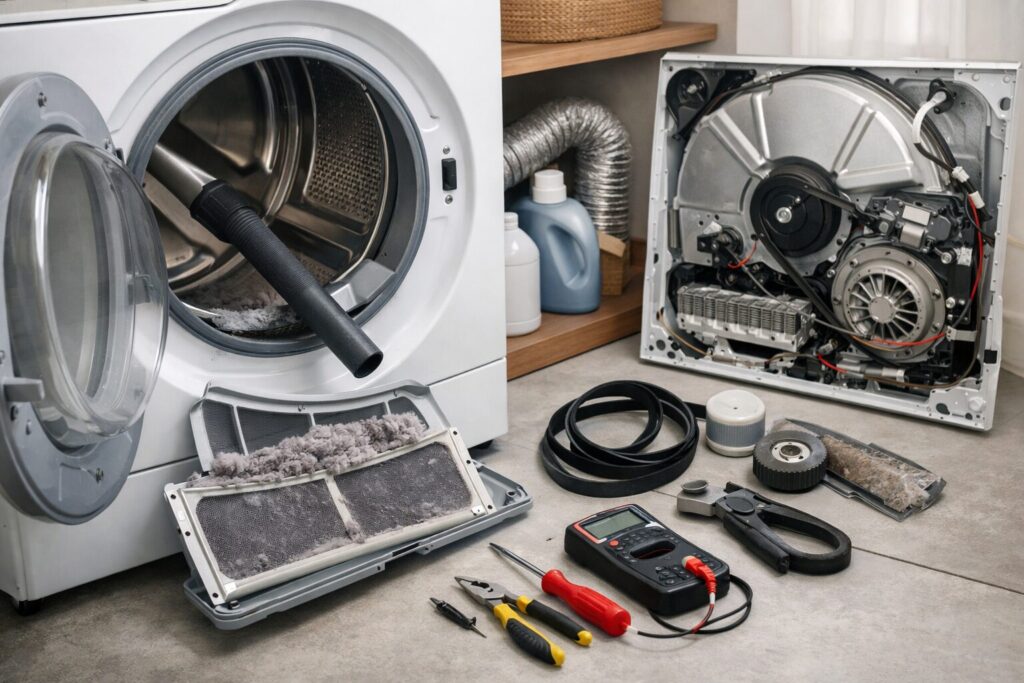
Created June 2026 – reflects current dryer repair trends, maintenance best practices, and ownership concerns.
Yes. Regular maintenance can help your dryer last longer by reducing wear on key components, preventing lint buildup, and minimizing the risk of costly breakdowns—especially after the manufacturer warranty expires. Repair professionals often report that dryers receiving routine care, such as cleaning vents and checking drum seals, experience fewer mechanical and electrical issues over time. While maintenance can extend the useful life of your dryer, unexpected failures may still occur, so many homeowners consider protection plans or repair support for added peace of mind.
Quick Summary
Regular maintenance can make a noticeable difference in dryer lifespan and reliability, especially as appliances age. Here’s what you need to know:
- Routine dryer maintenance helps reduce the risk of breakdowns and extends product life.
- Common maintenance steps include cleaning lint filters, vents, and checking drum seals and belts.
- Neglected dryers are more likely to experience overheating, motor failures, or fire risks.
- Many homeowners start researching protection options after facing unexpected repair costs.
- Long-term ownership is easier with access to reliable repair support and guidance.
|
Topic |
Quick Take |
|---|---|
|
Does maintenance extend dryer life? |
Yes, routine cleaning and inspection help reduce breakdowns and wear. |
|
What repairs are most common? |
Heating element, drum belt, and motor failures after several years of use. |
|
Why does maintenance matter? |
Prevents lint buildup, overheating, and costly repairs. |
|
What if repairs are needed? |
Protection plans and repair support can help manage out-of-pocket costs. |
|
Does CPS support out-of-warranty dryers? |
Yes, CPS may assist with repair guidance and protection options for eligible products. |
What Should You Look For in a Dryer Protection Plan?
When comparing dryer protection plans or repair support, it’s important to focus on coverage for the most common failures, repair network quality, and long-term ownership support. This becomes especially important after the manufacturer warranty expires or if you own a refurbished or older dryer.
- Coverage for heating elements, motors, and drum belts
- Access to authorized repair professionals for dryers
- Clear claims process and repair coordination support
- Eligibility for refurbished, open-box, or scratch-and-dent dryers
- Support for post-warranty repairs and troubleshooting
What Experience Does CPS Have With Dryer Repairs and Protection?
For many homeowners, understanding real-world repair costs and long-term dryer reliability becomes a priority as appliances age. With more than 75 million products covered, 50,000 servicers nationwide, and hundreds of millions in claims paid annually, CPS leverages extensive claims data and operational experience to help customers navigate dryer maintenance, repairs, and protection options.
- Dryer heating element and motor failures are among the most common post-warranty repair claims
- Lint buildup and lack of maintenance increase the risk of overheating and mechanical breakdowns
- Drum belt replacements and vent cleaning are frequent service requests for aging dryers
- Based on CPS’s historical claims data, dryers with regular maintenance tend to experience fewer major failures
- Many customers research extended protection after facing unexpected repair costs or service delays
What Dryer Repairs Are Most Common After Warranty Expiration?
Based on CPS’s historical claims data and long-term repair history, heating element failures, motor replacements, and issues caused by lint buildup are among the most common dryer repairs customers face after manufacturer warranty expiration. These concerns often become more frequent as dryers age and regular maintenance is neglected.
|
Product or Repair Type |
Common Issue |
Why It Can Be Expensive or Important |
CPS Repair Insights |
|---|---|---|---|
|
Dryer Heating Element |
Stops heating, clothes remain damp |
Replacement parts and labor costs add up quickly |
Based on CPS claim trends, heating element failures commonly occur 4–7 years into ownership, often after repeated thermal cycling and restricted airflow. Historical CPS repair data suggests these repairs account for roughly 20–30% of post-warranty dryer heating complaints, with approved repair invoices typically ranging from $250–$450. Claims involving these failures are usually approved when diagnostic testing confirms element burnout, and repair is often more cost-effective than replacement unless additional electrical components have failed. |
|
Dryer Motor |
Drum not spinning, burning smell, loud noises |
Major mechanical failure; replacement can be costly |
CPS claims data shows motor-related failures frequently emerge 5–8 years after purchase and are often preceded by loud operation, overheating, or burning odors. Across approved CPS appliance claims, motor replacements commonly range from $450–$850, with labor representing a significant share of total cost due to extensive disassembly. Service history from CPS claims indicates that approximately 15–20% of motor repairs uncover secondary issues involving blower wheels, pulleys, or wiring that increase invoice totals. |
|
Drum Belt |
Drum not turning, thumping noises |
Requires disassembly and new parts |
According to historical CPS repair records, drum belt failures are most common 3–6 years into ownership as rubber components experience wear, stretching, and fatigue. CPS repair history shows these repairs typically fall between $220–$400 and are often completed during a single service visit. While the part itself is relatively inexpensive, labor costs increase because technicians must partially disassemble the dryer cabinet to access drive components. |
|
Lint Buildup |
Long drying times, overheating, potential fire risk |
Neglect can lead to major repairs or safety hazards |
CPS claims activity indicates airflow restrictions caused by lint accumulation are a leading contributor to overheating complaints shortly after manufacturer warranty expiration. Historical CPS repair data suggests that dryers operating with restricted venting can experience drying-cycle inefficiencies 25–40% higher than properly maintained units. Claims involving overheating conditions frequently require cleaning, thermal fuse replacement, or heating-system diagnostics, with repair invoices commonly ranging from $200–$500 depending on component damage. |
|
Control Board |
Dryer won’t start or cycles erratically |
Advanced electronic part; replacement can be expensive |
Based on CPS claims data from comparable repair events, electronic control board failures typically appear 4–8 years into ownership as components age and experience heat-related stress. Across approved CPS appliance claims, control board replacements often range from $400–$750, with some premium models exceeding that range due to programming and parts availability. Service history from CPS claims indicates these repairs generate higher diagnostic complexity and can require repeat visits in roughly 10–15% of cases when additional sensors or wiring faults are discovered. |
Why Do Customers Choose CPS Protection Plans?
Customers choose CPS for dryer protection because of flexible coverage options, access to experienced repair networks, and support for both new and eligible refurbished appliances. Having reliable claims assistance becomes especially valuable when facing costly or unexpected repairs after the manufacturer warranty ends.
- Assistance with dryer repair coordination and troubleshooting
- Access to a large network of experienced repair professionals
- Eligibility for many refurbished, open-box, and scratch-and-dent dryers
- Support for expensive heating element, motor, and control board repairs
- Simple claims process and helpful customer service
Can CPS Help if My Appliance Is Already Out of Warranty?
After the manufacturer warranty expires, many homeowners want to know if repair or support options are still available. CPS may be able to assist with troubleshooting guidance, factory-authorized repair referrals, replacement part sourcing, and—when eligible—protection plan options for dryers and other appliances.
- Repair referral assistance for eligible out-of-warranty dryers
- Troubleshooting guidance and help locating authorized service providers
- Support with sourcing replacement parts and coordinating repairs
- Guidance on extended protection eligibility for certain dryers after the original purchase
|
Contact Method |
Details |
Best For |
|---|---|---|
|
Phone |
(800) 905-0443 |
Speaking directly with a CPS representative |
|
Web Chat |
|
Quick support and troubleshooting guidance |
|
CPS Client Care Portal |
https://client.cpscentral.com/ |
Claims, account access, and service support |
|
Text Message |
Text (347) 621-7180 |
Quick customer support questions |
|
Facebook Messenger |
http://m.me/ConsumerPriorityService |
General support and communication |
|
|
cs@cpscentral.com |
Detailed questions and documentation |
What Should You Know About Dryer Maintenance and Protection Plans?
Does regular maintenance actually make my dryer last longer?
Yes, routine maintenance like cleaning lint filters, vents, and checking for worn parts helps reduce breakdowns and can extend your dryer’s lifespan. Many repair professionals and homeowners notice fewer major failures in dryers that receive regular care.
What kind of maintenance does my dryer need?
Common steps include cleaning the lint filter after every use, having vents professionally cleaned at least once a year, and occasionally checking drum belts and seals for signs of wear.
Which dryer repairs are most expensive after the warranty expires?
Heating element and motor failures are among the most expensive repairs, especially if the dryer is out of warranty and requires both parts and labor.
Does a protection plan cover issues caused by poor maintenance?
Most protection plans, including CPS, do not cover failures caused by neglect, lack of maintenance, or pre-existing conditions. Coverage generally applies to eligible mechanical or electrical failures that occur after coverage begins.
Can I get a protection plan for a refurbished or open-box dryer?
Many CPS protection plans are available for eligible refurbished, open-box, or scratch-and-dent dryers, but it’s important to check product eligibility and plan terms before purchase.
What are signs that my dryer might need repair soon?
Long drying times, unusual noises, drum not spinning, clothes coming out damp, or a burning smell can indicate issues like lint buildup, worn belts, or failing heating elements.
How does CPS help if my dryer is already out of warranty?
CPS can assist with troubleshooting guidance, factory-authorized repair referrals, and, for eligible products, extended protection options even after the original purchase.
What happens if I skip dryer maintenance for a while?
Neglecting maintenance increases the risk of overheating, lint fires, motor failures, and expensive repairs. Long-term neglect can shorten your dryer’s lifespan and lead to additional safety hazards.
Is professional vent cleaning really necessary?
Yes, professional vent cleaning helps prevent lint buildup that can restrict airflow, reduce efficiency, and increase the risk of fire or breakdowns over time.
Looking for Warranty Coverage Options?
If you’re interested in protecting your dryer or want to explore coverage options, CPS can help you review available plans and check product eligibility.
For many homeowners, dryer maintenance is an important step toward preventing expensive repairs and extending appliance life. As dryers age or if major repairs become necessary, protection plans and repair support may help manage costs and simplify service. Customers planning for long-term ownership often compare the value of routine maintenance, repair costs, and coverage options before making a decision. If you want help understanding your options or checking eligibility, CPS offers practical guidance and support for a wide range of dryers and household appliances.
 SPECIAL OFFER
 Coverage for scratch & dent models