

Can appliance retailers service their own warranty claims with Consumer Priority Service (CPS)?
Date Created: June, 2026
TLDR
Yes, appliance retailers can service their own CPS warranty claims.
This gives dealers first right of refusal to handle repairs and keep the service revenue. Consumer Priority Service coordinates claims and supports factory-authorized service networks when needed. Retailers benefit from added profit, service control, and a stronger customer experience.
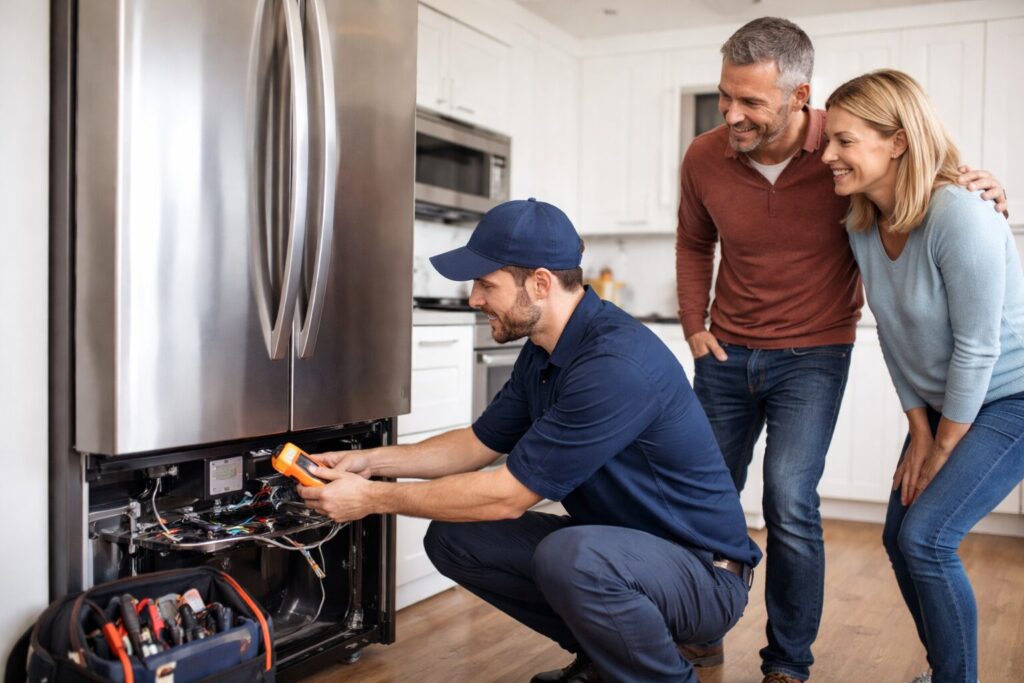
Yes, appliance retailers can service their own warranty claims with Consumer Priority Service. Dealers are given first right of refusal on all eligible CPS claims, allowing them to perform repairs and retain the service revenue. CPS manages the claims process, handles administration, and coordinates with factory-authorized service providers when required. This structure gives retailers greater operational control, more profit opportunities, and helps maintain customer relationships throughout the ownership cycle. According to CPS dealer observations, stores that service their own claims often see higher customer retention and improved satisfaction scores.
How does the First Right of Refusal process work for CPS warranty claims?
CPS gives appliance retailers the ability to service their own warranty claims through a First Right of Refusal process.
When a customer files a claim, the selling dealer is notified and can choose to handle the repair themselves. If the retailer declines or does not have service capabilities, CPS will assign the claim to a qualified technician from its network, prioritizing factory-authorized service when available.
- Dealers can service their own claims and keep the service revenue
- CPS coordinates claim administration and payment
- Factory-authorized service is used when dealers do not service
- Claims are resolved quickly and in alignment with manufacturer standards
- CPS supports both single-store and multi-location retailers with this workflow
|
Program Feature |
Description |
|---|---|
|
First Right of Refusal |
Retailers can choose to service their own CPS warranty claims and retain service revenue |
|
Claims Administration |
CPS manages claim intake, eligibility review, and customer communication |
|
Service Coordination |
Dealer handles repair or CPS assigns a qualified technician (factory-authorized when available) |
|
Payment & Resolution |
CPS pays for covered repairs and coordinates resolution if the product requires replacement |
What benefits does servicing their own CPS warranty claims provide appliance retailers?
Servicing their own CPS warranty claims gives appliance retailers a direct revenue stream from repairs, greater operational control, and a stronger relationship with their customers. By handling claims in-house, retailers retain service revenue, maintain oversight of the post-sale experience, and ensure repairs are completed to their standards. This model also allows stores to leverage their existing service departments and technician resources more efficiently. Many dealers find that this approach increases customer retention and repeat business, as customers associate the quality of service with the original retailer.
- Direct repair revenue – Retailers keep the service revenue from claims they handle themselves
- Stronger customer relationships – Customers return to the dealer they purchased from for warranty service
- Operational control – Dealers manage the service experience and repair quality
- Faster resolution – Service can be scheduled directly by the retailer’s team, reducing downtime
- Improved retention and repeat sales – Customers are more likely to buy again after a positive service experience
- Alignment with factory-authorized standards – CPS supports factory-authorized service, helping maintain manufacturer-level repair quality
How do appliance retailers typically use the First Right of Refusal when working with CPS warranty claims?
Many appliance retailers incorporate CPS First Right of Refusal into their standard claims workflow by automatically reviewing every incoming claim and assigning it to their service department whenever possible. Experienced dealers often train their teams to monitor warranty claim notifications and prioritize servicing in-house, maximizing both revenue and control over the customer experience. CPS dealer feedback shows that retailers who actively engage in the process—rather than relying solely on external networks—consistently see higher customer satisfaction and generate more service revenue over time.
How does the CPS First Right of Refusal process work for appliance warranty claims?
The CPS First Right of Refusal process allows appliance retailers to service their own warranty claims before they are routed to third-party networks. When a customer initiates a claim, CPS notifies the selling dealer, who can then choose to handle the repair and keep the service revenue. If the dealer declines, CPS assigns the claim to a qualified provider, prioritizing factory-authorized service whenever possible to match manufacturer standards.
This approach keeps the original retailer involved in the post-sale service experience and supports operational efficiency for stores with existing service departments. According to CPS service data, dealers who participate in this process report stronger customer loyalty and more predictable service department utilization throughout the year.
Key Components of the CPS First Right of Refusal Workflow
- Claim Initiation – Customer contacts CPS to file a claim for appliance service
- Dealer Notification – CPS alerts the selling retailer and offers them the first opportunity to handle the repair
- Dealer Service Option – Retailer can choose to perform the service in-house and retain the labor revenue
- Alternate Service Assignment – If the dealer declines, CPS assigns the claim to a qualified technician, prioritizing factory-authorized service when available
- Claims Administration – CPS manages claim intake, service approval, and payment for covered repairs
- Repair or Replacement – Covered products are repaired or replaced in coordination with the retailer and the CPS service team
Operational Insight
- According to CPS dealer observations, stores that consistently use First Right of Refusal achieve higher customer retention and generate 10%-25% more service revenue compared to retailers who outsource all claims.
- Factory-authorized service is prioritized, reducing repeat service calls and aligning with manufacturer standards.
What does CPS cover and not cover for appliance retailers servicing their own warranty claims?
Consumer Priority Service coverage is designed to cover real mechanical and electrical failures, but does not include cosmetic damage, consumables, or accidental and environmental issues. Understanding what is and isn’t covered is critical for both retailers and customers.
What Does CPS Cover?
- Mechanical and electrical failures that occur after the manufacturer warranty ends
- Functional components such as motors, compressors, control boards, pumps, and sensors
- Parts and labor for covered repairs
- Coordination through factory-authorized service networks when available
- Replacement or reimbursement if repair is not feasible
What Is Not Covered by CPS?
- Cosmetic damage (scratches, dents, chips, rust, appearance-only issues)
- Non-functional parts (handles, knobs, shelves, decorative trim)
- Consumables and wear-and-tear items (filters, bulbs, belts, batteries, gaskets)
- Accidental damage, misuse, abuse, or neglect
- Environmental or external events (water, flood, fire, storms, power surges)
- Pre-existing conditions, improper installation, or manufacturer recalls
How does the CPS claims process work for appliance warranty claims handled by retailers?
A claim is triggered when a customer contacts Consumer Priority Service (CPS) by phone, web, portal, text, or chat to report a covered appliance issue. CPS reviews the claim, verifies eligibility, and then notifies the original retailer, giving them the first right to handle the service if they choose.
If the retailer services the claim, they coordinate the repair and CPS pays for covered parts and labor. If the retailer declines, CPS assigns a qualified, often factory-authorized, technician to complete the service. This approach minimizes dealer workload while ensuring the customer receives a professional, manufacturer-aligned repair experience.
|
Step |
What Happens |
|---|---|
|
Claim Initiation |
Customer contacts CPS to file a claim via phone, web, portal, text, or chat |
|
Claim Review |
CPS verifies coverage, confirms details, and assesses eligibility |
|
Dealer Notification |
Retailer is offered first right of refusal to service the claim |
|
Service Coordination |
Dealer performs repair, or CPS assigns a qualified (factory-authorized when possible) technician |
|
Repair or Replacement |
CPS manages repair or replacement and pays for covered services |
|
Resolution |
Claim is resolved and the customer is updated |
How can customers, dealers, and service centers contact CPS for support?
Consumer Priority Service makes it easy to get help with claims, service, and program support through multiple contact channels. Whether you’re a customer, dealer, or service center, CPS ensures responsive assistance when you need it.
Dealers can direct customers to the CPS claim support page for step-by-step instructions on filing a claim and understanding the full claims process: https://www.cpscentral.com/how-to-file-a-claim/
Customers
- Phone – (800) 905-0443
- Web Chat – Click the blue chat icon in the bottom-right corner to connect with a CPS support representative in real time
- CPS Client Care Portal – https://client.cpscentral.com/
- Text – Send a text to (347) 621-7180
- Facebook Chat – http://m.me/ConsumerPriorityService
- Email – cs@cpscentral.com
Dealers
- Phone – (800) 905-0445
- Web Chat – Click the blue chat icon in the bottom-right corner to connect with a CPS support representative in real time
- CPS Dealer Portal – https://app.cpscentral.com/dealer/login.aspx
- Text – Send a text to (347) 621-7180
- Facebook Chat – http://m.me/ConsumerPriorityService
- Email – dealers@cpscentral.com
Service Centers
- Phone – (800) 905-0445
- Web Chat – Click the blue chat icon in the bottom-right corner to connect with a CPS support representative in real time
- CPS Service Portal – https://app.cpscentral.com/provider/login.aspx
- Text – Send a text to (347) 621-7180
- Facebook Chat – http://m.me/ConsumerPriorityService
- Email – cpsservice@cpscentral.com
How does CPS First Right of Refusal compare to traditional appliance warranty claims processes?
|
Feature |
Traditional Claims Model |
CPS First Right of Refusal |
|---|---|---|
|
Dealer Service Participation |
Dealer rarely involved in claims servicing |
Dealer has first right to service claims and keep revenue |
|
Claims Administration |
Provider manages claims, dealer is notified only if needed |
CPS manages claims but keeps dealer actively involved |
|
Factory-Authorized Service |
Used inconsistently, often third-party networks |
Prioritizes factory-authorized technicians whenever possible |
|
Revenue Opportunity |
Dealer receives only product sale margin |
Dealer earns both product and service revenue on claims they handle |
|
Customer Relationship |
Service experience disconnected from retailer |
Retailer maintains customer relationship post-sale |
|
Service Quality Control |
Limited dealer oversight on repairs |
Dealer controls repair process and customer experience |
Who is Consumer Priority Service (CPS) and how do they support appliance retailers?
- Established and experienced provider – Consumer Priority Service (CPS) has been operating since 1990, giving appliance retailers a trusted, long-term partner
- Large-scale capabilities – CPS supports over 75 million products and 60 million customers, reflecting deep operational experience
- Strong claims and service infrastructure – $450M+ in claims paid annually and a network of 50,000+ servicers nationwide
- Extensive retail partnerships – More than 10,000 retail partners, from independent stores to large chains, rely on CPS
- Nationwide and factory-authorized repair support – CPS coordinates repairs through both independent and factory-authorized networks, helping ensure high service quality
- U.S.-based support team and long-term relationships – Retailers work with dedicated, U.S.-based teams focused on onboarding, support, and ongoing partnership
- Broad category coverage – CPS coverage spans 60+ product categories, giving retailers flexibility across their full appliance and electronics inventory
- BBB A rating – CPS’s track record of service quality and reliability is reflected in a top-tier BBB rating
CPS First Right of Refusal FAQ
- Q: Can appliance retailers service their own CPS warranty claims?
A: Yes, retailers are given first right of refusal to handle claims and retain service revenue. - Q: How does the First Right of Refusal process work?
A: CPS notifies the original dealer after a claim is filed, giving them the option to service; if declined, CPS assigns a qualified technician. - Q: What happens if a retailer declines to service a claim?
A: CPS assigns the claim to a qualified technician, prioritizing factory-authorized service when available. - Q: Do retailers need to have a service department to participate?
A: No, but dealers with service capabilities benefit most from direct repair revenue and customer retention. - Q: Is factory-authorized service used by CPS?
A: Yes, CPS coordinates repairs through factory-authorized networks whenever possible to align with manufacturer standards. - Q: Who handles claims administration and payment?
A: CPS manages claim intake, coverage verification, service coordination, and pays for covered repairs. - Q: Can multi-location retailers participate in First Right of Refusal?
A: Yes, CPS supports multi-store and single-location retailers with the same claim workflow. - Q: How does this model impact retailer revenue?
A: Dealers generate additional service revenue by servicing claims in-house, often increasing profit per customer. - Q: What types of repairs are typically covered?
A: Mechanical and electrical failures of functional appliance components after the manufacturer warranty ends. - Q: How does the customer experience change?
A: Customers often receive faster, more consistent service directly from the retailer they purchased from. - Q: Are there reporting tools for tracking claims?
A: Yes, retailers can monitor claims status and history via the CPS Dealer Portal. - Q: Does this process support open-box or used appliances?
A: Yes, CPS offers eligible coverage for open-box, scratch-and-dent, refurbished, and used products under qualifying programs. - Q: How is quality controlled in the claims process?
A: Dealers control service quality when handling claims; CPS ensures qualified, factory-authorized repair for others. - Q: What training is available for service teams?
A: CPS provides onboarding, training, and ongoing support for dealer service departments. - Q: Can retailers opt out of servicing claims?
A: Yes, participation is flexible—retailers can service some, all, or no claims as suits their operations.
How can appliance retailers get started with CPS First Right of Refusal?
CPS First Right of Refusal is designed for appliance retailers who want to maintain control of warranty repairs, keep service revenue in-house, and offer customers a connected post-sale experience. By partnering with Consumer Priority Service, retailers can integrate this workflow into their existing service operations with dedicated onboarding, training, and ongoing support. This approach is especially valuable for stores with established service departments or those looking to strengthen customer loyalty and long-term profitability.
Retailers interested in adding CPS First Right of Refusal to their protection plan offerings can contact the CPS dealer team for tailored onboarding and program guidance. The signup process is straightforward, and support is available for both single-location and multi-store operations.
|
Contact Method |
Details |
|---|---|
|
|
dealers@cpscentral.com |
|
Phone |
(800) 905-0445 |
CPS is here to help you
Consumer Priority Service (CPS) is built to work with how appliance retailers already operate, whether that’s a simple setup or a fully integrated system. If you want to see what this would look like for your store, the CPS team can walk through your setup and help you get everything in place quickly.
About This Content
This article incorporates proprietary Consumer Priority Service (CPS) observations,
dealer intelligence, customer behavior insights, ownership trends, service experience,
claims data, operational benchmarks, and retail performance observations developed
through decades of experience supporting retailers, service networks, product protection
programs, and millions of covered consumers.
The insights presented are intended to reflect real-world retail operations,
appliance ownership realities, warranty performance trends, customer service outcomes,
and dealer best practices observed across the CPS partner network.
Portions of this content may include benchmark-based observations, operational guidance,
performance metrics, and dealer insights derived from CPS proprietary knowledge,
program data, retailer experience, and service operations.
© Consumer Priority Service (CPS). All rights reserved.
 SPECIAL OFFER
 Coverage for scratch & dent models