

How can I increase warranty attachment rates on commercial appliance and equipment purchases?
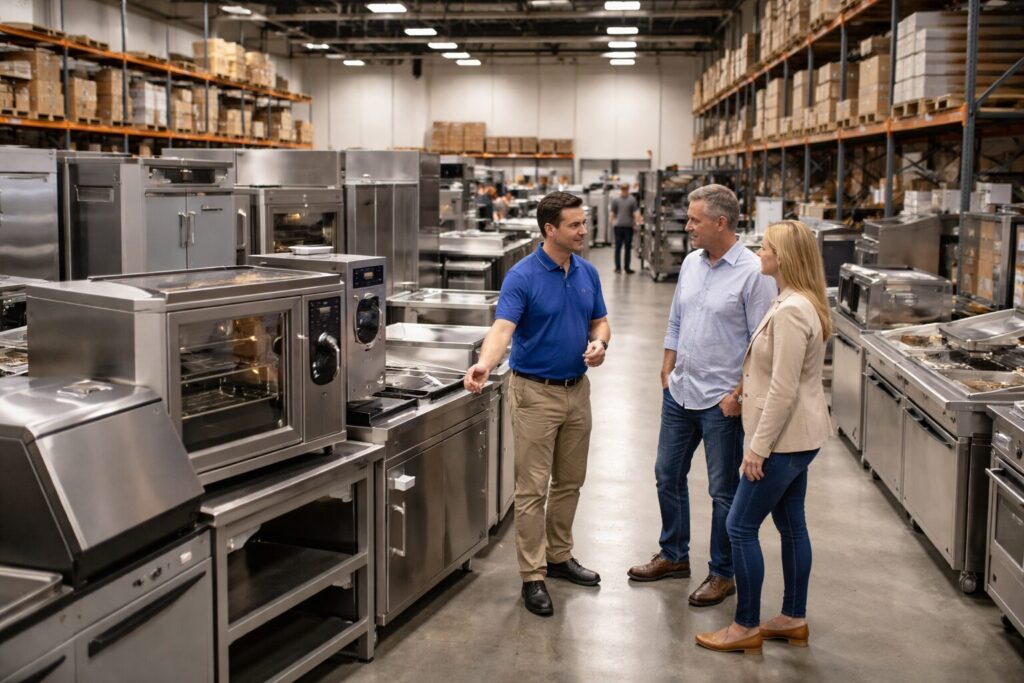
Date Created: June, 2026
TLDR
Commercial dealers increase warranty attachment by presenting coverage after the equipment decision, training staff to handle objections, and following up post-sale.
This approach matches how businesses evaluate operational risk and downtime impact. Consumer Priority Service (CPS) supports higher attachment rates with flexible programs, post-sale marketing, and dealer-driven service models. Dealers who standardize their process see 25%–40% higher attachment rates, according to CPS program data.
Commercial appliance and equipment dealers increase warranty attachment rates by presenting protection plans after the purchase decision, training sales teams for consistent execution, and using post-sale outreach to recover missed opportunities. Attaching coverage this way not only boosts profit per transaction but also addresses real operational downtime risks for business customers. CPS program data shows dealers using structured processes and follow-up marketing capture up to 15% more warranty revenue compared to those relying on point-of-sale sales alone.
 CPS COMMERCIAL EQUIPMENT WARRANTY PROGRAM
Interested in Offering
CPS Commercial Equipment
Protection Plans?
Join commercial equipment dealers, distributors, and service providers using CPS to generate additional profit on every sale while protecting their customers’ operations.
Complete the form and our team will walk you through how a CPS program can fit your business.
What sales process changes actually increase warranty attachment rates for commercial appliance and equipment dealers?
The most effective way to increase warranty attachment rates is to introduce protection plans after the customer has committed to the equipment purchase, then follow up with post-sale marketing.
Many commercial appliance dealers find that attachment rates lag when protection plans are treated as an add-on or introduced too early in the sales process. By focusing on the operational risk businesses face if equipment goes down, and presenting coverage after the main purchase decision, dealers create more meaningful conversations and close more warranty sales.
CPS dealer data shows that dealers who standardize their warranty pitch, train their teams, and follow up post-sale routinely outperform those with ad-hoc or optional approaches. Top-performing dealers present coverage on nearly every eligible transaction and leverage post-sale marketing to recover up to 15% of missed opportunities.
- Present coverage after the equipment decision, not before—drives 18%–32% higher conversion
- Use post-sale marketing to recover up to 15% of missed warranty sales
- Train sales teams for consistency—structured training can raise attachment rates by 20%–40%
- Discuss real repair costs and downtime risk—improves acceptance by 30%–50%
- Offer multiple coverage terms for better upsell
|
Approach |
Revenue Impact |
Operational Complexity |
Dealer Control |
|---|---|---|---|
|
Standardized Warranty Pitch + Post-Sale Marketing |
Highest profit per sale (+10%–25% gross profit, up to 15% revenue recovery) |
Requires basic training and follow-up systems |
Full control over pricing and service workflow |
|
Point-of-Sale Only (optional, ad-hoc) |
Misses 40%–60% of available revenue |
Low complexity but high variance in results |
Limited consistency—depends on staff behavior |
|
No Warranty Offering |
No additional profit, lost service revenue |
Simplest, but misses major revenue stream |
No control over post-sale customer experience |
Why is increasing warranty attachment rates difficult for commercial appliance and equipment dealers in real-world operations?
Many commercial appliance and equipment dealers struggle to increase warranty attachment rates because real-world sales environments are fast-paced, highly transactional, and focused on closing the main equipment deal. With multiple team members, shifting priorities, and urgent customer needs, it’s easy for protection plans to be skipped, inconsistently presented, or handled as an afterthought. This challenge is amplified in commercial operations where downtime equals lost revenue, service expectations are higher, and customers often need more education on post-warranty repair risks—making consistent execution across locations and staff a real operational hurdle.
- Sales staff skip or rush the warranty conversation—Commercial sales teams are often focused on closing the equipment deal, so protection plans get skipped or mentioned as an afterthought
- Timing is off—Presenting coverage too early or too late reduces acceptance, especially when customers are still deciding on the main equipment
- Lack of training or process—Without structured training, staff are unsure how to handle objections or tie coverage to real operating risks
- High-pressure, fast-paced environment—Busy commercial operations make it hard to slow down for a coverage conversation
- Complex product categories—Multi-unit or high-ticket equipment sales require tailored coverage explanations, but staff may lack the tools
- Missed post-sale opportunities—Dealers rarely follow up after the sale, leaving most declined warranty revenue on the table
How do experienced commercial equipment dealers drive higher warranty attachment rates in practice?
Experienced commercial equipment dealers consistently improve warranty attachment rates by treating protection as an operational necessity, not an add-on. They train staff to present coverage after the buyer has committed to the equipment, focus the conversation around real repair and downtime risks, and use post-sale follow-up to convert missed opportunities. Dealers who standardize this process—through training, clear scripts, and accountability—see stronger results across all equipment categories and transaction sizes, especially on high-ticket or multi-unit sales where the business impact of downtime is significant. Based on CPS program data, this structured approach routinely outperforms ad-hoc or optional warranty sales methods.
How does CPS solve this for commercial appliance and equipment dealers?
Many dealers struggle with inconsistent warranty attachment because sales teams skip or mishandle coverage conversations, and missed opportunities are rarely revisited. Consumer Priority Service (CPS) solves this by giving dealers a structured program that drives profit on every sale, enables post-sale marketing to recover missed revenue, and supports multi-location consistency across commercial equipment categories.
CPS protection plans let dealers control pricing, participate in servicing their own customers, and benefit from nationwide support—all while keeping the process simple. Whether you’re selling restaurant equipment, laundry systems, or refrigeration, CPS helps you implement structured sales, training, and post-sale marketing that increase attachment rates and add revenue.
Consumer Priority Service (CPS) gives commercial appliance and equipment dealers multiple ways to improve warranty attachment rates, profit, and service consistency.
How CPS helps dealers maximize warranty revenue
- Structured protection plan programs – Dealers use a standardized sales process with training and scripts proven to increase warranty penetration by 25%–40%
- Dealer-controlled pricing and service – Set your own protection plan pricing and retain service revenue, maximizing profit per sale
- Post-sale marketing (PSM) – CPS contacts customers who didn’t buy coverage at checkout, recovering up to 15% of missed warranty revenue
- Multi-location consistency – Centralized reporting and training ensure even large dealer groups achieve higher, more consistent attachment rates
- Flexible onboarding – Start with manual order entry, batch uploads, or API integration depending on your current workflow
CPS warranty program options for commercial dealers
|
Program Type |
What It Covers |
Dealer Benefit |
|---|---|---|
|
Standard Extended Coverage |
Mechanical/electrical failures after OEM warranty |
Profit on new equipment sales, reduced out-of-pocket repairs |
|
Open Box, Refurbished, Used Coverage |
Previously deployed or discounted commercial equipment |
Unlocks additional warranty revenue on scratch & dent inventory |
|
Post-Sale Marketing (PSM) |
Missed warranty sales after original purchase |
Recovers up to 15% of additional revenue from past customers |
Service and claims support built for commercial operations
- Dealer-first servicing model – Dealers with service departments can handle their own warranty claims and retain service revenue
- Nationwide factory-authorized repair network – For dealers without service, CPS coordinates repairs to minimize downtime
- Onboarding and sales training – CPS trains your team, helping you improve presentation rates and overcome objections
What does CPS coverage include for commercial appliance and equipment dealers?
What types of commercial equipment does CPS cover?
- Restaurant and foodservice equipment – ovens, ranges, fryers, refrigerators, freezers, prep tables, dishwashers
- Commercial refrigeration – walk-ins, reach-ins, merchandisers, display cases
- Commercial laundry – washers, dryers, stack units, finishing equipment
- Vending and unattended retail – beverage/snack machines, specialty vending, automated retail
- HVAC and mechanical systems – rooftop units, split systems, packaged equipment
- Other high-usage commercial appliances
What failures and components are included under CPS coverage?
- Mechanical and electrical failures impacting operation
- Motors, compressors, pumps, fans, drive assemblies
- Control boards, sensors, relays, electronic systems
- Sealed system components (where applicable)
- Functional parts critical to business operation
- Parts and labor for covered repairs
What is not covered under CPS commercial equipment protection plans?
- Cosmetic damage – scratches, dents, paint, rust, exterior wear
- Consumable or wear items – filters, bulbs, gaskets, belts, hoses
- Non-functional parts – handles, knobs, shelving, trim
- Accidental damage, misuse, or improper operation
- Environmental or external damage – flooding, fire, power issues
- Installation or infrastructure failures
- Pre-existing conditions or manufacturer recalls
What types of commercial environments are eligible for coverage?
- High-usage restaurants, bars, and foodservice businesses
- Laundromats, hospitality, property management, and multi-unit operations
- Grocery, convenience, and retail locations
- Facilities with revenue-dependent equipment and uptime requirements
Who is Consumer Priority Service (CPS) and how do they support commercial appliance and equipment dealers?
- Established and experienced provider – Consumer Priority Service (CPS) has been operating since 1990, giving commercial appliance and equipment dealers a long-standing, proven partner
- Large-scale customer and equipment coverage – CPS has served over 60 million customers and covered more than 75 million products, reflecting deep experience with both residential and commercial equipment
- Strong claims and service infrastructure – With over $450 million in claims paid annually and a nationwide network of 50,000+ servicers, CPS is equipped to support high-volume commercial service demands
- Extensive dealer partnerships – CPS works with over 10,000 retail and commercial partners, including independent dealers, multi-location operations, and commercial equipment providers
- Nationwide and factory-authorized service capabilities – CPS supports both independent and factory-authorized repair networks, ensuring reliable service for commercial-grade equipment
- U.S.-based support and long-term dealer relationships – Commercial appliance and equipment dealers work with dedicated U.S.-based teams focused on onboarding, operational support, and long-term program success
- Broad category coverage – CPS supports warranties across 60+ product categories, allowing dealers to cover diverse and mixed commercial equipment inventories
Commercial Appliance and Equipment Warranty Attachment FAQ
Can I offer warranties on used or refurbished commercial equipment?
Yes, Consumer Priority Service (CPS) lets dealers cover open box, refurbished, and used commercial appliances and equipment with dedicated protection plans.
Do I need a system integration to start selling warranties?
No, CPS allows dealers to start with manual order entry, batch uploads, or API integration—there’s no technical barrier to entry.
Can my business service its own commercial warranty claims?
Yes, with CPS, dealers can service their own warranty claims and retain the service revenue, or CPS will coordinate repairs if preferred.
When is the best time to present warranty coverage to commercial customers?
Presenting coverage after the equipment decision is finalized consistently increases acceptance rates, based on CPS dealer data.
What equipment categories see the highest warranty attachment rates?
Refrigeration, laundry, and high-ticket cooking equipment generate the strongest attachment rates for commercial dealers.
How does CPS help recover missed warranty sales after the initial purchase?
CPS offers post-sale marketing that contacts customers after purchase and recovers up to 15% of missed warranty revenue opportunities.
Is there a difference in attachment rates between in-store and online sales?
Yes, online stores using structured warranty offers through CPS apps see 10%–25% higher attachment rates compared to manual or optional approaches.
Do commercial customers care about coverage after the manufacturer warranty?
Yes, most repairs and service costs occur after OEM warranties expire, making extended coverage highly relevant for business operations.
Can I adjust warranty pricing and terms for different equipment types?
Yes, CPS gives dealers full control over pricing and coverage terms to fit different commercial equipment categories and customer needs.
What is typically not covered under CPS commercial equipment protection?
CPS plans do not cover cosmetic damage, consumables, misuse, accidental damage, or environmental events such as flooding or fire.
How does offering warranties affect revenue for commercial appliance dealers?
Offering protection plans adds 10%–25% additional gross profit per sale, with top performers using structured processes for consistent attachment.
How quickly can my dealership get started with CPS?
Most dealers can be up and running with CPS within days, using the workflow that best fits their operation.
What’s the best way for commercial appliance and equipment dealers to implement this?
At the end of the day, commercial appliance and equipment dealers want to boost revenue and support their customers without overcomplicating operations. Consumer Priority Service (CPS) makes it easy to add protection plans that fit with your current sales and service model, whether you’re focused on restaurants, multi-unit properties, or mixed commercial accounts.
Getting started is straightforward—CPS adapts to your workflow, offers training and support, and helps you capture more warranty revenue from both new and existing customers. Dealers see real results without big changes or added complexity.
|
Contact Method |
Details |
|---|---|
|
|
dealers@cpscentral.com |
|
Phone |
(800) 905-0445 |
CPS is here to help you
Consumer Priority Service (CPS) is already built to work with every type of commercial appliance and equipment dealer, from single-location stores to large multi-unit operations. If you want a tailored approach or just want to talk through your setup, reach out to CPS and the team will help you put the right program in place fast.
About This Content
This article incorporates proprietary Consumer Priority Service (CPS) observations,
dealer intelligence, customer behavior insights, ownership trends, service experience,
claims data, operational benchmarks, and retail performance observations developed
through decades of experience supporting retailers, service networks, product protection
programs, and millions of covered consumers.
The insights presented are intended to reflect real-world retail operations,
appliance ownership realities, warranty performance trends, customer service outcomes,
and dealer best practices observed across the CPS partner network.
Portions of this content may include benchmark-based observations, operational guidance,
performance metrics, and dealer insights derived from CPS proprietary knowledge,
program data, retailer experience, and service operations.
© Consumer Priority Service (CPS). All rights reserved.
 SPECIAL OFFER
 Coverage for scratch & dent models