

Are scratch and dent Gas Ranges safe to use?
Updated May 2026 – reflects current scratch and dent appliance safety, repair, and warranty considerations.
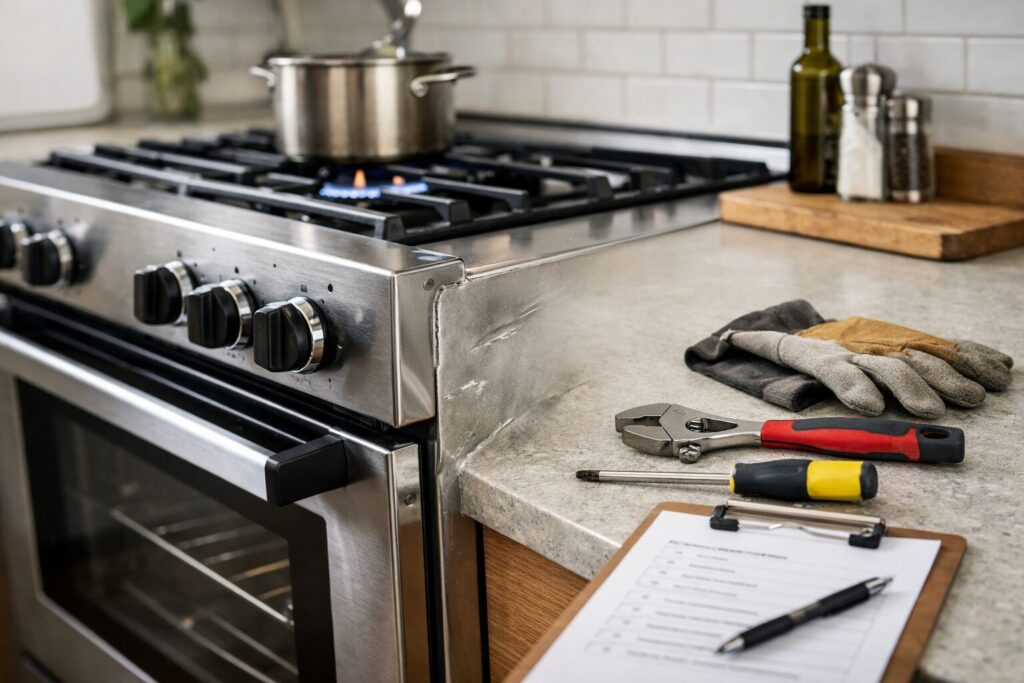
Yes, most scratch and dent gas ranges are safe to use as long as the damage is only cosmetic and does not affect any gas, electrical, or safety-critical components. However, it’s essential to inspect for dents near gas lines, burners, control panels, or valves, as functional or structural damage in these areas could create safety risks. Many homeowners choose scratch and dent ranges for savings, but proper installation and a careful safety check are important before use. CPS offers protection plan options and repair support for eligible scratch and dent appliances, helping customers address concerns that may arise after purchase.
Quick Summary
Here’s what you need to know about the safety of scratch and dent gas ranges:
- Scratch and dent gas ranges are generally safe if the damage is cosmetic and does not affect gas lines, burners, or controls.
- Inspect carefully for dents near gas supply, valves, or electronic controls before use.
- Functional or structural damage can increase safety risks—professional inspection is recommended if in doubt.
- Many scratch and dent models are eligible for extended protection and repair support from providers like CPS.
- Proper installation and leak testing are important, especially for any appliance with visible damage.
|
Topic |
Quick Take |
|---|---|
|
Are scratch and dent gas ranges safe? |
Yes, if damage is only cosmetic and safety-critical parts are unaffected |
|
What should you check? |
Inspect gas lines, valves, burners, and controls for damage |
|
Can you get warranty coverage? |
Many scratch and dent ranges are eligible for CPS protection plans |
|
Who should install? |
Professional installation is recommended for safety |
|
What’s the main risk? |
Hidden damage affecting gas or electrical systems |
free
Limited Time Offer
Get 3 months free on any protection plan.
Don’t wait for something to break. Get covered today and your first three months are on us.
What Should You Check Before Using a Scratch and Dent Gas Range?
When considering a scratch and dent gas range, it’s important to look beyond surface imperfections and focus on potential safety and performance issues. Customers often want to know what to inspect before installation and what matters most for long-term use.
- Inspect for damage near gas lines, burners, and control knobs
- Confirm that dents do not affect the oven door seal or stability
- Check for loose, broken, or misaligned parts near critical components
- Verify product eligibility for warranty or protection plan coverage
- Prioritize professional installation and safety leak testing
What Experience Does CPS Have With Scratch and Dent Appliance Repairs?
With over 75 million products covered and more than 50,000 servicers nationwide, CPS has extensive experience supporting scratch and dent appliance owners with repair coordination, claims expertise, and real-world safety concerns. Based on CPS’s long-term claims data, safety-critical component checks and professional installation are top priorities for damaged gas appliances.
- Scratch and dent gas ranges often require extra inspection for hidden damage affecting gas or electrical systems
- Based on CPS’s historical claims data, cosmetic-only damage rarely impacts safety, but dents near valves or burners require caution
- Professional installation and leak testing reduce risk for all gas appliances, especially those with visible dents
- Repair coordination for gas appliances may involve specialized servicers with experience in safety-critical repairs
- Products with structural or functional damage may need additional assessment to determine coverage eligibility
What Gas Range Repairs Are Most Concerning After Cosmetic Damage?
Based on CPS’s historical claims data, the most concerning repairs for scratch and dent gas ranges involve issues with gas lines, igniters, control boards, and seals—especially when dents are located near these areas. Many homeowners discover potential problems only after installation or during initial use, making thorough inspection essential.
|
Product or Repair Type |
Common Issue |
Why It Can Be Expensive or Important |
CPS Repair Insights |
|---|---|---|---|
|
Gas Range |
Dented near gas line or valve |
Potential gas leaks or safety risk |
CPS claims data shows gas range dents near regulator lines or burner valves frequently lead to secondary leak testing, pressure verification, and valve replacement approvals. Claims involving these failures typically require 1–2 additional diagnostic visits, especially within the first 2–4 years after purchase when installation-related stress or shipping damage becomes noticeable. Historical CPS repair data suggests approved repairs commonly range from $420–$980, while full replacement consideration increases once repair invoices exceed 45%–55% of replacement value due to safety liability exposure. |
|
Oven Door |
Dented door frame or seal |
Heat loss, poor performance, or safety issues |
Based on CPS claim trends, oven door and seal damage often creates uneven heating, longer cook times, and repeated temperature calibration complaints shortly after manufacturer warranty expiration. CPS repair history shows warped frames and compromised gasket seals can increase internal heat loss enough to trigger relay board strain and premature igniter cycling. Approved CPS appliance claims involving door alignment and seal replacement commonly fall between $280–$740, with repeat service visits occurring in roughly 18%–24% of claims when hidden hinge damage or cabinet distortion is discovered during repair. |
|
Control Panel |
Dented or misaligned controls |
Malfunctioning ignition or burner control |
Service history from CPS claims indicates cosmetic impact near control panels regularly affects spark modules, igniter switches, and electronic relay boards hidden behind the fascia assembly. Many failures do not fully appear until 3–6 years into ownership as vibration, grease intrusion, and thermal cycling worsen existing alignment damage. Historical CPS repair records suggest control-related repairs average $350–$1,050 depending on board availability and calibration requirements, while retail consumer invoices outside CPS networks often trend $200 higher due to labor-intensive disassembly. |
|
Ignition System |
Loose or damaged igniter |
Failed burner ignition, gas buildup risk |
Across approved CPS appliance claims, ignition failures tied to cosmetic dents or installation impact commonly result in delayed burner ignition, repeated clicking, or intermittent flame detection problems. CPS claims activity indicates these issues become more common during mid-life ownership periods when electrode wear and wiring harness fatigue combine with prior physical damage. Claims involving igniter systems typically require spark electrode replacement, flame sensor testing, or wiring repairs ranging from $260–$820, with replacement approvals becoming more likely once multiple burner systems are affected simultaneously. |
Why Do Customers Choose CPS Protection Plans?
Customers choose CPS for scratch and dent appliance coverage because of flexible protection plan options, nationwide repair support, and proven experience with post-warranty repair situations.
- Access to repair support for gas ranges, ovens, and kitchen appliances
- Eligibility for many scratch and dent, refurbished, and open-box appliances
- Assistance coordinating safety checks and repairs after purchase
- Support for expensive or safety-critical appliance repairs
- Easy claims process and professional service referrals
Can CPS Help if My Gas Range Is Already Out of Warranty?
For many homeowners, repair and safety concerns become more important after the manufacturer warranty expires. CPS may still be able to help connect customers with troubleshooting guidance, repair referrals, or extended protection options for eligible scratch and dent gas ranges.
- Factory-authorized repair referral assistance for out-of-warranty gas ranges
- Troubleshooting guidance and repair coordination for installation or performance issues
- Help sourcing replacement parts or locating service providers
- Guidance on extended protection eligibility for certain scratch and dent appliances after purchase
|
Contact Method |
Details |
Best For |
|---|---|---|
|
Phone |
(800) 905-0443 |
Speaking directly with a CPS representative |
|
Web Chat |
|
Quick support and troubleshooting guidance |
|
CPS Client Care Portal |
https://client.cpscentral.com/ |
Claims, account access, and service support |
|
Text Message |
Text (347) 621-7180 |
Quick customer support questions |
|
Facebook Messenger |
http://m.me/ConsumerPriorityService |
General support and communication |
|
|
cs@cpscentral.com |
Detailed questions and documentation |
What Questions Do Customers Ask About Scratch and Dent Gas Ranges?
Are scratch and dent gas ranges safe to use?
Yes, as long as the damage is only cosmetic and does not affect gas lines, burners, or controls. Always inspect carefully and consider professional installation to ensure safety.
What should I check before installing a scratch and dent gas range?
Inspect for dents near gas lines, valves, burners, and control panels. Make sure all connections are secure and there are no signs of functional or structural damage.
Can dents cause gas leaks or safety issues?
Dents near gas lines, valves, or controls can increase the risk of gas leaks or improper operation. If you see damage in these areas, have the range checked by a professional before use.
Are scratch and dent ranges eligible for warranty coverage?
Many scratch and dent gas ranges are eligible for CPS protection plans, but eligibility depends on the product’s condition and repair history.
Is it safe to install a scratch and dent gas range myself?
Professional installation is strongly recommended, especially if there is visible damage, to ensure all gas and safety systems are properly checked and connected.
What repairs are most common with damaged gas ranges?
According to CPS’s historical claims data, repairs often involve gas valves, igniters, control boards, and seals if dents occur near these components.
Does buying a scratch and dent gas range void the manufacturer warranty?
It depends on the manufacturer’s policy and the nature of the damage. Some warranties may exclude coverage for cosmetic defects but still cover mechanical failures.
Can I get extended protection after purchasing a scratch and dent range?
In many cases, yes—CPS may offer protection plans for eligible scratch and dent appliances if they pass a basic functionality check at the time of coverage activation.
What if I notice a problem after installation?
If you experience issues like gas smells, ignition problems, or uneven heating after installing a scratch and dent range, stop use immediately and contact a qualified service professional. CPS can help with repair coordination and support for covered products.
Is it worth buying a scratch and dent gas range?
Many customers find scratch and dent gas ranges to be a good value, especially when the damage is minor. Just be sure to evaluate safety, warranty eligibility, and repair support options before buying.
repair
No Hidden Fees
One price covers all parts, labor, makes & models.
Skip the guesswork. Our flat rate repair program means you know exactly what you’ll pay — before we start.
Want to Learn More About Protecting Your Appliance?
If you’re considering a scratch and dent gas range, exploring your coverage and repair support options can help you make a confident decision.
For many homeowners, scratch and dent gas ranges offer significant savings, but safety and long-term reliability should always come first. As appliances age or if damage is near critical components, repair costs and service access become more important considerations. Customers often compare the risk of expensive post-warranty repairs and the value of factory-authorized service before deciding on additional protection. If you have questions about coverage options or repair support for your gas range, CPS can provide practical guidance and help you check eligibility for protection plans.
 SPECIAL OFFER
 Coverage for scratch & dent models