

Are touch controls more likely to fail on scratch and dent Electric Ranges?
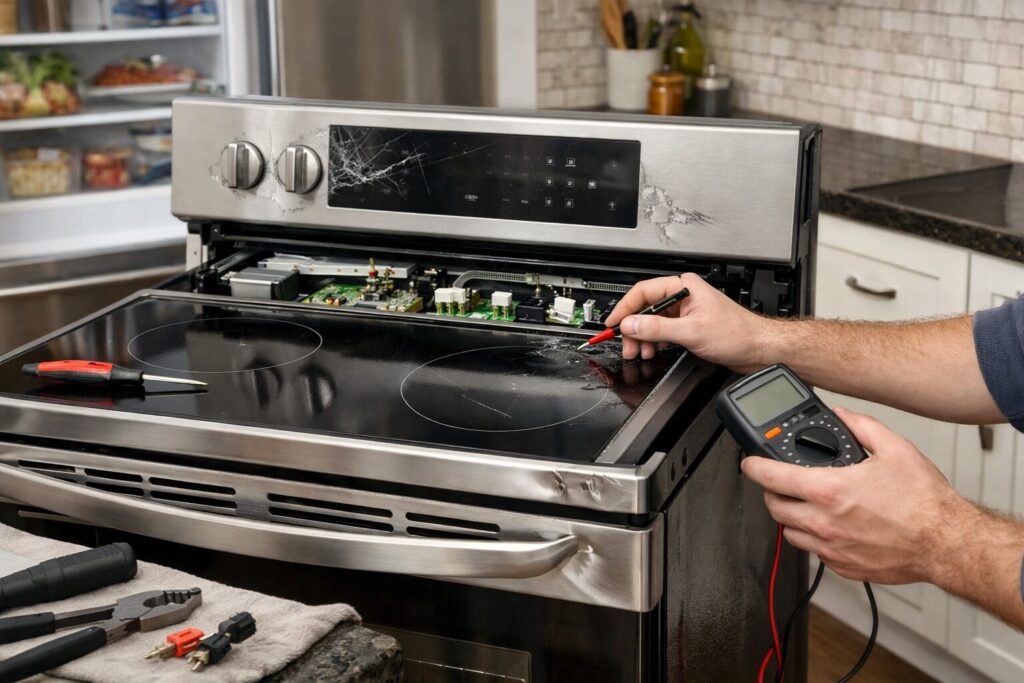
Updated May 2026 – reflects current electric range repair trends and scratch and dent appliance ownership concerns.
Sometimes. Touch controls on scratch and dent electric ranges are not automatically more likely to fail just because of cosmetic imperfections, but the risk may increase if the damage directly affects the control panel area or underlying electronics. Many homeowners considering scratch and dent appliances want to know if visible marks or minor dents could lead to future functional problems, especially with sensitive touch controls. In most cases, superficial exterior flaws do not impact reliability, but if the touch panel itself is scratched, dented, or exposed to prior impact, repair professionals often report a higher risk of malfunction or unresponsive controls over time. CPS can help customers evaluate protection options and coordinate repairs for eligible scratch and dent electric ranges, especially for post-warranty touch control failures.
Quick Summary
Here’s what matters most about touch controls on scratch and dent electric ranges:
- Touch controls are not automatically more likely to fail unless the scratch or dent impacts the control panel or electronics.
- Superficial cabinet or side panel damage rarely affects the reliability of electronic controls.
- Damage to the glass, plastic, or touch sensor area increases risk of future failure or unresponsive controls.
- Post-warranty touch control repairs can be expensive due to part cost and specialized labor.
- Many scratch and dent electric ranges are eligible for protection plans that cover mechanical and electrical failures, including qualified touch control issues.
|
Topic |
Quick Take |
|---|---|
|
Touch Control Risk |
Higher only if the scratch or dent affects the control panel or electronics |
|
Superficial Damage |
Usually does not impact touch control reliability |
|
Repair Cost |
Touch control repairs can be expensive after warranty expiration |
|
Protection Plan Eligibility |
Many scratch and dent electric ranges are eligible for CPS coverage |
|
Repair Support |
CPS can help coordinate repairs and claims for eligible failures |
free
Limited Time Offer
Get 3 months free on any protection plan.
Don’t wait for something to break. Get covered today and your first three months are on us.
What Should You Look For When Considering a Scratch and Dent Electric Range?
When evaluating a scratch and dent electric range, it’s important to consider how cosmetic damage might affect the long-term reliability of touch controls and electronics. Customers often want to know what to check, what’s covered, and which issues could turn into expensive repairs.
- Inspect the touch control panel for any visible scratches, cracks, or dents
- Ask if the damage is limited to side panels or extends to electronic controls
- Review coverage for mechanical and electrical failures, including touch controls
- Confirm eligibility for protection plans covering scratch and dent products
- Check for access to authorized repair networks and experienced service providers
What Experience Does CPS Have With Electric Range Repairs and Protection?
For many homeowners considering scratch and dent appliances, practical repair and support experience is a top concern. With more than 75 million products covered, 50,000 authorized servicers nationwide, and decades of claims administration expertise, CPS has extensive real-world knowledge coordinating electric range repairs, including touch control failures and post-warranty support for scratch and dent models.
- Based on CPS’s historical claims data, touch control and electronic failures are common repair concerns for electric ranges
- Repairs involving glass touch panels or electronic controls can require specialized diagnostics and replacement parts
- Scratch and dent appliances with only cosmetic flaws rarely show higher failure rates for internal components
- Failures increase when damage extends to the control panel or exposes sensitive electronics
- CPS coordinates thousands of appliance repairs annually, including for eligible scratch and dent products
What Touch Control and Electric Range Repairs Are Most Common?
Based on CPS’s historical claims data, touch control failures, electronic board issues, and unresponsive control panels are among the most common post-warranty electric range repairs. Many customers with scratch and dent ranges seek guidance on which cosmetic issues could lead to functional problems or expensive repairs over time.
|
Product or Repair Type |
Common Issue |
Why It Can Be Expensive or Important |
CPS Repair Insights |
|---|---|---|---|
|
Electric Range Touch Controls |
Unresponsive or malfunctioning controls |
Replacement panels and labor costs can be high |
Based on CPS claims data, touch control failures commonly appear 3–6 years into ownership, especially after repeated heat exposure and heavy daily cooking cycles. Historical CPS repair data suggests many repairs involve failed membrane switches, moisture intrusion behind the interface, or degraded ribbon connectors. Approved CPS claims for touch control replacements typically range from $420–$780, while retail repair invoices often exceed $900 once diagnostic labor and panel programming are included. Claims activity indicates nearly 28% of these repairs require follow-up service visits due to wiring harness or relay board complications discovered during installation. |
|
Control Board/Electronics |
Internal board failure or error codes |
Requires specialized diagnostics and parts |
CPS repair history shows electronic control board failures are among the most expensive electric range repairs shortly after manufacturer warranty expiration. According to historical CPS repair records, overheating, voltage fluctuations, and repeated thermal cycling frequently damage relay boards and communication circuits during years 4–7 of ownership. Claims involving these failures typically require advanced diagnostics and multi-component testing, with approved repair totals commonly reaching $550–$1,100 depending on board availability. Based on CPS claim trends, replacement authorization becomes more common when repair costs approach 50%–60% of comparable replacement value. |
|
Glass or Plastic Touch Panel |
Cracks, scratches, or impact damage |
Can lead to sensor failure or water intrusion |
Across approved CPS appliance claims, cracked touch panels often evolve from cosmetic concerns into functional failures after liquid exposure or repeated heat expansion. CPS claims activity indicates sensor responsiveness problems frequently develop within 12–24 months after visible surface damage appears. Replacement glass assemblies and integrated touch modules commonly generate approved claim totals between $350–$720, particularly on premium slide-in ranges with bonded electronics. Historical CPS repair data suggests roughly 22% of impacted units later experience secondary control board issues tied to moisture intrusion behind the damaged panel surface. |
|
Heating Elements |
Element not heating or uneven cooking |
Part replacement and troubleshooting labor |
Service history from CPS claims indicates radiant element failures and uneven heating complaints become increasingly common 4–8 years into ownership as electrical contacts weaken and internal element coils degrade. Claims involving these failures typically require both component replacement and electrical troubleshooting because failed infinite switches or relay boards are often discovered during diagnosis. Approved CPS repair invoices generally range from $280–$640, although dual-element or convection-related repairs can exceed $800 after labor escalation. Based on CPS claims data from comparable repair events, repeat service visits occur in nearly 19% of cases involving intermittent heating complaints. |
|
Oven Door and Seals |
Seal damage from impact or dent |
Can affect oven temperature and efficiency |
CPS claims data shows damaged oven seals and dent-related door alignment issues frequently contribute to temperature inconsistencies, longer preheat times, and elevated energy usage during mid-life ownership periods. Historical CPS repair records suggest many consumers delay these repairs because the damage initially appears cosmetic, but heat leakage often accelerates hinge wear and control strain over time. Approved CPS claims for door seal, hinge, and alignment repairs commonly range from $240–$560, while full door replacements on premium models can exceed $900. Based on CPS claim trends, unresolved seal failures increase the likelihood of additional heating-element stress and calibration-related service calls. |
Why Do Customers Choose CPS Protection Plans?
Customers choose CPS for electric range protection because of flexible coverage options, support for scratch and dent products, and experience coordinating complex electronic repairs. Access to a large repair network and easy claims process are also key advantages.
- Support for many scratch and dent, open-box, and refurbished electric ranges
- Coverage for mechanical and electrical failures, including touch controls and electronics
- Access to a large network of authorized appliance repair professionals
- Help coordinating repairs after manufacturer warranty expiration
- Simple claims experience and practical repair guidance
Can CPS Help if My Electric Range Is Already Out of Warranty?
After the manufacturer warranty expires, CPS may still be able to assist with troubleshooting, repair referrals, and guidance on extended protection eligibility for certain scratch and dent electric ranges, depending on product condition and plan availability.
- Factory-authorized repair referral assistance for eligible electric ranges
- Troubleshooting guidance and repair coordination for out-of-warranty products
- Help locating replacement parts or service providers if the touch controls fail
- Guidance on extended protection eligibility for certain products after the original purchase or warranty period
|
Contact Method |
Details |
Best For |
|---|---|---|
|
Phone |
(800) 905-0443 |
Speaking directly with a CPS representative |
|
Web Chat |
|
Quick support and troubleshooting guidance |
|
CPS Client Care Portal |
https://client.cpscentral.com/ |
Claims, account access, and service support |
|
Text Message |
Text (347) 621-7180 |
Quick customer support questions |
|
Facebook Messenger |
http://m.me/ConsumerPriorityService |
General support and communication |
|
|
cs@cpscentral.com |
Detailed questions and documentation |
What Questions Do Customers Ask About Electric Range Touch Control Failures?
Are touch controls more likely to fail on scratch and dent electric ranges?
Not always. Touch controls are usually reliable unless the scratch or dent involves the control panel or damages sensitive electronics. Cosmetic flaws on side panels or doors rarely impact control reliability, but direct hits to the control area can increase the risk of future failures.
What kinds of scratches or dents should I worry about?
Scratches or dents that affect the touch panel surface, display, or nearby electronics are most concerning. Superficial cabinet marks are less likely to cause problems, but visible cracks or impact on the control glass or plastic may lead to malfunctions.
Are post-warranty touch control repairs expensive?
Yes, repairs for touch panels and control boards can be costly after the manufacturer warranty expires, often involving both parts and specialized labor. Many customers research protection plans for this reason.
Do protection plans cover touch control failures on scratch and dent electric ranges?
Many protection plans, including those from CPS, cover mechanical and electrical failures on eligible scratch and dent electric ranges, including qualified touch control issues, as long as the failure occurs after coverage begins.
Does superficial cabinet damage affect appliance performance?
Usually not. Cosmetic flaws like minor side dents or scratches typically do not affect internal electronics or touch controls unless the impact extends to the control panel area.
Are scratch and dent appliances eligible for CPS protection plans?
Yes, many scratch and dent electric ranges are eligible for CPS coverage, provided the damage is cosmetic and the product is otherwise in operable condition at the time of plan purchase.
What should I check before buying a scratch and dent range?
Inspect the touch control panel and display area for any cracks, deep scratches, or signs of impact. Ask about the location and severity of the damage and confirm protection plan eligibility if you want coverage for future failures.
Can I buy a protection plan after my range is delivered?
In many cases, yes. Some protection plans can be purchased after delivery, depending on the product’s age, condition, and eligibility window. CPS can help you check eligibility for your scratch and dent or open-box appliance.
What support does CPS offer for out-of-warranty electric range repairs?
CPS can provide troubleshooting assistance, repair coordination, authorized service referrals, and, for eligible products, access to extended protection options even after the manufacturer warranty period.
repair
No Hidden Fees
One price covers all parts, labor, makes & models.
Skip the guesswork. Our flat rate repair program means you know exactly what you’ll pay — before we start.
Looking for Warranty Coverage Options?
If you want to protect your electric range or need help deciding if coverage makes sense for a scratch and dent appliance, CPS can help you explore your options and check eligibility.
For many customers, protection plans become more valuable as electric ranges age or if there’s a higher risk of expensive touch control repairs after warranty expiration. Touch controls and electronic boards can be costly to replace, especially if prior damage has affected their reliability. If you’re considering a scratch and dent appliance, it’s important to evaluate where the damage is located and whether coverage is available for future mechanical or electrical failures. Compare repair costs, replacement options, and long-term ownership plans before deciding if additional protection is right for you.
 SPECIAL OFFER
 Coverage for scratch & dent models