

Dishwasher Leaving Dishes Dirty
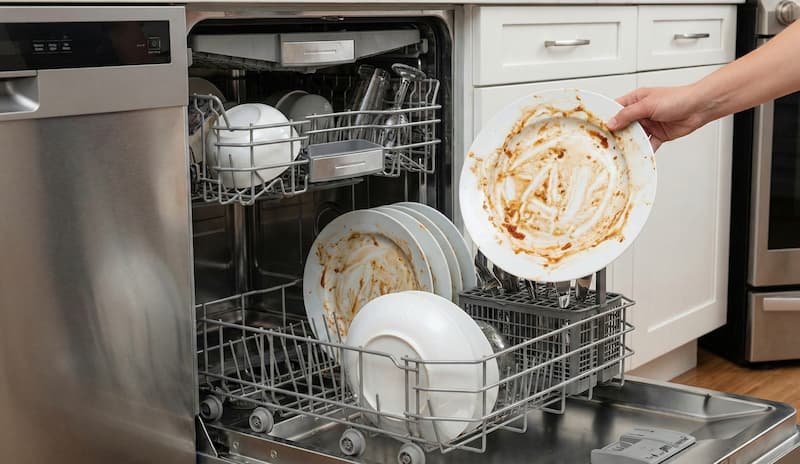
If your dishwasher is leaving dishes dirty, the most common causes are a blocked spray arm, a clogged filter, or improper loading. In many cases, the problem is a simple blockage that restricts water flow or spray coverage. However, persistent issues can also point to a mechanical failure, such as a malfunctioning pump or a faulty heating element.
Why This Problem Happens
Dishes coming out of the dishwasher still dirty is usually due to a disruption in water movement, detergent distribution, or heating. Here are the most common causes:
1. Clogged Spray Arms
What it is: The spray arms distribute water during the wash cycle. Over time, food particles and hard water deposits can block the tiny spray holes.
Why it happens: Leftover debris or minerals accumulate, especially if dishes aren’t scraped before loading.
How serious: Usually minor and easy to fix.
DIY-fixable? Yes—can often be cleaned at home.
2. Dirty or Blocked Filter
What it is: The dishwasher filter catches food scraps and debris. If it’s clogged, water can’t circulate properly.
Why it happens: Filters need regular cleaning; neglect causes buildup.
How serious: Typically minor but can lead to bigger issues if ignored.
DIY-fixable? Yes—removable and washable in most models.
3. Improper Loading
What it is: Placing dishes incorrectly can block spray arms or prevent thorough cleaning.
Why it happens: Overloading or stacking items too closely.
How serious: Minor—can be fixed by adjusting how you load the dishwasher.
DIY-fixable? Absolutely.
4. Low Water Temperature
What it is: Hot water is essential for dissolving detergent and breaking down grease.
Why it happens: Water heater set too low or a malfunctioning heating element.
How serious: Moderate—heating element failure requires repair.
DIY-fixable? Temperature adjustment is DIY; heating element replacement is usually best left to professionals.
5. Mechanical or Electrical Failures
What it is: Faulty pumps, motors, or control boards can prevent the dishwasher from operating properly.
Why it happens: Wear and tear or component failure.
How serious: Significant—often requires professional attention.
DIY-fixable? Not recommended without technical expertise.
Why This Problem Should Not Be Ignored
Ignoring a dishwasher that leaves dishes dirty can have real consequences. Food residue can harden, making future cleaning more difficult, and persistent moisture or buildup can promote mold growth inside the appliance. A blocked filter or spray arm can put strain on pumps and motors, potentially leading to more expensive repairs. Over time, minor issues can escalate into major mechanical failures, increasing repair costs and downtime.
Step 1: Try These Fixes First
- Power Off: Unplug the dishwasher or switch off the circuit breaker for safety.
- Clean Spray Arms: Remove the lower and upper spray arms (consult your manual). Rinse under running water and use a toothpick to clear blocked holes. Reinstall.
- Check and Clean the Filter: Remove the filter from the bottom of the dishwasher. Rinse thoroughly and use a soft brush if needed. Replace securely.
- Inspect Loading: Reload dishes so water can reach all surfaces. Avoid stacking or nesting items.
- Check Water Temperature: Run hot water at the sink before starting the dishwasher. Ensure your water heater is set to at least 120°F (49°C).
If your dishes come out clean after these steps, the issue was likely a blockage or loading error. If not, continue diagnosing.
Step 2: Identifying Mechanical vs Electrical Failure
- Makes noise but doesn’t clean: Likely a blocked spray arm or weak pump—possible minor or mechanical issue.
- Silent (no operation at all): Could indicate a control board or electrical fault—mechanical/electrical issue.
- Runs but leaves spots/film: Water quality, detergent, or heating problem—check temperature and rinse aid.
- Runs slowly or incompletely: May signal pump or motor wear—mechanical issue requiring service.
Repair Cost Expectations
Typical repair costs for a dishwasher not cleaning dishes range from $100 to $350, depending on the issue. Cleaning or replacing a filter is at the low end; spray arm or pump replacement may cost $150–$300. Heating element replacement can run $200–$350. Costs vary by brand, model, and location. Getting a professional diagnosis ensures you only pay for what’s necessary.
Professional Repair Pathway
If DIY steps haven’t resolved the issue, it’s time to connect with a factory-authorized repair professional. Consumer Priority Service (CPS) provides access to brand-trained technicians who use manufacturer-approved parts and follow strict diagnostic standards. With a nationwide service network, CPS helps ensure your dishwasher is repaired correctly the first time.
Warranty & Eligibility Clarification
Protection plans and extended warranty coverage from CPS do not cover pre-existing failures. Coverage applies to future mechanical breakdowns after proper repair. Once your dishwasher is fixed, you may be eligible for a protection plan for electronics and appliances to safeguard against future issues.
Why Factory-Authorized Service Matters
Factory-authorized service means your dishwasher is repaired using OEM (original equipment manufacturer) parts—not generic substitutes. Technicians are trained on your brand’s technology and follow precise repair standards. This ensures accurate diagnostics, protects your appliance investment, and helps extend the life of your dishwasher.
After Repair: Future Protection
After your dishwasher is restored, an appliance extended warranty from CPS can cover future mechanical failures, electrical breakdowns, control board malfunctions, and issues with pumps or motors. This provides confidence and peace of mind for continued reliable performance.
FAQ
-
Why is my dishwasher leaving food on dishes?
Usually due to a clogged spray arm or filter. Clean both and check your loading method before seeking repair service. -
Can hard water cause dirty dishes?
Yes, hard water can leave residue. Use a rinse aid and clean the spray arms. If the problem persists, water softening or service may be needed. -
What if my dishwasher runs but doesn’t clean?
Check for blockages and clean the filter. If water isn’t circulating, a pump or motor issue may require professional repair. -
Is it worth repairing an old dishwasher?
If the appliance is under 10 years old and the repair costs less than half the price of a new unit, repair is usually worthwhile. CPS can help you connect to authorized service for a reliable fix. -
Does an extended warranty cover existing problems?
No, extended warranty coverage applies to future mechanical or electrical failures, not pre-existing issues. -
How often should I clean my dishwasher filter?
Clean the filter at least once a month to prevent buildup and maintain cleaning performance. -
What’s the benefit of factory-authorized repair?
Factory-authorized service uses OEM parts and trained technicians, reducing the risk of repeat issues and protecting your appliance’s value. -
How do I get protection after repair?
Once your dishwasher is professionally repaired and fully functional, you may be eligible for a CPS appliance extended warranty to cover future problems.

Still have warranty questions?
Finished the article and still looking for answers? Don't leave your investment to chance. Our extended warranties offer seamless coverage that picks up right where the manufacturer leaves off. From 24/7 support to easy claims.
Get 3 Months Free