

Does my Electric Range require professional installation to maintain warranty coverage?
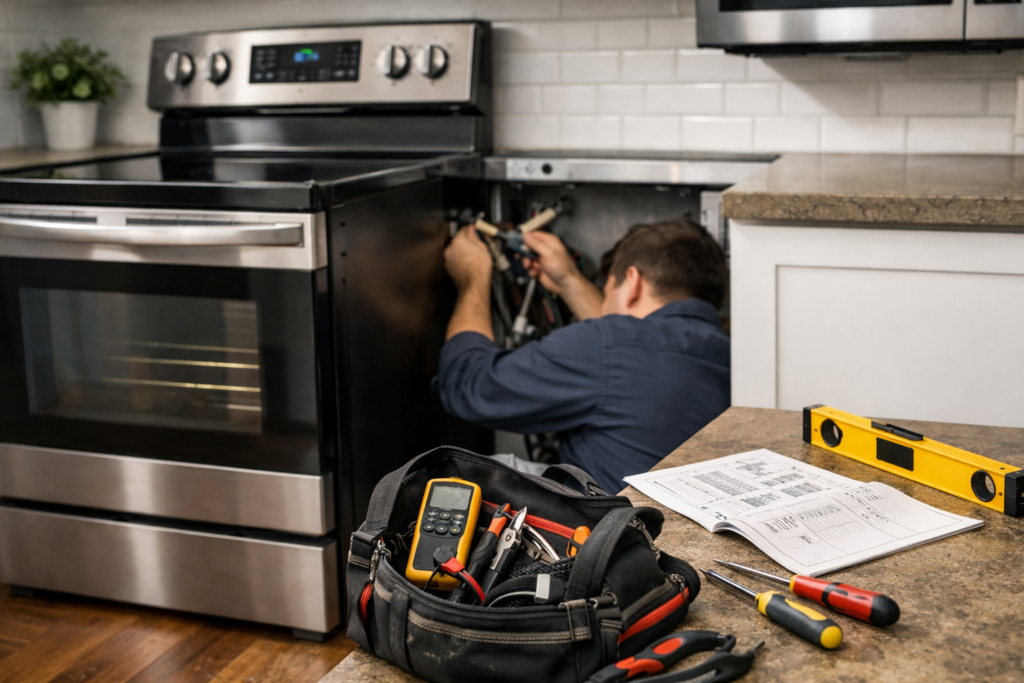
Updated May 2026 – reflects current appliance installation requirements and repair claim trends.
Sometimes. Most electric ranges require professional installation to maintain full manufacturer warranty coverage, especially when hardwired, but requirements can vary by brand and model. Many warranty terms specify that improper installation or self-installation may void coverage for electrical, heating, or control failures. Professional installation also helps ensure electrical safety, correct voltage, and code compliance, which repair professionals frequently report as common factors in denied warranty claims. CPS and many extended protection plans may also require proof of professional installation for certain electric range repairs, particularly for new, built-in, or high-end models. For homeowners installing a new electric range, reviewing both manufacturer and protection plan requirements before setup is essential to avoid coverage issues later.
Quick Summary
Here’s what you need to know about electric range installation and warranty coverage:
- Many electric ranges require professional installation to maintain warranty coverage, especially if hardwired.
- Improper installation or DIY wiring can lead to denied warranty claims for electrical or heating failures.
- Manufacturers and protection plans may request proof of professional installation for certain repairs.
- Professional installation ensures safe electrical connections and helps avoid service issues later.
- Coverage requirements can vary, so always check your specific warranty terms before installation.
|
Topic |
Quick Take |
|---|---|
|
Is professional installation required? |
Often required for warranty coverage, especially for hardwired units |
|
What happens if I install it myself? |
DIY installation can void warranty if not done to code or with proof |
|
What does professional installation help with? |
Ensures code compliance, safety, and fewer warranty claim issues |
|
What documentation is needed? |
Installation receipt or proof may be requested for certain repairs |
|
Does CPS require professional installation? |
For many repairs, yes—especially for new or built-in electric ranges |
free
Limited Time Offer
Get 3 months free on any protection plan.
Don’t wait for something to break. Get covered today and your first three months are on us.
What Should You Look For When Installing an Electric Range to Keep Warranty Coverage?
When installing a new electric range, it’s important to understand the installation requirements that protect your warranty coverage. Customers often ask what counts as professional installation and which situations may lead to denied claims or coverage gaps.
- Confirmation of manufacturer or plan installation requirements
- Proof of professional installation (receipt or installer’s details)
- Proper electrical hookup and code compliance
- Clear documentation for built-in or hardwired units
- Understanding what repairs may be excluded after DIY installation
What Experience Does CPS Have With Electric Range Repairs and Warranty Claims?
For homeowners concerned about installation and warranty coverage, CPS brings decades of experience coordinating appliance repairs and administering warranty claims for a wide range of electric ranges. With over 75 million products covered, 50,000 servicers nationwide, and hundreds of millions in claims paid annually, CPS has a deep understanding of how installation quality and documentation impact real-world repair outcomes.
- Improper installation is a common reason for denied electric range warranty claims
- Electrical and control board failures often result from installation errors or code issues
- Professional installation documentation may be required for heating element and wiring repairs
- Hardwired and built-in electric ranges are more likely to require proof of professional setup
- CPS’s long-term claims data shows that professionally installed units have fewer claim disputes
What Electric Range Repairs Are Most Common After Installation?
Based on CPS’s historical claims data, electric range repairs after installation often relate to electrical wiring, control board malfunctions, and heating element failures. These repairs can be both costly and complex, especially if installation did not follow manufacturer guidelines or local code requirements.
|
Product or Repair Type |
Common Issue |
Why It Can Be Expensive or Important |
CPS Repair Insights |
|---|---|---|---|
|
Electric Range |
Electrical wiring issues |
Professional diagnosis and code compliance required |
CPS claims data shows electrical wiring failures are among the most common electric range issues reported within the first 1–3 years after installation, especially in homes with older 240V connections or improper breaker sizing. Claims involving wiring harnesses, terminal blocks, or scorched connectors typically require licensed electrical diagnostics and multiple service visits, with approved repair totals commonly ranging from $320–$780. Historical CPS repair data suggests nearly 30% of post-installation electrical claims involve heat damage caused by loose connections or incorrect installation practices that accelerate component fatigue shortly after manufacturer warranty expiration. |
|
Electric Range |
Control board failure |
Replacement parts and electronics expertise |
Based on CPS claim trends, electronic control board failures frequently emerge 3–5 years into ownership after repeated thermal cycling and voltage fluctuations begin affecting relay boards and sensor communication. Repairs often require advanced diagnostics, calibration, and OEM board replacement, with invoice totals commonly escalating between $450–$1,050 depending on part availability. CPS claims activity indicates replacement approval rates increase significantly once repair costs exceed roughly 50% of replacement value, particularly on premium slide-in electric ranges with integrated smart controls. |
|
Electric Range |
Heating element failure |
Labor-intensive repairs and safety checks |
Service history from CPS claims indicates heating element failures commonly occur 2–4 years into ownership due to high-temperature stress, grease intrusion, and repeated expansion-and-contraction fatigue. Claims involving bake or surface element replacements typically range from $280–$690 after labor and electrical safety testing are included. Historical CPS repair records also show repeat-visit rates approaching 20% when wiring damage or failed thermostatic sensors are discovered during the initial repair process, increasing both labor exposure and consumer downtime. |
|
Built-In Range |
Improper installation damage |
May not be covered without professional installation proof |
Across approved CPS appliance claims, built-in range installation-related damage is often tied to ventilation restrictions, cabinet clearance violations, or improper electrical routing that creates overheating conditions during early ownership periods. Repairs involving damaged wiring, cracked glass surfaces, or compromised control systems can exceed $700–$1,400 because partial cabinet removal and reinstallation labor are frequently required. CPS claims data shows consumers without documented professional installation records experience higher denial rates when failures occur shortly after installation completion. |
|
Hardwired Range |
Power supply or voltage issues |
Specialized electrical repairs and code compliance |
According to historical CPS repair records, hardwired range voltage issues commonly surface within the first 2 years after installation when inconsistent electrical supply or improper grounding places stress on relay boards, heating circuits, and internal fuses. Claims involving voltage-related damage frequently require both appliance service and independent electrical correction, with combined repair exposure often reaching $500–$1,200. CPS repair history shows these failures are more likely to escalate into replacement consideration when repeated breaker trips or burned terminal connections indicate broader electrical instability throughout the kitchen circuit. |
Why Do Customers Trust CPS for Appliance Warranty Coverage?
Customers trust CPS for electric range protection because of the company’s experience with appliance repairs, extensive service network, and clear claims support for both new and professionally installed units.
- Support for electric range repairs, including wiring, control boards, and heating elements
- Access to a wide network of authorized appliance repair professionals
- Clear guidance on installation requirements and documentation
- Coverage options for both new and certain eligible refurbished appliances
- Assistance navigating claims and repair coordination after installation
Can CPS Help if My Electric Range Is Already Out of Warranty?
After the manufacturer warranty expires, CPS may still be able to help with repair guidance, factory-authorized service referrals, and, in some cases, extended protection options for eligible electric ranges depending on the age and installation documentation.
- Referral assistance to authorized repair providers for out-of-warranty electric ranges
- Troubleshooting guidance and repair coordination for electrical and control issues
- Help finding replacement parts and qualified service technicians
- Guidance on eligibility for extended protection based on installation and product age
|
Contact Method |
Details |
Best For |
|---|---|---|
|
Phone |
(800) 905-0443 |
Speaking directly with a CPS representative |
|
Web Chat |
|
Quick support and troubleshooting guidance |
|
CPS Client Care Portal |
https://client.cpscentral.com/ |
Claims, account access, and service support |
|
Text Message |
Text (347) 621-7180 |
Quick customer support questions |
|
Facebook Messenger |
http://m.me/ConsumerPriorityService |
General support and communication |
|
|
cs@cpscentral.com |
Detailed questions and documentation |
What Questions Do Customers Ask About Electric Range Warranty Coverage?
Does my electric range warranty require professional installation?
For many electric ranges, yes—especially if the unit is hardwired or built-in. Manufacturer warranties and many protection plans often require proof of professional installation to maintain full coverage for electrical and heating repairs.
What happens if I install my electric range myself?
DIY installation can void warranty coverage if not done according to manufacturer guidelines or local code. If a problem arises and professional installation can’t be verified, claims for electrical or control board issues may be denied.
What documentation do I need for warranty claims?
Most warranties and protection plans require a receipt or written proof of installation by a licensed or qualified professional. This is especially important for built-in or hardwired electric ranges.
Does CPS require professional installation for electric range coverage?
For most new, built-in, and hardwired electric ranges, CPS may require proof of professional installation for eligible repairs, especially for electrical, control, or heating element issues.
Are repairs for electric range wiring or control boards expensive?
Yes—wiring faults, control board failures, and electrical issues often require specialized diagnostics and labor, which can be costly after the manufacturer warranty expires.
Can I get coverage for a refurbished or open-box electric range?
Many protection plans, including CPS, offer options for certain eligible refurbished or open-box electric ranges, but proof of professional installation may still be required for coverage on electrical or control failures.
What electric range repairs are most common after installation?
Based on CPS’s historical claims data, common repairs include electrical wiring issues, control board malfunctions, heating element failures, and problems related to improper installation.
Does professional installation affect safety and performance?
Absolutely. Professional installation ensures electrical safety, correct voltage, and compliance with local codes—helping prevent many common service issues and claim disputes down the line.
Can CPS help if my electric range is already out of warranty?
Yes. CPS may still be able to assist with repair guidance, referrals to authorized service providers, replacement part sourcing, and, for some eligible products, extended protection options.
repair
No Hidden Fees
One price covers all parts, labor, makes & models.
Skip the guesswork. Our flat rate repair program means you know exactly what you’ll pay — before we start.
Need Help With Electric Range Installation or Coverage?
If you have questions about warranty coverage, installation requirements, or want to check eligibility for your electric range, CPS is here to help.
For many homeowners, professional installation is the key to keeping electric range warranties valid and avoiding expensive repair surprises down the road. As ranges become more advanced and repairs more costly, reviewing installation requirements and ensuring proper setup can make a real difference in long-term ownership costs. If you’re unsure about your coverage, planning a new installation, or comparing protection options, exploring support and confirming your eligibility with CPS can help you make a confident decision.

 Coverage for scratch & dent models

