

Fridge Not Cooling
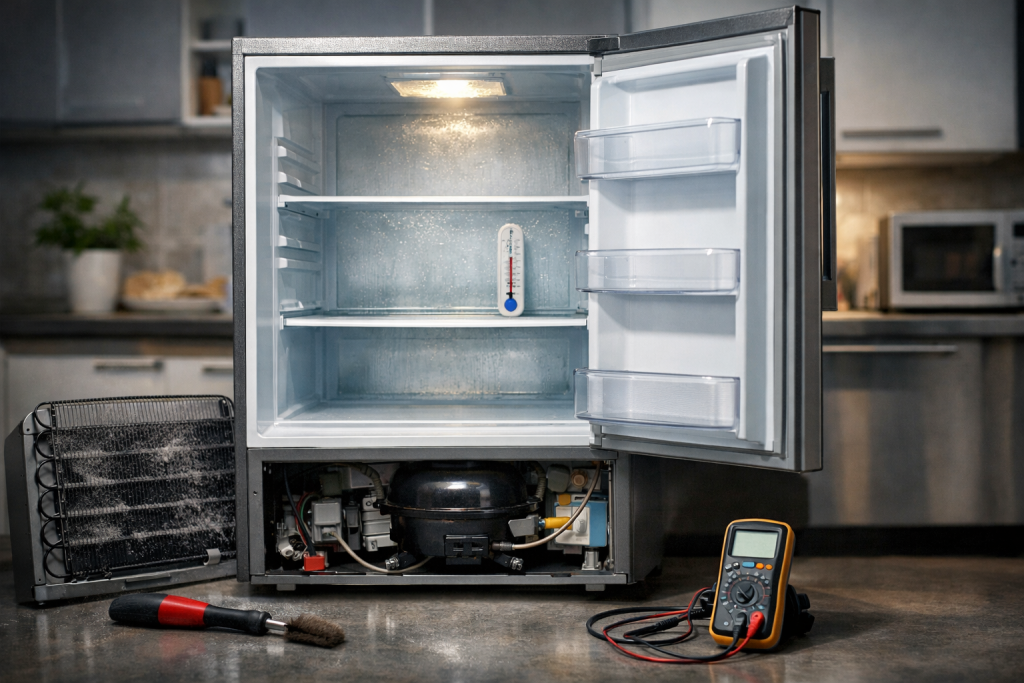
A refrigerator that suddenly stops cooling is one of the most common and frustrating appliance problems. This issue is often caused by something simple, such as blocked airflow or dirty condenser coils, but it can also signal a mechanical or electrical failure. Many cooling problems can be addressed at home with basic maintenance, but if cleaning and simple checks don't restore proper temperature, professional repair through an authorized service provider may be necessary.
Why is my fridge not cooling?
Short answer: The most likely causes for a fridge not cooling are dirty condenser coils, blocked air vents, faulty temperature controls, or failed internal components such as the compressor or evaporator fan. Start by checking and cleaning external and accessible parts before assuming a major repair is needed.
The Most Common Causes
- Dirty or clogged condenser coils preventing proper heat dissipation
- Evaporator or condenser fan failure disrupting airflow
- Defective temperature control thermostat or electronic control board
- Blocked air vents between the fridge and freezer compartments
- Poor door seal allowing cold air to escape
If your fridge isn’t cooling, address the problem quickly to avoid food spoilage and potential damage to the appliance. Early action can often prevent more complicated and costly repairs.
Need Professional Fridge Repair? CPS Connects You to Factory-Authorized Service
Short answer: If cleaning and basic troubleshooting do not restore cooling, professional service may be required to diagnose and repair internal electrical or mechanical failures.
CPS connects you to experienced, factory-authorized appliance repair networks nationwide.
- Brand-trained technicians
- OEM manufacturer-approved parts
- Repairs performed to manufacturer standards
- Nationwide authorized repair access
Schedule Factory-Authorized Fridge Repair
Why a Fridge That Won’t Cool Should Not Be Ignored
Short answer: Ignoring a fridge that isn’t cooling can result in food spoilage, further damage to internal components, and more expensive repairs if the underlying cause escalates.
- Secondary component damage
- Electrical strain on compressor and fans
- Food spoilage and possible health risks
- Higher repair cost risk if left unresolved
Address cooling issues as soon as possible to protect both your appliance and your stored food.
Try These Fixes First
Short answer: Start by cleaning the condenser coils, checking for blocked vents, and inspecting door seals for leaks—these are the most common and easily correctable causes of cooling loss.
How to Fix a Fridge That’s Not Cooling
- Unplug the fridge for safety before performing any maintenance.
- Check that the temperature setting is correct and not accidentally adjusted upwards.
- Clean the condenser coils (usually located behind or beneath the fridge) using a coil brush or vacuum.
- Inspect and clear any obstructions from air vents inside the fridge and freezer.
- Check that the door seals are intact and free from debris; clean or gently reseat as needed.
- Ensure the fridge has proper clearance from walls to allow airflow around coils.
- Plug the fridge back in and allow several hours to see if cooling improves.
If cooling returns after cleaning and adjusting, a blockage or maintenance issue was likely the cause. If not, further diagnosis of internal components may be needed.
How to Identify the Type of Failure
Short answer: The way your fridge behaves—such as whether it’s running continuously, not running at all, or making unusual noises—can indicate whether the problem is related to airflow, electrical controls, or mechanical failure.
If the fridge is running but not cooling
This often points to dirty condenser coils, blocked vents, or a failing compressor. Listen for the compressor running and check for heat at the back of the unit.
If the fridge is silent or not running
This may indicate a problem with the thermostat, control board, or electrical supply. Check that the unit is plugged in and the outlet is working.
If the fridge makes clicking or buzzing sounds
Frequent clicking or buzzing can signal compressor or start relay issues, which typically require professional repair.
If only the fridge or freezer compartment is warm
Blocked vents or a failed evaporator fan can prevent cold air from circulating between compartments.
Repair Cost: What Should You Expect?
Short answer: Professional fridge repair can range from $100–$400 for common issues, while major component replacements (like compressors) may cost $500 or more.
- Service visit and diagnostic: $90–$150
- Minor component replacement (thermostat, fan motor): $100–$300
- Major component replacement (compressor): $400–$700
- Costs vary by brand, model, and region
Can I Buy a Warranty to Fix This Current Issue?
Short answer: No, extended warranty coverage applies only to future mechanical or electrical failures, not to pre-existing problems.
A fridge must be fully functional at the time extended protection coverage begins. After the current issue is professionally repaired and the appliance is restored to proper working order, you may be eligible for a protection plan to help reduce future repair costs.
Why Factory-Authorized Service Matters
Short answer: Authorized service protects your appliance by ensuring repairs are completed using manufacturer-approved parts and standards, reducing the risk of repeat failures or voided warranties.
- OEM parts
- Brand-specific training
- Proper diagnostic standards
- Aftermarket components (unauthorized risk)
- Misdiagnosis (unauthorized risk)
- Repeat failure risk (unauthorized risk)
After Repair: Protect Against Future Breakdowns
Short answer: Once your fridge is working properly again, a CPS extended warranty can help protect against covered breakdowns and costly future repairs.
- Motors
- Pumps
- Heating elements
- Control boards
- Mechanical failure due to normal use
Fridge Not Cooling FAQs
Why has my fridge suddenly stopped cooling?
Most often, this is caused by dirty coils, blocked vents, or a failed internal component.
How long should I wait after cleaning coils to see results?
Allow at least 4–6 hours for the fridge to reach proper temperature after cleaning.
Is it safe to keep food in a non-cooling fridge?
No; perishable items can spoil quickly if temperatures rise above 40°F.
Can I fix a fridge that’s not cooling myself?
You can address simple causes like cleaning and checking settings, but internal repairs typically require a professional.
What if only the freezer or fridge section is warm?
This may indicate a blocked vent or a failed fan motor.
Is a clicking sound from the fridge a serious problem?
Frequent clicking often signals a compressor or relay failure and needs professional attention.
Will an extended warranty cover an existing cooling problem?
No, coverage only applies to future breakdowns after the appliance is functioning normally.
What maintenance helps prevent cooling loss?
Regularly cleaning condenser coils and keeping vents clear helps maintain efficiency.
How long does it take for a fridge to become cold after a repair?
It typically takes several hours for temperatures to stabilize after service.
Who should I contact for authorized fridge repair?
Use CPS to connect with factory-authorized technicians for reliable service and genuine parts.

Still need help with your appliance?
If you’ve gone through the troubleshooting steps and the problem isn’t resolved, it may be time to think about protecting your appliance before the next issue appears. Our extended warranty plans continue coverage after the manufacturer’s warranty ends, helping cover repairs, parts, and service when unexpected breakdowns happen. With simple claims and dedicated support, protecting your appliance is easy.
Get Flat Rate Repair Program