

Washing Machine Not Spinning
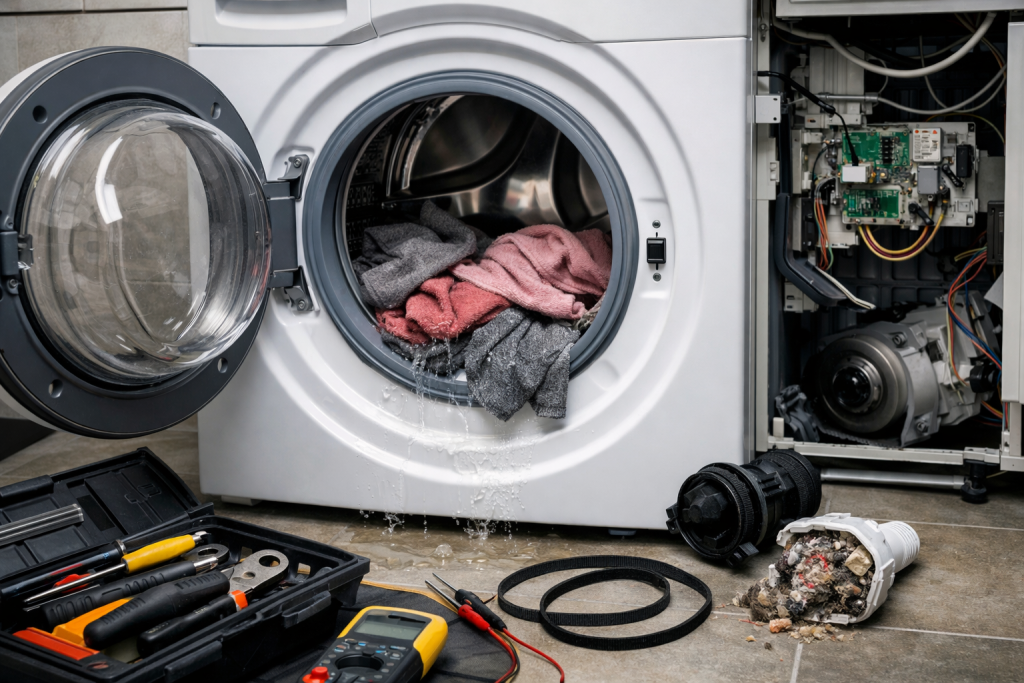
A washing machine that won’t spin is a common frustration for many households. Most often, this issue is caused by an unbalanced load, a clogged drain, or a faulty lid switch. While some causes are simple to resolve at home, mechanical or electrical failures may require professional attention. If basic cleaning and checks don’t fix the problem, factory-authorized repair may be needed to restore safe and reliable operation.
Why is my washing machine not spinning?
Short answer: A washing machine may stop spinning due to a blocked drain pump, broken drive belt, faulty lid switch, or control board malfunction. Start with simple checks, but persistent issues can signal the need for professional service.
The Most Common Causes
- Blocked or clogged drain pump or hose
- Broken or worn drive belt
- Faulty lid switch or door latch
- Malfunctioning control board or timer
- Unbalanced or overloaded wash load
If your washer isn’t spinning, prompt attention can help prevent further damage and minimize repair costs. Delaying repairs may lead to larger, more expensive issues.
Need Professional Washing Machine Repair? CPS Connects You to Factory-Authorized Service
Short answer: If your troubleshooting doesn’t resolve the issue, or if you suspect a mechanical or electrical failure, professional repair through a factory-authorized network is recommended.
CPS Warranty Service connects you with trusted repair professionals who use manufacturer-approved parts and follow brand-specific standards.
- Brand-trained technicians
- OEM manufacturer-approved parts
- Repairs performed to manufacturer standards
- Nationwide authorized repair access
Schedule Factory-Authorized Washing Machine Repair
Why a Washing Machine That Won’t Spin Should Not Be Ignored
Short answer: Ignoring a washer that won’t spin can lead to more extensive mechanical problems, water drainage issues, and increased repair costs.
- Secondary component damage
- Electrical strain
- Higher repair cost risk
- Mold/odor damage from standing water
Early action helps protect your appliance, your laundry, and your budget.
Try These Fixes First
Short answer: Begin with basic cleaning and inspection steps, such as checking for blocked drains or an unbalanced load, before moving to more advanced troubleshooting.
How to Fix a Washing Machine That Won’t Spin
- Unplug the washing machine and ensure it is safe to access.
- Check that the load inside the drum is balanced and not overloaded.
- Inspect the lid or door to make sure it is closing and latching fully.
- Examine the drain hose for kinks or clogs and clear any obstructions.
- Remove the washer’s drain filter (if accessible) and clean out lint or debris.
- Plug the washer back in and run a spin cycle to test operation.
If your washer spins after these steps, a blockage was likely the cause. If the issue persists, further diagnosis is needed.
How to Identify the Type of Failure
Short answer: The way your washer behaves during the cycle often points to the underlying cause—listening and observing can help identify mechanical, electrical, or blockage issues.
If the washing machine drains but does not spin
This often indicates a problem with the lid switch or door latch, as most washers will not spin unless the lid is securely closed.
If the washing machine makes noise but the drum does not turn
This usually points to a worn or broken drive belt or motor coupling that transfers power to the drum.
If the washer does not drain or spin
This is commonly caused by a clogged drain pump or blocked hose, preventing water from leaving the drum and triggering a safety stop.
If the washer does nothing at all during spin
An electrical control or timer issue may be to blame, especially if the washer doesn’t respond to cycle changes.
Repair Cost: What Should You Expect?
Short answer: Washing machine spin-related repairs typically range from $100–$400 depending on the cause and extent of the issue.
- Service visit: $75–$150
- Minor component replacement (lid switch, belt): $100–$200
- Major component replacement (motor, control board): $200–$400+
- Costs vary by brand, model, and region.
Can I Buy a Warranty to Fix This Current Issue?
Short answer: No, warranty plans only cover future mechanical failures, not pre-existing issues.
A washing machine must be fully functional at the time you purchase extended coverage. Once your washer is professionally repaired, it may be eligible for ongoing protection to help avoid future repair costs.
Why Factory-Authorized Service Matters
Short answer: Authorized service ensures your washing machine is repaired using the correct parts and procedures, protecting both your appliance and your investment.
- OEM parts
- Brand-specific training
- Proper diagnostic standards
- Aftermarket components (unauthorized risk)
- Misdiagnosis (unauthorized risk)
- Repeat failure risk (unauthorized risk)
After Repair: Protect Against Future Breakdowns
Short answer: Once your washer is working reliably, an extended protection plan can help reduce the risk and cost of future breakdowns.
- Motors
- Pumps
- Heating elements
- Control boards
- Mechanical failure due to normal use
Washing Machine Not Spinning FAQs
Why won’t my washing machine spin?
Most commonly, this is due to a blocked drain pump, faulty lid switch, or worn drive belt.
Can I fix a washer that won’t spin myself?
You can often resolve simple issues like unbalanced loads or clogged drains, but mechanical or electrical failures need professional repair.
Is it safe to keep running the washer if it won’t spin?
No, continued use may cause additional damage or mold growth inside the drum.
What does it mean if water won’t drain and the washer won’t spin?
This usually indicates a drain blockage or failure of the pump.
How much does it cost to repair a non-spinning washer?
Typical repairs range from $100–$400 depending on the part and labor required.
Does an extended warranty cover a washer that already isn’t spinning?
No—coverage applies only to future failures that occur after the plan is purchased.
How do I know if the lid switch is broken?
If the washer won’t spin and doesn’t recognize the lid is closed, the switch may be faulty.
Why does my washer stop mid-cycle and not spin?
This can be caused by unbalanced loads, control board issues, or a faulty timer.
How often do washers need professional repair for spinning issues?
Frequency varies, but prompt attention to unusual noises or failures helps prevent major breakdowns.

Still need help with your appliance?
If you’ve gone through the troubleshooting steps and the problem isn’t resolved, it may be time to think about protecting your appliance before the next issue appears. Our extended warranty plans continue coverage after the manufacturer’s warranty ends, helping cover repairs, parts, and service when unexpected breakdowns happen. With simple claims and dedicated support, protecting your appliance is easy.
Get Flat Rate Repair Program