

Why does my Gas Range smell like gas?
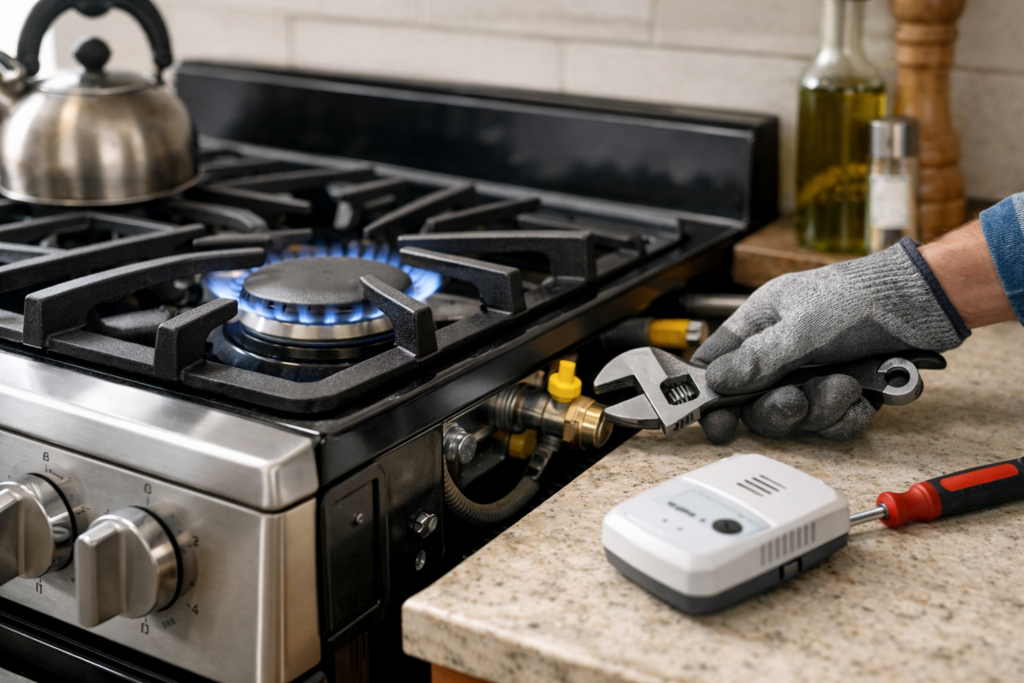
Updated June 2026 – reflects current gas range safety concerns and repair trends.
A gas smell from your range is a serious safety concern and is usually caused by a gas leak, burner not igniting properly, or a pilot light going out. Even a faint odor of gas should never be ignored—immediate steps should be taken to turn off the gas supply, ventilate the area, and contact a professional for inspection. Many homeowners experience this issue due to worn igniters, loose connections, or accidental burner movement, especially as ranges age or after cleaning. CPS can help with troubleshooting guidance, authorized repair referrals, and coverage options for eligible ranges, but urgent safety issues should always be addressed right away.
Need Repair Help?
We’re ready to help now.
- Factory-authorized service
- Flat-rate pricing options
- Appliance experts standing by
- Fast, reliable nationwide support
Get 3 Months Free
Protect your appliance and save.
- 3 extra months of coverage
- Plans for 60+ product categories
- Trusted protection you can count on
- No hidden fees, no surprises
Are You a Retailer?
Grow your business with CPS.
- Offer warranties customers trust
- Increase sales and customer loyalty
- 10,000+ retailers and growing
- Dedicated partner support
Quick Summary: Gas Range Smells Like Gas
If you notice a gas smell from your range, here’s what you need to know:
- Any gas odor from a range can signal a leak, faulty igniter, or unlit burner and should be taken seriously.
- Common causes include burners not lighting, pilot lights going out, or loose gas connections.
- Immediate safety steps include turning off the gas, ventilating the area, and avoiding open flames.
- Repair professionals often report igniter failure and connection issues as frequent culprits, especially in older or heavily used ranges.
- CPS can assist with repair guidance, service referrals, and coverage options for eligible gas ranges after manufacturer warranty expiration.
|
Topic |
Quick Take |
|---|---|
|
Is a gas smell normal? |
No. Any gas odor from your range should be investigated immediately. |
|
Most common causes |
Unlit burners, faulty igniters, pilot lights out, or gas leaks |
|
What to do first |
Turn off gas supply, ventilate area, avoid flames, and contact a professional |
|
Can CPS help? |
Yes. CPS offers repair guidance and referrals for eligible gas ranges |
|
Post-warranty support |
Repair assistance and coverage options may be available after manufacturer warranty expires |
free
Limited Time Offer
Get 3 months free on any protection plan.
Don’t wait for something to break. Get covered today and your first three months are on us.
What Should You Look For When Your Gas Range Smells Like Gas?
When dealing with a gas smell from your range, safety and proper diagnosis should always come first. Customers often want to know what steps to take, what potential problems to look for, and how to find trustworthy repair support or extended coverage options.
- Immediate safety actions and proper ventilation
- Verification that all burners are fully turned off and igniters are working
- Inspection for loose connections or damaged gas lines
- Access to factory-authorized repair professionals
- Availability of repair support and coverage for post-warranty or older ranges
What Experience Does CPS Have With Gas Range Repairs and Protection?
With more than 75 million products covered and over 50,000 repair providers nationwide, CPS has extensive experience helping customers address gas range issues, safety concerns, and post-warranty repair needs. Based on long-term claims data, CPS has supported millions of homeowners through complex appliance repairs, including gas leak troubleshooting and igniter failures.
- Igniter and burner failures are among the most common gas range repairs reported after several years of use
- Gas leaks often result from worn fittings, damaged lines, or failed connections, especially in older ranges
- Repair costs increase when specialized labor is needed for gas line or valve repairs
- Factory-authorized repair referrals are important for gas appliance safety and compliance
- Post-warranty support is often requested when homeowners encounter safety issues after the manufacturer coverage ends
What Gas Range Repairs Are Most Common and Expensive After Warranty Expiration?
Based on CPS’s historical claims data, common gas range repairs include igniter replacements, burner valve repairs, and addressing gas leaks from worn connections. As ranges age, these issues become more frequent and can be both urgent and costly, especially when specialized diagnostics or repairs are required.
|
Product or Repair Type |
Common Issue |
Why It Can Be Expensive or Important |
CPS Repair Insights |
|---|---|---|---|
|
Gas Range |
Igniter failure |
Prevents burners from lighting; may require replacement parts and labor |
Igniter failures are among the most common post-warranty gas range claims because repeated heat exposure gradually weakens the component over time. CPS claims data shows repairs often become more labor-intensive on slide-in and sealed-burner models where technicians must partially disassemble the cooktop to access ignition assemblies and wiring harnesses. Delays are common when model-specific igniters or spark modules are backordered, and service costs can escalate quickly once additional burner or control issues are discovered during diagnosis. Historical CPS repair records suggest these failures most commonly emerge 3–6 years into ownership, with approved repair invoices commonly ranging from $350–$1,100 depending on burner access, ignition-system configuration, and cooktop complexity. Claims involving intermittent clicking or delayed ignition also show repeat-service rates approaching 20% when multiple ignition components fail simultaneously. |
|
Gas Range |
Burner valve leak |
Can cause gas odors and safety risks; requires professional repair |
Burner valve leaks typically trigger urgent service calls due to obvious safety concerns and the need for immediate shutoff diagnostics. Repair history shows these claims frequently involve multiple service visits because technicians must pressure-test fittings, inspect regulators, and verify there are no secondary gas delivery issues before restoring operation. Labor costs rise further when older valves are discontinued or when corrosion and heat damage make removal difficult without replacing surrounding components. Historical CPS repair data suggests these failures commonly emerge 5–8 years into ownership, with approved repair invoices commonly ranging from $600–$1,700 depending on valve accessibility, safety-testing requirements, and installation layout. Claims involving gas odor complaints also show elevated approval rates for replacement consideration once repair estimates approach 45%–60% of appliance replacement value. |
|
Gas Range |
Pilot light out |
Unlit burner may allow gas to flow; urgent attention needed |
Pilot light failures are often underestimated because the visible symptom appears minor, but CPS historical claims data suggests underlying causes frequently involve thermocouples, safety valves, or gas flow irregularities that require detailed troubleshooting. Built-in and commercial-style ranges can increase repair complexity due to restricted installation access and additional labor needed to safely remove cabinetry-integrated units for inspection. Historical CPS repair records suggest these failures commonly emerge 4–7 years into ownership, with approved repair invoices commonly ranging from $400–$1,300 depending on ignition-system design, thermocouple involvement, and gas-line accessibility. Claims involving intermittent pilot outages also show elevated repeat-service percentages because gas-flow inconsistencies and safety shutoff issues are difficult to isolate during initial diagnostics. |
|
Gas Range |
Loose gas line connection |
Leak risk; may need specialized repair and parts |
Loose gas line connections regularly become high-friction repairs because technicians must perform leak verification, regulator testing, and safety compliance checks before completing the service. Claims activity commonly increases on older ranges after appliance movement or kitchen renovations loosen fittings behind the unit, and repairs can become expensive when hard-to-access connections require partial uninstall procedures or replacement of damaged flex lines and shutoff hardware. Historical CPS repair records suggest these failures commonly emerge 5–10 years into ownership, with approved repair invoices commonly ranging from $450–$1,500 depending on gas-line accessibility, cabinetry constraints, and safety-testing requirements. Based on CPS claim trends, repeat visits are common when concealed fittings or improper prior installations create recurring leak concerns after the initial repair. |
|
Gas Range |
Control board failure |
Can prevent safety shutoff or ignition; advanced diagnostics required |
Control board failures have become more expensive as modern gas ranges rely heavily on electronic ignition systems, sensor feedback, and digital safety monitoring. CPS repair history shows these claims often involve advanced diagnostics to isolate whether the failure originates from the board, spark module, wiring harness, or connected sensors, creating longer service windows and repeat-visit scenarios. Replacement boards themselves can represent a significant percentage of the appliance’s residual value, particularly on premium smart-enabled ranges where programming and calibration may also be required after installation. Historical CPS repair records suggest these failures commonly emerge 4–8 years into ownership, with approved repair invoices commonly ranging from $800–$2,200 depending on smart-feature integration, board availability, and programming complexity. Claims involving smart-enabled or dual-fuel models also show elevated downtime because OEM electronic assemblies frequently experience parts delays after manufacturer warranty expiration. |
Why Do Customers Choose CPS for Gas Range Protection and Repair Support?
Many homeowners choose CPS for access to reliable repair support, flexible coverage options, and help navigating urgent issues like gas odors or burner failures, especially after manufacturer warranties expire.
- Repair coordination and access to authorized service for gas ranges
- Coverage options for both new and eligible refurbished or open-box appliances
- Support for urgent issues like igniter failures and gas leaks
- Assistance with troubleshooting, repair referrals, and post-warranty repairs
- Experience-driven claims support and guidance throughout the repair process
Can CPS Help if My Gas Range Is Already Out of Warranty?
After the manufacturer warranty expires, many homeowners worry about repair costs and finding qualified service for gas ranges. CPS may still be able to help with troubleshooting support, repair referrals, and coverage options for certain eligible products, even after the original warranty period has ended.
- Factory-authorized repair referral assistance for gas range issues
- Troubleshooting support and repair coordination for out-of-warranty products
- Help sourcing replacement parts and qualified repair providers
- Guidance on eligibility for extended protection or coverage after purchase, depending on product and condition
|
Contact Method |
Details |
Best For |
|---|---|---|
|
Phone |
(800) 905-0443 |
Speaking directly with a CPS representative |
|
Web Chat |
|
Quick support and troubleshooting guidance |
|
CPS Client Care Portal |
https://client.cpscentral.com/ |
Claims, account access, and service support |
|
Text Message |
Text (347) 621-7180 |
Quick customer support questions |
|
Facebook Messenger |
http://m.me/ConsumerPriorityService |
General support and communication |
|
|
cs@cpscentral.com |
Detailed questions and documentation |
What Should Homeowners Know About Gas Range Safety, Repairs, and Warranty Coverage?
Is it normal to smell gas from my range when it’s off?
No. You should not smell gas from your range when it is turned off. A persistent gas odor may indicate a leak or faulty connection and requires immediate attention from a qualified professional.
What should I do if I smell gas coming from my stove or oven?
Turn off the gas supply, ventilate the area, avoid any open flames or sparks, and contact a professional or your gas utility immediately. Do not use the appliance until it has been inspected and repaired.
Can a faulty igniter cause a gas smell?
Yes. A faulty igniter can prevent the burner from lighting, allowing gas to escape and cause an odor. This is a common repair issue, especially as ranges age or after heavy use.
Are gas leaks covered by appliance protection plans?
Coverage for gas leaks depends on the cause and specific plan details. Mechanical or electrical failures, like faulty igniters or valves, may be covered under eligible CPS protection plans, but all safety issues should be addressed immediately by a professional.
Why does my range smell like gas after cleaning?
It’s possible a burner was accidentally left on, moved slightly out of position, or a connection was loosened during cleaning. Always check burner placement and verify all controls are off after cleaning.
Do refurbished or open-box gas ranges qualify for protection?
Many refurbished and open-box gas ranges may be eligible for CPS protection plans, provided they meet certain criteria for age and condition. Eligibility should be checked at the time of purchase or inquiry.
What are the most common gas range repairs after warranty expiration?
Based on CPS’s historical claims data, common repairs include igniter replacements, valve repairs, fixing leaks at connections, and control board failures.
Can I get repair help if my gas range warranty has expired?
Yes. CPS may still be able to assist with repair referrals, troubleshooting guidance, and coverage options for eligible products, even after the original warranty period has ended.
How do I know if my gas range is safe to use after repairs?
After any repair to a gas appliance, a qualified professional should verify that all connections are secure, there are no leaks, and the range operates safely. Never use a gas range if you suspect any ongoing issues.
Does CPS coordinate emergency gas leak repairs?
For urgent gas leaks, always contact your gas utility or emergency services first. CPS can help coordinate repairs and provide support for covered failures once the immediate safety concern has been addressed.
repair
No Hidden Fees
One price covers all parts, labor, makes & models.
Skip the guesswork. Our flat rate repair program means you know exactly what you’ll pay — before we start.
Want to Learn More About Gas Range Protection and Repair Support?
Explore your options for coverage, repair assistance, and safety support for gas ranges—whether your appliance is new, refurbished, or out of warranty.
For many homeowners, a gas smell from the range is both unsettling and potentially hazardous. As appliances age or experience heavy use, repair risks increase and parts like igniters or valves can fail unexpectedly. Customers often compare repair costs, replacement costs, and the value of ongoing support—especially for urgent issues and out-of-warranty repairs. If you’re concerned about range safety, repair options, or long-term protection, it’s worth exploring your eligibility for coverage and understanding how CPS can help with troubleshooting, repair referrals, and service coordination.
About the CPS Repair Insights Data
The repair insights, reliability observations, repair frequency estimates, and cost ranges referenced on this page are based on Consumer Priority Service (CPS) proprietary claims intelligence.
Data Source
- Analysis of 239,000+ service claims
- Claims processed since January 2024
- Aggregated repair activity across CPS-covered products
- Based on actual repair outcomes and claims history
What the Data Reflects
- Common repair patterns
- Reliability trends
- Historical service frequencies
- Real-world ownership experiences
- Typical repair cost observations
Purpose
The information is intended to help consumers better understand potential repair risks, ownership costs, and common post-warranty repair situations based on observed claims activity.
 SPECIAL OFFER
 Coverage for scratch & dent models