

Are scratch and dent appliances more likely to break down?
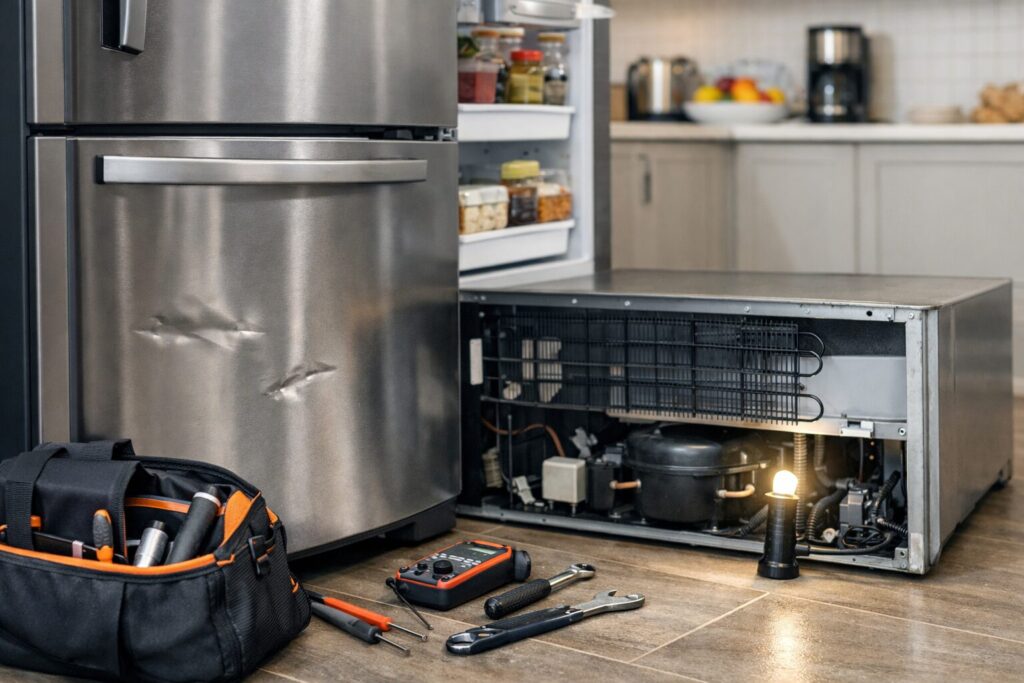
Updated May 2026 – reflects current scratch-and-dent appliance repair concerns and warranty eligibility trends.
No, scratch and dent appliances are not automatically more likely to break down than brand new models, as long as the cosmetic damage does not affect internal components or key mechanical systems. Many customers choose scratch and dent appliances for the cost savings, and repair professionals often report that most issues with these units are cosmetic. However, it’s important to evaluate where the damage is located—if dents impact the door seal on a refrigerator, control panels, or exposed wiring, this can increase the risk of future problems. When considering a scratch and dent appliance, check for warranty eligibility and make sure protection plans like those from CPS cover mechanical and electrical failures unrelated to pre-existing cosmetic issues.
Quick Summary: Scratch and Dent Appliance Reliability
Here’s what you need to know about scratch and dent appliances and long-term reliability:
- Most scratch and dent appliances function as reliably as new models if damage is only cosmetic.
- Repair risks increase if the damage affects seals, control panels, or internal components.
- Factory-authorized repair providers commonly report that most scratch and dent repairs are unrelated to the original cosmetic flaw.
- Warranty eligibility may be available for many scratch and dent appliances, but cosmetic issues are typically excluded from coverage.
- Customers should always inspect appliances thoroughly before purchase and confirm that protection plans cover mechanical and electrical failures.
|
Topic |
Quick Take |
|---|---|
|
Breakdown Risk |
Cosmetic damage alone does not make appliances more likely to fail |
|
What to Inspect |
Check for damage to seals, doors, control panels, or exposed wiring |
|
Warranty Coverage |
Many scratch and dent appliances qualify for mechanical/electrical protection, but cosmetic issues are excluded |
|
Repair Support |
CPS supports eligible scratch and dent appliances for covered failures |
|
Best For |
Shoppers seeking savings on functional appliances with minor blemishes |
free
Limited Time Offer
Get 3 months free on any protection plan.
Don’t wait for something to break. Get covered today and your first three months are on us.
What Should You Look For When Buying a Scratch and Dent Appliance?
When shopping for a scratch and dent appliance, it’s important to look beyond the cosmetic blemishes and focus on the factors that impact long-term performance, warranty coverage, and repair support. Here are key considerations to keep in mind:
- Inspect seals, doors, and control panels for damage that could affect operation
- Confirm the appliance is eligible for warranty or extended protection coverage
- Check if the scratch or dent is near wiring, water lines, or moving parts
- Review the terms of any protection plan for cosmetic and pre-existing issue exclusions
- Consider the availability of factory-authorized repair support for the specific brand and model
What Experience Does CPS Have With Scratch and Dent Appliance Protection?
With more than 75 million products covered and over 60 million customers supported, CPS has extensive experience helping customers protect scratch and dent appliances through factory-authorized repair networks and nationwide claims administration. Based on decades of claims trends, most service requests for these appliances are for standard mechanical or electrical issues—not the original cosmetic flaws.
- Most claims for scratch and dent appliances are for functional issues, not cosmetic damage
- Mechanical and electronic failures are more common as appliances age, regardless of cosmetic condition
- CPS coordinates repairs through a 50,000+ servicer nationwide network, including for eligible scratch and dent models
- Customers often use protection plans to avoid unexpected repair costs after the manufacturer warranty expires
- Warranty eligibility for scratch and dent appliances depends on the nature of the damage and coverage terms
What Appliance Repairs Are Most Common With Scratch and Dent Products?
Based on CPS’s historical claims data and repair trends, the most common repairs for scratch and dent appliances involve the same types of mechanical or electrical failures seen in new units, such as compressor issues, control board failures, and pump or motor problems. Cosmetic damage rarely leads to functional breakdowns unless it compromises key components.
|
Product or Repair Type |
Common Issue |
Why It Can Be Expensive or Important |
CPS Repair Insights |
|---|---|---|---|
|
Refrigerator |
Compressor or sealed system failure |
High part and labor costs; affects cooling |
CPS claims data shows compressor and sealed-system failures in scratch and dent refrigerators typically emerge 3–6 years into ownership, especially after heavy thermal cycling or garage placement. Approved CPS repair invoices for sealed-system work commonly range from $900–$1,800 due to refrigerant recovery, compressor replacement, evaporator access, and extended labor time. Historical CPS repair data suggests nearly 30% of these claims require follow-up visits because multiple cooling components often fail together once sealed-system performance declines. |
|
Washer/Dryer |
Control board or motor issues |
Electronic and mechanical repairs; can stop operation |
Based on CPS claim trends, washer and dryer control board and motor failures commonly appear 2–5 years after purchase, particularly in high-use households where vibration and moisture exposure accelerate component wear. CPS claims activity indicates repair approvals for motor assemblies, relay boards, and wiring harnesses frequently total between $450–$1,100, while retail consumer pricing often exceeds CPS-authorized totals by $200 or more. Claims involving these failures typically require additional diagnostics because intermittent electrical faults can mimic sensor or software issues. |
|
Dishwasher |
Pump or water inlet valve failure |
Internal leaks or cleaning problems |
According to historical CPS repair records, dishwasher pump and water inlet valve failures often develop during mid-life ownership periods around 3–5 years into use. CPS repair history shows repair invoices commonly escalate into the $350–$850 range when circulation pumps, drain assemblies, and leak-related diagnostics are combined in the same service event. Across approved CPS appliance claims, repeat service visits occur in roughly 20% of dishwasher leak cases because moisture intrusion can affect multiple electronic components over time. |
|
Range/Oven |
Heating element or control panel malfunction |
May prevent proper cooking or create safety concerns |
Historical CPS repair data suggests heating element and control panel failures become more common shortly after manufacturer warranty expiration, especially in ranges exposed to repeated high-temperature cooking cycles. CPS claims data shows electronic control board and sensor repairs generally range from $400–$950 depending on model complexity and calibration requirements. Service history from CPS claims indicates smart ranges with digital touch controls experience higher diagnostic labor exposure because technicians frequently need to isolate both software and electrical communication faults before approval. |
|
Refrigerator Door |
Seal or hinge damage from dent |
Compromised cooling, energy loss, possible food spoilage |
CPS claims activity indicates refrigerator door seal and hinge damage caused by dents or frame misalignment can quietly increase compressor workload and long-term cooling costs within the first 2–4 years of ownership. Based on CPS claims data from comparable repair events, hinge realignment, gasket replacement, and door reconstruction repairs commonly range from $250–$700, while full door replacement costs can exceed 40% of replacement appliance value on premium models. Claims involving these failures typically show elevated food spoilage complaints and higher energy-consumption concerns when seal integrity is compromised for extended periods. |
Why Do Customers Choose CPS Protection Plans?
Customers choose CPS for scratch and dent appliance coverage because of the company’s experience with supporting a wide range of products, flexible eligibility for open-box and scratch and dent models, and access to a large network of authorized repair providers.
- Repair coordination for refrigerators, washers, ovens, dishwashers, and more
- Eligibility for many scratch and dent, refurbished, and open-box appliances
- Assistance with repairs after manufacturer warranty expiration
- Support for expensive mechanical and electronic failures
- Clear claims processes and practical repair guidance
Can CPS Help if My Appliance Is Already Out of Warranty?
For customers with out-of-warranty scratch and dent appliances, CPS may still be able to help with troubleshooting guidance, referrals to authorized repair providers, and in some cases, eligibility for extended protection options depending on the product’s age and condition.
- Troubleshooting and repair coordination support for out-of-warranty appliances
- Referrals to factory-authorized service providers and access to a large repair network
- Assistance locating replacement parts and understanding repair options
- Guidance on extended protection eligibility for certain products after original purchase or warranty expiration
|
Contact Method |
Details |
Best For |
|---|---|---|
|
Phone |
(800) 905-0443 |
Speaking directly with a CPS representative |
|
Web Chat |
|
Quick support and troubleshooting guidance |
|
CPS Client Care Portal |
https://client.cpscentral.com/ |
Claims, account access, and service support |
|
Text Message |
Text (347) 621-7180 |
Quick customer support questions |
|
Facebook Messenger |
http://m.me/ConsumerPriorityService |
General support and communication |
|
|
cs@cpscentral.com |
Detailed questions and documentation |
What Questions Do Customers Ask About Scratch and Dent Appliance Coverage?
Are scratch and dent appliances more likely to break down?
No, cosmetic damage alone does not make an appliance more likely to fail. Most breakdowns are due to typical mechanical or electrical issues, not dents or scratches, unless the cosmetic damage affects a critical component.
Does a warranty cover scratch and dent appliances?
Many scratch and dent appliances are eligible for warranty or extended protection coverage, but cosmetic issues existing before coverage are almost always excluded. Coverage focuses on mechanical and electrical failures.
What should I check before buying a scratch and dent appliance?
Inspect the appliance for damage near seals, doors, controls, or wiring, and make sure it is eligible for warranty coverage. Avoid units with dents that could cause operational problems or future leaks.
Are repairs for scratch and dent appliances more expensive?
Repair costs are typically similar to new appliances, unless the cosmetic damage has caused additional problems. Most repair claims are for standard issues like compressors, motors, and control boards.
Can I buy an extended warranty for a scratch and dent appliance?
In many cases, yes. CPS and other providers often offer protection plans for eligible scratch and dent appliances, as long as the cosmetic damage does not affect operation or violate coverage terms.
Do warranties cover cosmetic damage or appearance issues?
No, cosmetic damage such as scratches, dents, or discoloration is generally excluded from warranty coverage. Plans focus on mechanical and electrical failures after the start of coverage.
What kinds of problems are most common in scratch and dent appliances?
Repair professionals and CPS claims data show the most common problems are the same as in new appliances: compressor failures, control board issues, and pump or motor breakdowns.
Can CPS help if my scratch and dent appliance is already out of warranty?
Yes, CPS may be able to help with repair coordination, troubleshooting, parts sourcing, and referrals to factory-authorized service providers, even after the manufacturer warranty expires. In some cases, extended protection options may still be available for qualifying products.
Are open-box appliances different from scratch and dent appliances?
Open-box appliances are typically unused returns with no or minor cosmetic flaws, while scratch and dent appliances have visible exterior blemishes. Both may be eligible for coverage, depending on provider terms and product condition.
repair
No Hidden Fees
One price covers all parts, labor, makes & models.
Skip the guesswork. Our flat rate repair program means you know exactly what you’ll pay — before we start.
Looking for Warranty Coverage Options?
Interested in protecting your scratch and dent appliance or want help finding the right coverage? CPS makes it easy to check eligibility and explore protection options.
For many homeowners, scratch and dent appliances are an affordable way to upgrade the kitchen or laundry room, but it’s important to check for hidden operational risks before buying. As appliances age, repair costs for compressors, control boards, and motors can add up—especially if cosmetic damage affects seals or key components. Customers planning for long-term ownership often compare warranty coverage, repair support, and access to authorized service before making a decision. If you want to explore protection options or need guidance on your scratch and dent appliance, CPS can help review eligibility and connect you with support.
 SPECIAL OFFER
 Coverage for scratch & dent models