

Are scratch and dent appliances reliable long term?
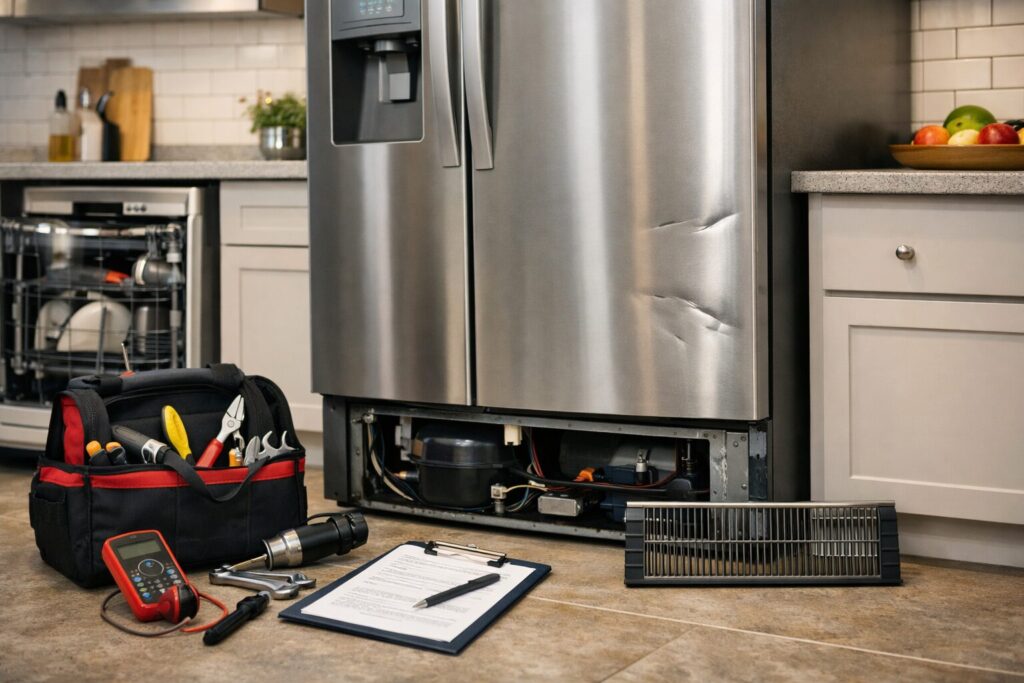
Updated May 2026 – reflects current scratch and dent appliance repair trends and long-term reliability concerns.
Sometimes. Scratch and dent appliances can be reliable long term if the damage is cosmetic and the core mechanical and electrical systems are unaffected, but hidden damage or improper handling can increase the risk of repairs as the appliance ages. Many customers find scratch and dent models to be a practical way to save on premium appliances, but it’s important to understand the source of the damage, inspect for functional issues, and consider post-warranty repair risks before purchasing. CPS supports coverage for many scratch and dent and open-box appliances, offering repair assistance and protection options for eligible products after the manufacturer warranty expires.
Quick Summary
Here’s what you need to know about scratch and dent appliance reliability and long-term ownership:
- Scratch and dent appliances are often reliable if damage is only cosmetic, but hidden issues can affect long-term performance.
- Appliances with dents near doors, seals, or control panels may be more prone to leaks or electronic failures over time.
- Many homeowners save on high-end models by purchasing scratch and dent, but post-warranty repairs can be more important if underlying issues appear.
- Coverage eligibility for scratch and dent appliances varies; many qualify for CPS protection plans and repair support.
- Inspecting appliances and understanding return policies is key before finalizing a scratch and dent purchase.
|
Topic |
Quick Take |
|---|---|
|
Long-Term Reliability |
Often reliable if damage is cosmetic and internal components are unaffected |
|
Hidden Risks |
Damage near seals, controls, or wiring can cause issues over time |
|
Warranty Coverage |
Many scratch and dent appliances are eligible for CPS protection plans |
|
Repair Support |
Post-warranty repairs and claims support available for eligible products |
|
Best Practices |
Inspect appliances carefully and check for functional issues before purchase |
free
Limited Time Offer
Get 3 months free on any protection plan.
Don’t wait for something to break. Get covered today and your first three months are on us.
What Should You Look For When Buying a Scratch and Dent Appliance?
When considering a scratch and dent appliance, it’s important to look beyond the price tag and evaluate the actual condition, repair risks, and coverage options. Here are the most important factors to keep in mind before making a decision.
- Inspect for functional issues beyond cosmetic damage
- Check the location of dents or scratches (avoid damage near seals, control panels, or wiring)
- Ask about coverage eligibility for extended protection plans
- Look for clear return policies and post-warranty repair support
- Consider potential repair costs if hidden issues appear over time
What Experience Does CPS Have With Scratch and Dent Appliance Repairs and Protection?
CPS has extensive experience supporting millions of customers with scratch and dent, open-box, and refurbished appliances, coordinating repairs for over 75 million products and partnering with more than 50,000 authorized servicers nationwide. Based on historical claims data, CPS helps customers navigate both common cosmetic concerns and the unexpected repairs that can develop with these discounted appliances over time.
- Control board and electronic failures are among the most common long-term repairs seen in scratch and dent appliances
- Damage near doors, seals, or display panels can increase the risk of leaks and operational issues as appliances age
- Many scratch and dent models require advanced diagnostics to rule out hidden mechanical damage
- Customers often seek repair support for refrigerators, washers, dryers, and ranges purchased as scratch and dent
- CPS coordinates repairs and coverage for eligible scratch and dent appliances across a wide service network
What Repairs Are Most Common With Scratch and Dent Appliances?
Based on CPS’s historical claims data, the most common repair concerns for scratch and dent appliances involve hidden mechanical or electrical issues that may not be visible during purchase. While many cosmetic imperfections don’t affect performance, appliances with dents near seals, control panels, or wiring may be more likely to experience leaks, control failures, or electrical problems as they age.
|
Product or Repair Type |
Common Issue |
Why It Can Be Expensive or Important |
CPS Repair Insights |
|---|---|---|---|
|
Refrigerator |
Seal or door damage |
May cause cooling issues and food spoilage |
CPS claims data shows refrigerator door and seal-related failures often begin 2–5 years into ownership, especially when dents impact hinge alignment or gasket compression areas. Historical CPS repair data suggests even small cabinet distortions can increase compressor runtime by 15%–25%, leading to temperature instability and food spoilage complaints. Approved CPS claims involving seal failure commonly range from $320–$780, while compressor-related escalation tied to prolonged cooling strain can exceed $1,200. Service history from CPS claims indicates replacement recommendations become more common once repair totals approach 45%–60% of replacement value. |
|
Washer/Dryer |
Control panel or wiring problems |
Electronic repairs and parts replacement can be costly |
Based on CPS claim trends, washer and dryer control failures frequently emerge 3–6 years after purchase, particularly in units with hidden shipping or cosmetic side-panel impact exposure. CPS claims activity indicates wiring harness stress, moisture intrusion, and vibration-related connector failures often require multiple diagnostic visits before root causes are isolated. Typical approved repair invoices range from $420–$950, with smart laundry models regularly exceeding $1,100 when control boards and display assemblies are both replaced. Historical CPS repair records also show repeat service visits occur in nearly 28% of electronic laundry claims due to intermittent faults and software calibration issues. |
|
Dishwasher |
Pump or leak from dented tub |
Water damage risk and labor-intensive repairs |
According to historical CPS repair records, dented dishwasher tubs can gradually compromise pump seals, spray-arm alignment, and lower-door water containment during mid-life ownership periods around 4–7 years after purchase. Claims involving these failures typically require extensive leak diagnostics and partial disassembly, increasing labor exposure substantially compared to standard pump repairs. CPS claims data shows approved repairs commonly range from $480–$980, while hidden flooring or cabinet moisture damage may further escalate total claim severity. Service history from CPS claims indicates leak-related dishwasher repairs have elevated repeat-visit rates near 22% due to slow-developing seal failures and intermittent water intrusion. |
|
Range/Oven |
Display or control board failures |
Smart appliance electronics require specialized repair |
CPS repair history shows control board and display failures are increasingly common in smart ranges and ovens 3–5 years into ownership, especially when cosmetic impact affects console mounting or internal relay stability. Based on CPS claims data from comparable repair events, electronic diagnostics and calibration procedures can account for nearly 40% of total invoice cost before parts replacement even begins. Typical CPS-authorized repairs range from $450–$1,050, while premium induction and convection models can exceed $1,400 when multiple relay boards or touch interfaces fail together. Claims activity also indicates consumers frequently delay these repairs after manufacturer warranty expiration because cooking functionality may degrade gradually before full failure occurs. |
|
Microwave |
Door latch or sensor issues |
Can affect safety and require part replacement |
CPS claims data shows microwave door latch and sensor failures commonly appear 2–4 years into ownership as repeated door pressure, vibration, and hinge wear affect interlock alignment. Claims involving these failures typically require safety testing, switch replacement, and sensor recalibration to restore proper operation and prevent intermittent shutdown behavior. Historical CPS repair data suggests approved repair costs usually range from $240–$620, although built-in microwave configurations can exceed $850 due to cabinet removal labor and trim-kit access requirements. Across approved CPS appliance claims, repeat service visits occur in roughly 18% of microwave sensor claims because intermittent latch communication faults are difficult to reproduce during initial diagnostics. |
Why Do Customers Choose CPS for Scratch and Dent Appliance Coverage?
Customers choose CPS for scratch and dent appliance coverage because of flexible eligibility, nationwide repair support, and practical expertise handling post-warranty repair situations. Here are a few reasons why CPS stands out for owners of discounted appliances.
- Repair support for refrigerators, washers, dryers, dishwashers, ovens, and more
- Eligibility for many scratch and dent, open-box, and refurbished appliances
- Assistance coordinating repairs after manufacturer warranty expiration
- Access to a large network of factory-authorized and experienced servicers
- Clear claims process and practical repair guidance when issues appear
Can CPS Help if My Appliance Is Already Out of Warranty?
After the manufacturer warranty expires, many customers want to know their options if their scratch and dent appliance needs service. CPS may still be able to assist with troubleshooting, repair referrals, and, in some cases, extended protection options for eligible products, depending on the product’s age, condition, and coverage guidelines.
- Factory-authorized repair referral assistance for eligible appliances
- Troubleshooting guidance and repair coordination support for out-of-warranty products
- Help locating replacement parts, authorized service, and repair options
- Guidance on extended protection eligibility for certain products after original purchase or manufacturer warranty period
|
Contact Method |
Details |
Best For |
|---|---|---|
|
Phone |
(800) 905-0443 |
Speaking directly with a CPS representative |
|
Web Chat |
|
Quick support and troubleshooting guidance |
|
CPS Client Care Portal |
https://client.cpscentral.com/ |
Claims, account access, and service support |
|
Text Message |
Text (347) 621-7180 |
Quick customer support questions |
|
Facebook Messenger |
http://m.me/ConsumerPriorityService |
General support and communication |
|
|
cs@cpscentral.com |
Detailed questions and documentation |
What Should You Know About Scratch and Dent Appliance Coverage?
Are scratch and dent appliances as reliable as new appliances?
Scratch and dent appliances can be just as reliable as new appliances if the damage is only cosmetic and there are no hidden mechanical or electrical issues. However, dents or scratches near critical components may increase the risk of future repairs.
What should I check before buying a scratch and dent appliance?
Inspect for more than surface damage—look for any signs of issues near doors, seals, control panels, or wiring. Test basic appliance functions and ask about return policies and extended protection eligibility.
Are scratch and dent appliances covered by manufacturer warranties?
Many scratch and dent appliances still include the original manufacturer warranty, but coverage details may depend on the retailer, the extent of the damage, and the appliance brand. Always confirm warranty status before purchasing.
Can I get an extended warranty or protection plan for a scratch and dent appliance?
Yes, many scratch and dent appliances are eligible for CPS protection plans, but eligibility depends on the product’s age, condition, and where it was purchased. CPS offers support for many new, open-box, and scratch and dent models.
What kinds of repairs are most common with scratch and dent appliances?
Based on CPS’s historical claims data, the most common repairs involve control boards, seals, leaks, or electrical issues—especially if the cosmetic damage affects functional parts.
Are repair costs higher for scratch and dent appliances?
Repair costs are similar to those for new appliances, but hidden damage or issues related to the original dent or scratch can sometimes add complexity or cost to repairs.
Does accidental damage coverage apply to scratch and dent appliances?
No, accidental damage is generally not covered for appliances. CPS protection plans focus on mechanical and electrical failures that occur after coverage begins, not pre-existing or cosmetic issues.
Can I get help if my scratch and dent appliance is already out of warranty?
Yes, CPS may still be able to assist with repair referrals, troubleshooting guidance, and, in some cases, extended protection for certain eligible products—even after the manufacturer warranty has expired.
Are refurbished or open-box appliances handled the same way as scratch and dent for warranty coverage?
Many refurbished and open-box appliances are eligible for similar CPS protection and repair support, though eligibility depends on product type, condition, and where it was purchased.
What are the main risks with scratch and dent appliances long term?
Main risks include hidden damage to seals, control boards, or wiring, which can cause leaks, electronic failures, or mechanical issues as the appliance ages. Careful inspection and protection options can help reduce long-term risks.
repair
No Hidden Fees
One price covers all parts, labor, makes & models.
Skip the guesswork. Our flat rate repair program means you know exactly what you’ll pay — before we start.
Want to Learn More About Protecting Your Appliance Long-Term?
If you’re considering a scratch and dent appliance or want to protect your current product, CPS can help you explore coverage options and answer questions about eligibility and repair support.
For many homeowners, buying scratch and dent appliances is a practical way to save on premium models, but it’s important to weigh the long-term reliability, repair risks, and protection options before making a decision. As appliances age, unexpected repairs—especially for control boards, seals, or electronic components—can become more likely, particularly if the original damage was more than cosmetic. Exploring protection plans and understanding repair support options can help you manage ownership costs and avoid surprises down the road.
 SPECIAL OFFER
 Coverage for scratch & dent models