

Dishwasher Not Cleaning
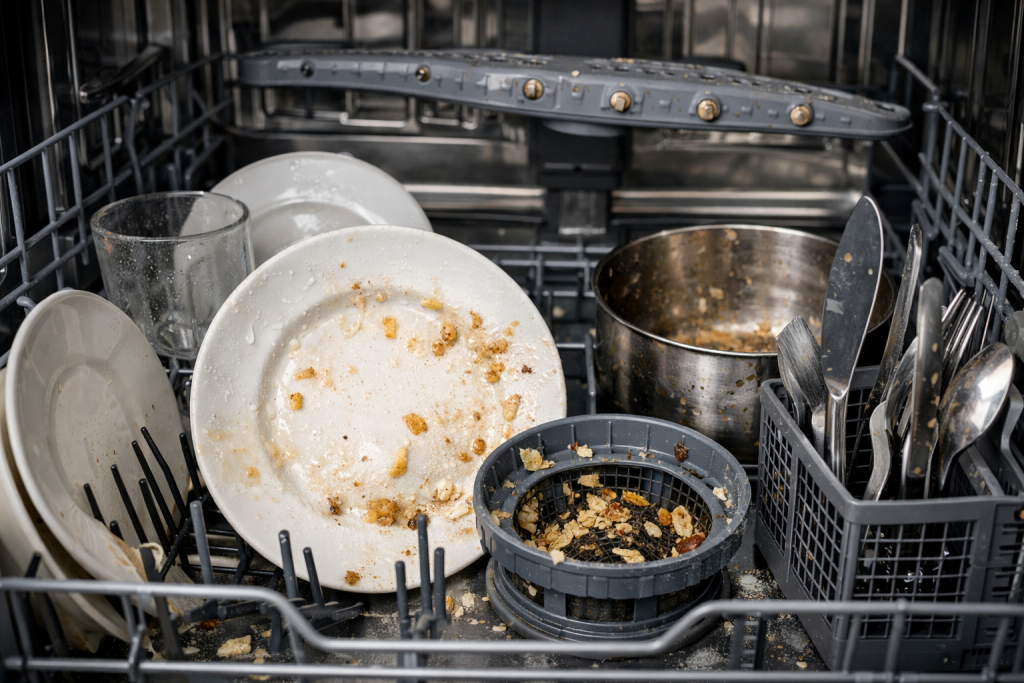
A dishwasher that’s not cleaning dishes properly is a common household frustration. Most often, the issue is caused by a clogged filter, blocked spray arms, or a problem with detergent dispensing. Fortunately, many cleaning and performance issues can be resolved with a few simple steps at home.
If cleaning and basic troubleshooting do not restore proper washing, professional repair may be needed to address underlying mechanical or control failures.
Why is my dishwasher not cleaning?
Short answer: The most likely causes are a dirty filter, blocked spray arms, or incorrect loading that prevents water from reaching all surfaces. In some cases, a malfunctioning pump, heating element, or control board can also impact cleaning performance.
The Most Common Causes
- Clogged filter or food debris blocking water flow
- Spray arm blockage or malfunction
- Faulty water inlet valve or pump failure
- Heating element not working (prevents detergent activation)
- Improper loading or using the wrong detergent
Addressing dishwasher cleaning problems early can prevent more serious or costly repairs. Unresolved issues may impact both cleaning results and the long-term lifespan of your appliance.
Need Professional Dishwasher Repair? CPS Connects You to Factory-Authorized Service
Short answer: If basic cleaning and maintenance steps do not resolve the issue, a professional technician may be required to diagnose and repair the underlying mechanical or electrical problem.
Professional service ensures your dishwasher is repaired using manufacturer-recommended procedures and components.
- Brand-trained technicians
- OEM manufacturer-approved parts
- Repairs performed to manufacturer standards
- Nationwide authorized repair access
Schedule Factory-Authorized Dishwasher Repair
Why a Dishwasher That Doesn’t Clean Properly Should Not Be Ignored
Short answer: Ongoing cleaning issues can put additional strain on dishwasher components and may lead to further mechanical problems, water leaks, or hygiene concerns.
- Secondary component damage
- Electrical strain
- Higher repair cost risk
- Mold/odor damage
Address dishwasher cleaning problems promptly to avoid more extensive repairs and maintain a healthy kitchen environment.
Try These Fixes First
Short answer: Start by cleaning the filter, inspecting the spray arms, and checking for blockages or detergent issues before considering more advanced repairs.
How to Fix a Dishwasher That’s Not Cleaning
- Turn off and unplug the dishwasher or switch off the circuit breaker.
- Remove and clean the filter under the bottom rack, rinsing away food residue.
- Inspect spray arms for clogs—remove and rinse them under running water, using a toothpick to clear blocked holes if needed.
- Check the detergent dispenser for buildup or obstructions.
- Make sure dishes are loaded correctly, avoiding overloading or blocking spray arms.
- Run a cycle with dishwasher cleaner or white vinegar to remove internal residue.
- Restart the dishwasher and observe cleaning performance.
If dishes come out clean after these steps, the problem was likely a blockage or maintenance issue. If not, there may be an internal mechanical or electrical fault that needs further diagnosis.
How to Identify the Type of Failure
Short answer: The symptoms your dishwasher displays—such as incomplete cycles, cold water, or standing water—can help pinpoint the underlying cause of poor cleaning.
If the dishwasher leaves dishes dirty but water drains normally
The issue is most likely a clogged filter, blocked spray arms, or incorrect detergent usage.
If detergent remains undissolved after the cycle
This may indicate a faulty dispenser, spray arm blockage, or a heating element that isn’t activating properly.
If dishes are wet and gritty, and there is standing water
The drain hose or pump could be obstructed, or there may be a malfunction in the drain system.
If water is cold during the wash
This suggests a possible heating element failure, impacting both cleaning and drying results.
Repair Cost: What Should You Expect?
Short answer: Dishwasher repair costs typically range from $100–$350 depending on the diagnosis and the parts involved.
- Service visit: $100–$150
- Minor component replacement (filter, spray arm): $125–$225
- Major component replacement (pump, heating element): $200–$350
- Costs vary by brand, model, and region.
Can I Buy a Warranty to Fix This Current Issue?
Short answer: No, warranty coverage only applies to future mechanical or electrical failures, not to existing or pre-existing issues.
Your dishwasher must be fully functional at the time extended protection coverage is purchased. After any necessary repairs are completed and the appliance is operating normally, you may be eligible to protect it from unexpected future breakdowns through a CPS protection plan.
Why Factory-Authorized Service Matters
Short answer: Factory-authorized service ensures repairs are completed to the manufacturer’s standards, protecting both the dishwasher and your investment.
- OEM parts
- Brand-specific training
- Proper diagnostic standards
- Aftermarket components (risk)
- Misdiagnosis (risk)
- Repeat failure risk (risk)
After Repair: Protect Against Future Breakdowns
Short answer: Once your dishwasher is functioning properly, extended protection can help reduce the risk and cost of future mechanical failures.
- Motors
- Pumps
- Heating elements
- Control boards
- Mechanical failure due to normal use
Dishwasher Not Cleaning FAQs
Why is my dishwasher not cleaning dishes even after running a full cycle?
Common issues include clogged filters, blocked spray arms, or incorrect detergent use.
How often should I clean the dishwasher filter?
Check and clean the filter at least once a month, or more often if you use your dishwasher heavily.
Can using the wrong detergent cause poor cleaning?
Yes, using non-dishwasher or excessive detergent can leave residue and affect performance.
What if my dishwasher leaves residue or spots?
Hard water buildup or a malfunctioning rinse aid dispenser could be the cause; try a dishwasher cleaner and check rinse aid levels.
Should I pre-rinse dishes before loading?
Scrape off large food particles, but pre-rinsing is usually not necessary with modern dishwashers.
Why is water not draining at the end of the cycle?
This could be a sign of a blocked drain hose or a faulty drain pump.
What does it mean if my dishwasher isn’t heating water?
A failed heating element or control board may be preventing water from reaching the correct temperature.
Is it safe to repair a dishwasher myself?
Basic cleaning and inspection are safe, but complex repairs should be handled by a professional technician.
How do I know if it’s time to call for service?
If cleaning and basic troubleshooting don’t solve the problem, or if you notice leaks or electrical issues, it’s best to seek professional help.
Can extended warranty coverage help with future cleaning issues?
Yes, once your dishwasher is working properly, a CPS protection plan can cover eligible future mechanical or electrical failures.

Still need help with your appliance?
If you’ve gone through the troubleshooting steps and the problem isn’t resolved, it may be time to think about protecting your appliance before the next issue appears. Our extended warranty plans continue coverage after the manufacturer’s warranty ends, helping cover repairs, parts, and service when unexpected breakdowns happen. With simple claims and dedicated support, protecting your appliance is easy.
Get Flat Rate Repair Program