

Does my appliance require professional installation to maintain warranty coverage?
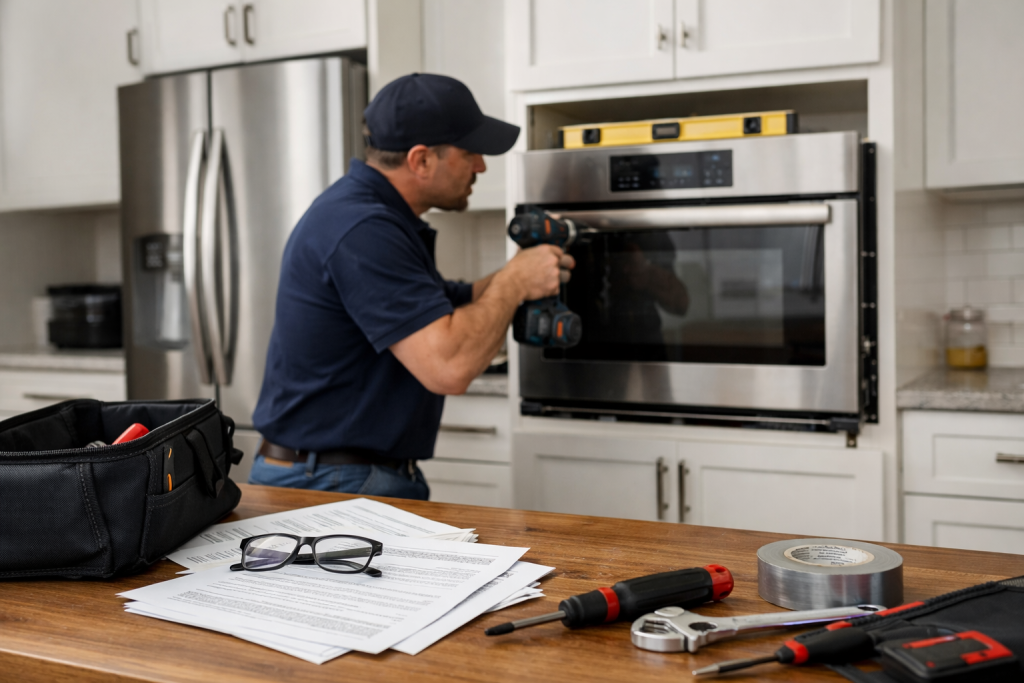
Updated June 2026 – reflects current appliance warranty requirements and professional installation trends.
Sometimes. Many appliance warranties—both manufacturer and extended protection plans—require professional installation to maintain full coverage, especially for major appliances like refrigerators, dishwashers, ovens, and built-in units. If an appliance is not installed by a licensed professional, coverage for certain types of repairs or failures may be denied due to improper installation. CPS and most reputable protection providers typically follow manufacturer guidelines regarding installation requirements. Always keep records of your installation, as proof may be needed if you file a warranty claim.
Need Repair Help?
We’re ready to help now.
- Factory-authorized service
- Flat-rate pricing options
- Appliance experts standing by
- Fast, reliable nationwide support
Get 3 Months Free
Protect your appliance and save.
- 3 extra months of coverage
- Plans for 60+ product categories
- Trusted protection you can count on
- No hidden fees, no surprises
Are You a Retailer?
Grow your business with CPS.
- Offer warranties customers trust
- Increase sales and customer loyalty
- 10,000+ retailers and growing
- Dedicated partner support
Quick Summary / TL;DR
Here’s what matters most about installation requirements and warranty coverage for appliances:
- Many appliance warranties require professional installation for full coverage, especially for built-in or complex products.
- Repairs related to improper installation are commonly excluded from warranty and protection plan coverage.
- Proof of installation by a licensed professional may be needed to process warranty claims.
- Self-installation or DIY setup can sometimes void coverage for certain appliance types.
- Always save installation receipts, as they help support claims if issues arise after purchase.
|
Topic |
Quick Take |
|---|---|
|
Professional Installation Required? |
Often required for full warranty coverage, especially for built-in and major appliances |
|
DIY Installation Risks |
Can void warranty or limit coverage for certain repairs |
|
Proof Needed? |
Installation receipts or documentation may be required for claims |
|
Covered Products |
Major appliances, smart appliances, built-in units, and sometimes laundry equipment |
|
Repair Support |
CPS follows manufacturer guidelines and helps with coverage questions |
free
Limited Time Offer
Get 3 months free on any protection plan.
Don’t wait for something to break. Get covered today and your first three months are on us.
What Should You Look For When Checking Appliance Warranty Requirements?
When comparing appliance warranties or considering a protection plan, it’s important to understand installation requirements and how they affect coverage. Many customers discover these details only when a repair issue arises, so knowing what to look for upfront can help avoid surprises. Here are the key factors to keep in mind:
- Clear requirements for professional installation and who qualifies as a licensed installer
- Coverage limitations for self-installed or DIY appliances
- Specific documentation or proof needed to validate installation
- How improper installation can affect claims and repair eligibility
- Coverage details for built-in, high-end, and smart appliances
What Experience Does CPS Have With Appliance Warranty Requirements and Repairs?
With more than 75 million products covered, 60 million+ customers supported, and over 50,000 servicers nationwide, CPS has extensive experience helping homeowners navigate appliance warranty requirements—including installation standards, claims documentation, and common repair scenarios. Based on long-term claims administration, CPS regularly assists customers with coverage questions related to installation and post-warranty repairs.
- Improper installation is a leading reason for denied appliance warranty claims based on CPS’s historical claims data
- Major appliances like refrigerators, dishwashers, and ovens most often require professional installation for full coverage
- Control boards, compressors, and water line connections are common sources of installation-related repair issues
- Many smart and built-in appliances have more stringent installation and documentation requirements
- Customers frequently contact CPS for guidance on installation records and claim eligibility
What Appliance Repairs Are Most Affected by Installation Requirements?
Based on CPS’s historical claims data and real-world repair trends, installation-related issues are among the most common reasons for warranty claim denials on major appliances. Homeowners often discover the importance of proper installation only when a repair is needed, especially for refrigerators, dishwashers, ovens, and laundry appliances.
|
Product or Repair Type |
Common Issue |
Why It Can Be Expensive or Important |
CPS Repair Insights |
|---|---|---|---|
|
Refrigerator (built-in or with ice/water) |
Water line leaks or cooling failures |
Improper installation can lead to leaks or compressor damage; repairs often not covered |
Based on CPS repair experience, built-in refrigerator repairs frequently become high-cost service events because improper water line installation or restricted airflow can contribute to compressor strain, leaks, and sealed-system failures. Customers often underestimate how cabinetry removal, water-damage mitigation, and specialty installation access increase labor costs during approved claims. Historical CPS repair data suggests these failures commonly emerge 5–8 years into ownership, with approved repair invoices regularly ranging from $900–$2,200 once leak diagnostics, refrigerant handling, and multiple service visits are involved. Claims involving hidden moisture damage also show elevated repeat-service rates when surrounding cabinetry or flooring complications delay full repairs. |
|
Dishwasher |
Drainage or flooding problems |
Incorrect hook-up can cause water damage and denied claims |
CPS service observations indicate dishwasher installation-related failures commonly lead to leaking hoses, drainage restrictions, and hidden moisture exposure when drain lines or leveling adjustments are improperly configured. Service history from CPS claims shows built-in dishwasher repairs frequently require cabinet removal and extensive leak diagnostics to access damaged circulation systems, pumps, and electronic controls. Approved CPS appliance claims involving installation-related leak damage commonly range from $500–$1,300 depending on moisture severity and internal component exposure. Based on CPS claim trends, delayed detection of slow leaks significantly increases repeat-service scenarios and secondary repair costs. |
|
Oven/Range (gas or electric) |
Electrical or gas connection issues |
Improper installation can be a safety hazard and void warranty coverage |
Historical CPS repair records indicate gas and electric range installation failures increasingly involve unstable voltage delivery, loose wiring connections, ignition calibration problems, or restricted ventilation conditions that create recurring performance and safety concerns. CPS claims activity suggests these failures often emerge shortly after installation or during mid-life ownership periods when repeated heat cycling stresses improperly connected components. Approved repair invoices commonly range from $450–$1,250 depending on electrical diagnostics, ignition-system repairs, and accessibility requirements. Claims involving repeated ignition failures or overheating complaints also show elevated labor exposure because multiple internal systems may require recalibration or replacement simultaneously. |
|
Washer/Dryer |
Drain or vent problems |
Poor installation can lead to leaks, vent blockages, or electrical failures |
CPS repair experience indicates laundry appliance installation issues commonly contribute to restricted dryer airflow, drainage backflow, vibration-related wear, and premature motor strain when venting or leveling systems are improperly configured. Service history from CPS claims shows these conditions frequently accelerate failures involving pumps, motors, thermal fuses, and electronic controls 3–6 years into ownership. Approved CPS appliance claims involving vent-related overheating or drainage-system damage commonly range from $500–$1,200 depending on accessibility and secondary component wear. Claims involving recurring no-heat or leak complaints also show elevated repeat-service activity when underlying installation conditions are not corrected after initial repairs. |
|
Smart Appliance (Wi-Fi enabled) |
Connectivity or power issues |
Incorrect setup can cause electronics or control board failures |
CPS service observations indicate smart appliance installation failures increasingly involve unstable power delivery, firmware corruption, wireless synchronization problems, and damaged control boards caused by improper setup or voltage irregularities. Historical CPS repair data suggests these failures commonly emerge within the first several years after purchase as connected systems attempt repeated communication cycles under unstable operating conditions. Approved repair invoices for smart appliance electronic failures commonly range from $600–$1,500 depending on calibration requirements and replacement-module availability. Based on CPS claim trends, connected appliances also show above-average repeat-service percentages near 25% because software-related communication faults are often difficult to isolate during initial diagnostics. |
Why Do Customers Trust CPS for Appliance Warranty Support?
Customers turn to CPS for clear coverage guidance, help navigating installation requirements, and support with appliance repairs after the manufacturer warranty expires. The CPS team is experienced in identifying coverage eligibility and assisting with claims, even for complex or built-in appliances.
- Support for installation documentation and coverage questions
- Access to authorized repair networks for all major appliance brands
- Assistance with repair claims for refrigerators, dishwashers, ovens, washers, and dryers
- Coverage options for many new, refurbished, or open-box appliances
- Guidance for repair options after manufacturer warranty expiration
Can CPS Help if My Appliance Is Already Out of Warranty?
After the manufacturer warranty expires, CPS may still be able to help with troubleshooting guidance, repair coordination, and referrals to authorized service providers. For certain eligible products, extended protection options may be available even after the original sale, depending on the appliance type and condition.
- Troubleshooting guidance and repair coordination support for out-of-warranty appliances
- Assistance finding factory-authorized repair providers and replacement parts
- Help understanding extended protection eligibility for certain appliances after purchase
- Guidance on service options and next steps for expensive post-warranty repairs
|
Contact Method |
Details |
Best For |
|---|---|---|
|
Phone |
(800) 905-0443 |
Speaking directly with a CPS representative |
|
Web Chat |
|
Quick support and troubleshooting guidance |
|
CPS Client Care Portal |
https://client.cpscentral.com/ |
Claims, account access, and service support |
|
Text Message |
Text (347) 621-7180 |
Quick customer support questions |
|
Facebook Messenger |
http://m.me/ConsumerPriorityService |
General support and communication |
|
|
cs@cpscentral.com |
Detailed questions and documentation |
What Should You Know About Appliance Warranty Coverage?
Do I need professional installation for my appliance warranty to be valid?
In many cases, yes—especially for major or built-in appliances. Warranties often require installation by a licensed professional, and claims may be denied if improper installation causes the issue.
Which appliances most often require professional installation for warranty coverage?
Refrigerators (especially built-in or with water lines), dishwashers, ovens, ranges, and smart appliances commonly require professional installation under both manufacturer and extended warranties.
What happens if I install my appliance myself?
Self-installation may void warranty coverage for certain repairs, especially if issues are traced to improper setup. Always check the warranty terms before proceeding with DIY installation.
Will I need to show proof of professional installation if I file a warranty claim?
Yes, you may be asked for installation receipts or documentation, especially for built-in, high-end, or smart appliances. Keeping these records can speed up the claims process.
Does CPS require professional installation for coverage?
CPS typically follows the manufacturer’s installation requirements. If the original warranty requires professional installation, CPS coverage will as well.
Are repairs for installation mistakes covered by my warranty?
No, repairs needed due to improper installation are generally excluded from warranty and protection plan coverage.
Do refurbished or open-box appliances need professional installation for coverage?
Yes—many warranties and protection plans, including those from CPS, still require professional installation for refurbished or open-box appliances to maintain coverage.
What should I do if I’m not sure about my appliance’s installation requirements?
Contact CPS or check your appliance documentation. The CPS team can help clarify what’s required for coverage and guide you on next steps if you’re missing installation records.
Can I add a protection plan to my appliance if it was installed years ago?
In some cases, yes—depending on the appliance’s age, condition, and proof of installation. Contact CPS to check your product’s eligibility for coverage.
repair
No Hidden Fees
One price covers all parts, labor, makes & models.
Skip the guesswork. Our flat rate repair program means you know exactly what you’ll pay — before we start.
Want to Learn More About Appliance Warranty Coverage?
Explore your coverage options or speak with a CPS specialist to get answers about installation requirements and appliance protection.
For many homeowners, understanding installation requirements is just as important as choosing the right appliance. As appliances become more complex and installation standards evolve, proper setup can determine whether future repairs are covered or denied. Customers planning long-term ownership or dealing with built-in units should carefully review their warranty terms and save all installation records.
If you have questions about your appliance’s coverage or want help comparing protection options, CPS can help clarify eligibility and guide you toward the best support for your ownership situation.
About the CPS Repair Insights Data
The repair insights, reliability observations, repair frequency estimates, and cost ranges referenced on this page are based on Consumer Priority Service (CPS) proprietary claims intelligence.
Data Source
- Analysis of 239,000+ service claims
- Claims processed since January 2024
- Aggregated repair activity across CPS-covered products
- Based on actual repair outcomes and claims history
What the Data Reflects
- Common repair patterns
- Reliability trends
- Historical service frequencies
- Real-world ownership experiences
- Typical repair cost observations
Purpose
The information is intended to help consumers better understand potential repair risks, ownership costs, and common post-warranty repair situations based on observed claims activity.
 SPECIAL OFFER
 Coverage for scratch & dent models