

Does my Gas Range have known reliability issues?
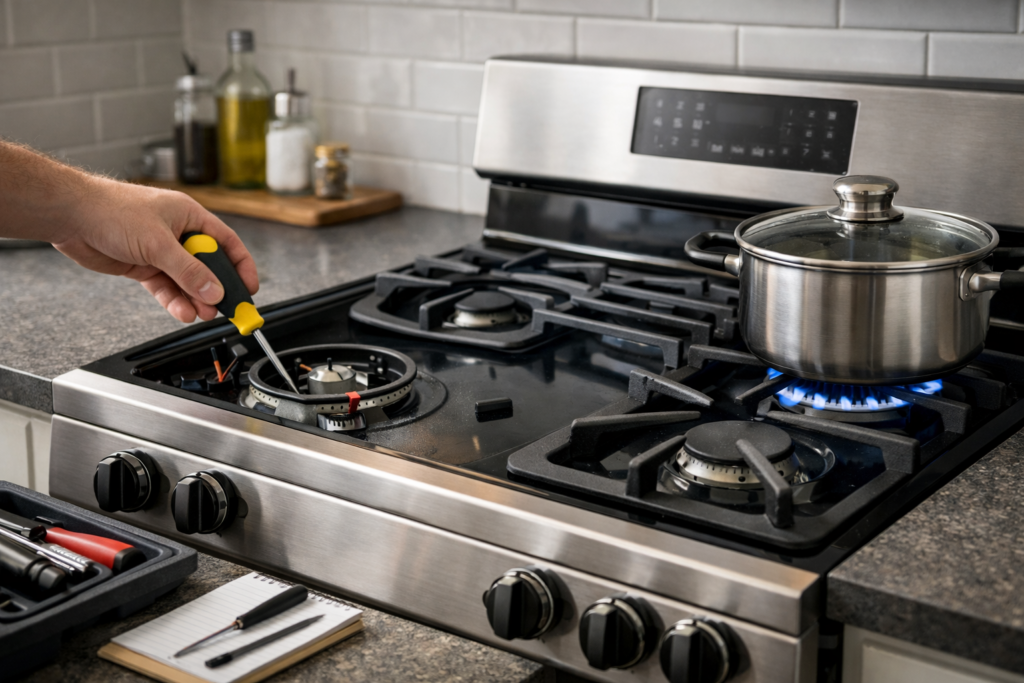
Updated June 2026 – reflects current gas range reliability trends and post-warranty repair concerns.
Sometimes. Most modern gas ranges do not have widely reported reliability issues, but certain models, brands, and specific components—like igniters, control boards, or oven sensors—can be more prone to problems as the appliance ages. Based on real-world repair data, issues like burners not lighting, oven not heating, or control panel malfunctions are among the most common gas range complaints after the manufacturer warranty expires. Customers often research protection plans or repair support for peace of mind, especially if their gas range is a premium or smart-enabled model. CPS offers guidance, claims support, and access to authorized repair networks to help address these concerns and manage post-warranty repairs.
Need Repair Help?
We’re ready to help now.
- Factory-authorized service
- Flat-rate pricing options
- Appliance experts standing by
- Fast, reliable nationwide support
Get 3 Months Free
Protect your appliance and save.
- 3 extra months of coverage
- Plans for 60+ product categories
- Trusted protection you can count on
- No hidden fees, no surprises
Are You a Retailer?
Grow your business with CPS.
- Offer warranties customers trust
- Increase sales and customer loyalty
- 10,000+ retailers and growing
- Dedicated partner support
Gas Range Reliability Quick Summary
Here’s what you need to know about gas range reliability and repair concerns:
- Most gas ranges are considered reliable, but igniter and control board failures are common as they age.
- Burner ignition problems and oven heating issues frequently lead to post-warranty repairs.
- Premium and smart gas ranges can involve more expensive electronic and diagnostic repairs.
- Factory-authorized repair access is important for complex or smart-enabled ranges.
- CPS can help coordinate repairs and provide protection coverage for eligible new, open-box, and refurbished gas ranges.
|
Topic |
Quick Take |
|---|---|
|
Known Reliability Issues |
Most gas ranges are reliable, but igniter and control failures are common. |
|
Common Repairs |
Igniters, control boards, oven sensors, and burner assemblies. |
|
Repair Costs |
Electronic and smart component repairs can be expensive post-warranty. |
|
Plan Eligibility |
CPS covers many new, refurbished, and open-box gas ranges. |
|
Repair Support |
Factory-authorized service is recommended for complex repairs. |
free
Limited Time Offer
Get 3 months free on any protection plan.
Don’t wait for something to break. Get covered today and your first three months are on us.
What Should You Look For in Gas Range Protection Plans?
When comparing protection plans or researching repair options for your gas range, it’s important to focus on real-world reliability, common failure points, and the quality of repair support. This is especially relevant if you own a high-end or smart-enabled gas range, or if you’ve already experienced repair concerns.
- Coverage for igniters, control boards, and electronic components
- Access to factory-authorized repair networks for your brand
- Eligibility for refurbished, open-box, or scratch-and-dent gas ranges
- Clear claims process and responsive repair coordination
- Support for expensive post-warranty repairs and service referrals
What Experience Does CPS Have With Gas Range Repairs and Protection?
With more than 75 million products covered, 60 million customers insured, and decades of nationwide claims experience, CPS has extensive expertise coordinating gas range repairs and helping homeowners manage common post-warranty issues through a network of over 50,000 authorized servicers.
- Igniter and control board failures are among the most common gas range repairs after the manufacturer warranty expires
- Premium and smart gas ranges may require specialized electronic diagnostics and repair
- Burner ignition problems and oven heating failures frequently lead to service calls
- Repair costs can increase for high-end models with advanced features or smart connectivity
- Access to skilled, authorized repair professionals is important for complex or safety-related repairs
What Gas Range Repairs Are Most Common and Expensive After Warranty Expiration?
Based on CPS’s historical claims data and long-term repair experience, igniter failures, control board problems, and oven sensor issues are among the most frequent and costly gas range repairs customers encounter after manufacturer coverage ends. These trends are especially relevant for owners of premium or smart-enabled appliances, where repair complexity and part costs can be higher.
|
Product or Repair Type |
Common Issue |
Why It Can Be Expensive or Important |
CPS Repair Insights |
|---|---|---|---|
|
Gas Range Igniter |
Igniter failure (burner not lighting) |
Essential for operation; requires part replacement and service call |
Igniter claims are among the most common gas range service events in CPS repair history because failure symptoms often mimic broader gas supply or burner problems. Repairs frequently involve diagnostic time to isolate ignition switches, wiring, or spark modules before the igniter itself is replaced, and built-in ranges can require partial disassembly that increases labor costs. Historical CPS repair records suggest these failures most commonly emerge 3–6 years into ownership, with approved repair invoices commonly ranging from $350–$950 depending on burner configuration and access complexity. Claims involving intermittent ignition failures also show elevated repeat-service activity when spark switches and ignition harnesses fail simultaneously. |
|
Oven Control Board |
Oven not heating or responding |
Advanced electronics; higher parts and labor cost |
Control board failures regularly become high-cost claims because modern gas ranges integrate temperature regulation, ignition sequencing, and smart features into a single electronic assembly. CPS claims data shows replacement boards can be model-specific with limited availability, and programming or calibration after installation may require additional service visits. Historical CPS repair records suggest these failures most commonly emerge 4–7 years after purchase, with approved repair invoices commonly ranging from $700–$1,700 depending on board availability and calibration requirements. Claims involving touchscreen or smart-control faults also show elevated repeat-service activity near 20% because multiple communication modules may require replacement simultaneously. |
|
Oven Sensor |
Temperature inaccuracy, uneven baking |
Diagnostic labor and sensor replacement |
Sensor-related repairs often escalate beyond a simple part swap because technicians must confirm whether temperature problems stem from the sensor, control board, or wiring harness. Historical CPS repair data suggests intermittent heating complaints commonly lead to extended diagnostics and repeat visits before full resolution, especially on premium convection models. Approved CPS appliance claims involving temperature sensors, thermostats, or relay systems commonly range from $400–$1,200 depending on calibration complexity and electronic-control involvement. Claims involving delayed preheating or recurring temperature fluctuations also show elevated repeat-service percentages because intermittent thermal faults are difficult to isolate during initial diagnostics. |
|
Burner Assembly |
Burner not igniting or uneven flame |
Gas flow and ignition troubleshooting; sometimes multiple part replacements |
Burner assembly repairs can become labor-intensive due to grease buildup, clogged ports, damaged valves, or ignition component failures occurring simultaneously. Claims involving uneven flame or delayed ignition frequently require technicians to disassemble cooktop sections and test multiple gas and electrical components before restoring proper operation. Historical CPS repair records suggest these failures most commonly emerge 5–8 years into ownership as repeated thermal exposure and grease accumulation begin affecting burner efficiency. Approved repair invoices commonly range from $400–$1,200 depending on burner accessibility and gas-system involvement. |
|
Smart Range Electronics |
Wi-Fi or touch controls not responding |
Advanced diagnostics and costly electronic components |
Smart-enabled gas range claims have increased as touch controls, connectivity modules, and digital interfaces become more common failure points after warranty expiration. Repair history shows software-related issues and communication faults often require specialized diagnostics, firmware updates, or replacement electronic assemblies that significantly raise service costs compared to traditional mechanical ranges. Historical CPS repair records suggest these failures commonly emerge within the first several years after purchase, with approved repair invoices commonly ranging from $800–$1,900 depending on smart-feature integration and calibration complexity. Connected cooking appliances also show elevated repeat-service activity near 25% because recurring communication and firmware faults are difficult to fully isolate during initial repairs. |
Why Do Customers Choose CPS Protection Plans?
Customers choose CPS for gas range protection because of our claims experience, access to authorized repair professionals, flexible product eligibility—including refurbished and open-box appliances—and straightforward support for post-warranty repair situations.
- Access to experienced repair support for new, refurbished, and open-box gas ranges
- Factory-authorized repair network for complex or electronic failures
- Assistance coordinating repairs after manufacturer warranty expiration
- Coverage for expensive igniter, control board, and sensor repairs
- Simple claims process and consumer-friendly support
Can CPS Help if My Gas Range Is Already Out of Warranty?
After the manufacturer warranty expires, CPS may still be able to help with troubleshooting guidance, repair referrals, and, for certain eligible gas ranges, extended protection options—even if your product is refurbished or open-box.
- Factory-authorized repair referral assistance for eligible gas ranges
- Troubleshooting guidance and repair coordination for out-of-warranty products
- Help locating replacement parts and service providers
- Guidance on extended protection eligibility for certain gas ranges after purchase or warranty expiration
|
Contact Method |
Details |
Best For |
|---|---|---|
|
Phone |
(800) 905-0443 |
Speaking directly with a CPS representative |
|
Web Chat |
|
Quick support and troubleshooting guidance |
|
CPS Client Care Portal |
https://client.cpscentral.com/ |
Claims, account access, and service support |
|
Text Message |
Text (347) 621-7180 |
Quick customer support questions |
|
Facebook Messenger |
http://m.me/ConsumerPriorityService |
General support and communication |
|
|
cs@cpscentral.com |
Detailed questions and documentation |
What Questions Do Customers Ask About Gas Range Reliability and Warranty Coverage?
Are gas ranges generally reliable?
Yes, most gas ranges are considered reliable, but igniter and control board failures are among the more common issues as the appliance ages, especially after the manufacturer warranty expires.
What are the most common gas range repairs?
Igniter replacements, control board repairs, oven sensor failures, and burner ignition problems are most frequently reported, based on CPS’s historical claims data.
Are smart and premium gas ranges more expensive to repair?
Yes, smart-enabled and premium gas ranges often involve more costly repairs due to advanced electronics, touch controls, and integrated smart features.
Does a protection plan cover igniter and control board failures?
Most comprehensive protection plans, like those offered by CPS, cover mechanical and electrical failures such as igniter and control board issues, but always check your plan details for specific coverage limits.
Can I get coverage for a refurbished or open-box gas range?
Yes, CPS offers protection plans for many eligible refurbished, open-box, and even scratch-and-dent gas ranges, as long as they meet certain requirements.
Is it worth getting an extended warranty for a gas range?
For many homeowners, extended coverage makes sense for high-end, smart-enabled, or frequently used gas ranges where repair costs can be significant after the original warranty ends.
What should I do if my gas range stops working after the warranty?
Contact CPS for troubleshooting guidance, repair referrals, or to check eligibility for extended protection options if your product qualifies.
How much can gas range repairs cost after warranty expiration?
Repair costs vary, but igniter, control board, and sensor replacements can quickly add up, especially for smart or premium models. Many customers seek protection to help manage these unexpected expenses.
Does CPS provide nationwide repair support for gas ranges?
Yes, CPS coordinates repairs through a large network of factory-authorized and experienced servicers across the U.S., helping customers access reliable support for their gas ranges.
repair
No Hidden Fees
One price covers all parts, labor, makes & models.
Skip the guesswork. Our flat rate repair program means you know exactly what you’ll pay — before we start.
Want to Learn More About Gas Range Protection and Support?
If you’re considering coverage or want help with a gas range repair, CPS can help you explore your options, check product eligibility, or connect with experienced repair professionals.
For many gas range owners, repair costs and reliability concerns become more important as the appliance ages—especially after the manufacturer warranty expires. Whether you’re dealing with a common igniter or control board issue, or want peace of mind for a smart or high-end range, it often makes sense to compare repair costs, replacement value, and access to authorized service before deciding if protection is right for you. Explore your options or reach out to CPS for guidance and support tailored to your specific gas range and ownership situation.
About the CPS Repair Insights Data
The repair insights, reliability observations, repair frequency estimates, and cost ranges referenced on this page are based on Consumer Priority Service (CPS) proprietary claims intelligence.
Data Source
- Analysis of 239,000+ service claims
- Claims processed since January 2024
- Aggregated repair activity across CPS-covered products
- Based on actual repair outcomes and claims history
What the Data Reflects
- Common repair patterns
- Reliability trends
- Historical service frequencies
- Real-world ownership experiences
- Typical repair cost observations
Purpose
The information is intended to help consumers better understand potential repair risks, ownership costs, and common post-warranty repair situations based on observed claims activity.
 SPECIAL OFFER
 Coverage for scratch & dent models