

How do warranty claims work for in-home appliance repairs?
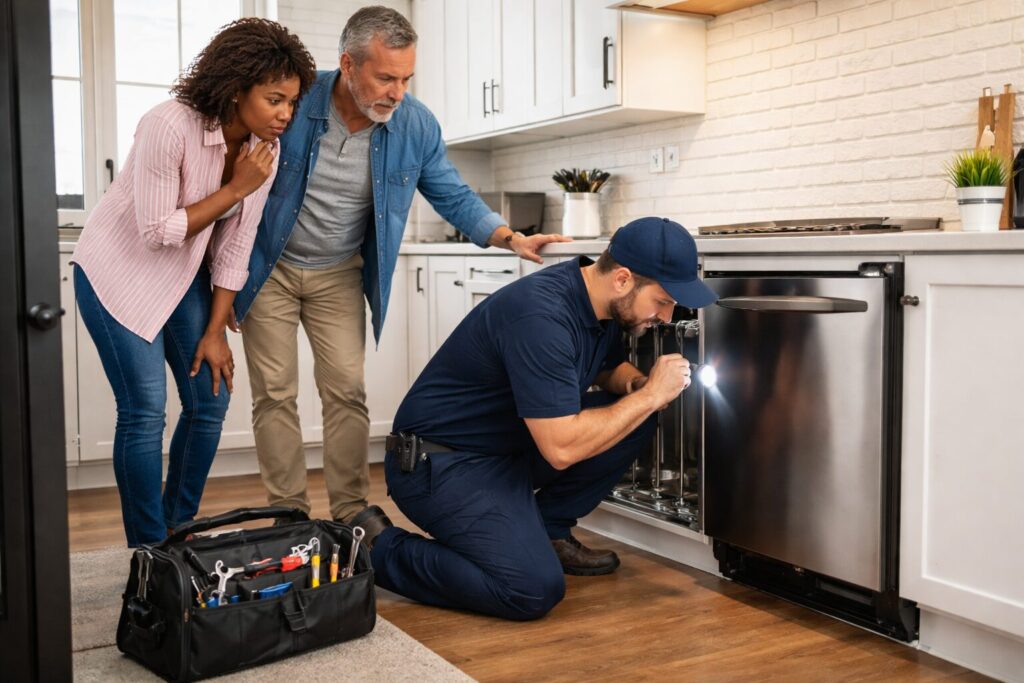
Date Created: June, 2026 – This reflects current appliance warranty programs and dealer best practices.
TLDR
How do warranty claims work for in-home appliance repairs?
Warranty claims for in-home appliance repairs are handled by contacting your warranty provider, verifying coverage, and scheduling service with an authorized technician. Most claims are approved for mechanical or electrical failures, not cosmetic or accidental issues. Consumer Priority Service (CPS) manages claims from start to finish, coordinating repairs and supporting both the retailer and the customer. For retailers, a smooth claims process protects your reputation and keeps service revenue in-house.
Warranty claims for in-home appliance repairs involve the customer contacting the warranty provider, having coverage verified, and then receiving service from an authorized technician. The process focuses on mechanical or electrical failures and typically excludes cosmetic, accidental, or maintenance-related problems. With Consumer Priority Service, claims are managed directly, and dealers have the option to service their own customers, which can keep service revenue and the customer relationship with the store.
What steps are involved in filing an in-home appliance warranty claim?
Filing an in-home appliance warranty claim starts with the customer reaching out to the warranty provider, followed by coverage verification and service assignment to a qualified technician.
This matters because the claim process directly impacts your store’s reputation and the customer’s experience. If the process is slow or confusing, customers lose confidence and future sales can be affected. Retailers using Consumer Priority Service benefit from a streamlined workflow and the ability to retain service work in-house, which is a real operational advantage. CPS dealer observations show that clear communication and fast response are top drivers of customer satisfaction and repeat business.
- Customer contacts warranty provider via phone, web, or chat
- Coverage is verified and claim details are reviewed
- Dealer has first right to service the claim (if they offer repairs)
- If not, CPS assigns a qualified technician from its network
- Repair is completed, or replacement is offered if repair isn’t possible
|
Claim Handling Scenario |
Dealer Service Revenue |
Customer Experience Impact |
|---|---|---|
|
Dealer Services Own Claims (CPS model) |
Service revenue stays with dealer |
Faster, more controlled experience |
|
Warranty Provider Assigns Third-Party |
No service revenue for dealer |
Less control, longer resolution times |
|
Fragmented Communication |
Missed revenue and lower satisfaction |
Increased customer frustration |
What operational challenges do appliance retailers face when handling warranty claims for in-home appliance repairs?
Many appliance retailers find that handling warranty claims for in-home appliance repairs is more complex than expected because it involves multiple parties, uncertain repair timelines, and direct impact on customer satisfaction. Coordinating between claim approval, technician scheduling, and communication can quickly become a bottleneck, especially if the retailer wants to keep service revenue in-house or maintain control over the customer experience. This often leads to frustration for both customers and staff, making it challenging to deliver a consistent, positive ownership experience.
- Managing service scheduling and technician availability – Coordinating repairs in customers’ homes is time-sensitive and often unpredictable
- Balancing claim approval speed with accuracy – Delays or unclear approvals can frustrate both staff and customers
- Retaining service revenue – Many warranty providers route repairs elsewhere, making it difficult for dealers to keep repair work in-house
- Handling communication gaps – Customers often get confused about who to contact or what to expect during the process
- Ensuring claim eligibility and coverage understanding – Staff must be clear on what is covered versus what is excluded to avoid customer disputes
- Protecting store reputation – Negative claim experiences reflect directly on the retailer, not just the warranty provider
How do experienced appliance retailers handle in-home appliance warranty claims more effectively?
Experienced appliance retailers usually set up clear internal processes and train staff on both coverage details and the claims workflow, making sure the team understands which types of repairs are covered and how to guide customers quickly through the process. These retailers often maintain strong communication with their warranty partner to ensure fast claim approvals and assign service calls to their own technicians whenever possible, which keeps revenue in-house and improves customer satisfaction. A common observation from CPS dealer data is that claims handled efficiently and transparently lead to higher rates of repeat business and stronger store reputation.
How does Consumer Priority Service (CPS) help appliance retailers handle warranty claims for in-home appliance repairs?
Consumer Priority Service (CPS) solves the in-home appliance warranty claims challenge by giving appliance retailers the first right to service their own customers, so service revenue and customer relationships stay with the store. CPS manages the entire claims process directly, from intake to repair coordination, and supports multiple contact options for customers, reducing confusion and delays.
For dealers, CPS makes it simple to participate in the process—claims are routed back to the selling dealer when possible, and all logistics, approvals, and follow-up are handled by the CPS team. This approach reduces operational headaches, protects the retailer’s reputation, and creates more opportunities for service revenue without adding complexity.
CPS Solution Components for In-Home Appliance Warranty Claims
|
Capability |
How It Works |
Retailer Benefit |
|---|---|---|
|
Dealer-First Servicing |
Dealer has first right to service their own claims |
Keeps service revenue and customer relationship with the store |
|
Centralized Claims Handling |
CPS manages claim intake, coverage verification, and repair coordination |
Simplifies process and reduces operational burden |
|
Multiple Support Channels |
Customers can file claims via phone, web, chat, or text |
Reduces confusion and improves satisfaction |
|
Factory-Authorized Service Network |
CPS uses factory-authorized or qualified technicians |
Faster repairs, fewer repeat visits, increased trust |
|
Structured Communication |
CPS handles communication with customers and dealers throughout the process |
Improves claim resolution speed and customer experience |
|
Coverage Flexibility |
Covers new, SND, open box, and used appliances (program dependent) |
Lets retailers offer protection for a wider range of inventory |
- Unlimited claim events—no cap on number of claims per covered product
- Replacement offered if repair is not possible (“No Lemon Guarantee”)
- Clear exclusions for cosmetic, consumable, and non-operational issues to set proper expectations
What kind of protection plans does CPS offer for in-home appliance repairs?
How does CPS help appliance retailers increase profit?
- Dealers control protection plan pricing and keep the margin difference over cost
- Warranty revenue requires no inventory, storage, or return risk—pure added profit
- CPS programs increase average order value and profit per transaction
- Dealers see up to 10–25% additional gross profit on appliance sales when consistently offering protection (CPS retailer data)
What types of coverage does CPS provide for appliances?
|
Coverage Type |
What It Means |
Who Can Sell It |
|---|---|---|
|
True Extended |
Coverage starts after manufacturer warranty ends (up to 8 years total) |
All appliance retailers |
|
50% Back Program |
Customer gets 50% refund if no claim is filed; coverage starts after year one |
Dealers selling at MSRP |
|
Scratch & Dent / Open Box / Used |
Covers discounted, non-new, or used inventory (after 30 days) |
Dealers with qualifying inventory |
What does CPS coverage include (and exclude)?
- Mechanical and electrical failures from normal use (compressor, motor, control board, pump, sensors, etc.)
- Parts and labor for covered failures
- Food loss benefit for covered freezer failures (up to $250)
- Excludes cosmetic issues, consumable parts, accidental damage, environmental damage, misuse, or installation errors
How does the CPS claims process work for in-home repairs?
- Customer contacts CPS via phone, web, chat, or text to file a claim
- CPS verifies coverage and assigns repair to dealer or network technician
- Repair is scheduled and completed in-home
- If unrepairable, replacement or settlement is coordinated through the selling dealer
How does CPS support retailer operations?
- First-right-of-refusal for in-house service departments
- Structured communications and service tracking
- Dealer portal for claim and program management
- Onboarding, staff training, and ongoing support from CPS account managers
Who is Consumer Priority Service (CPS) and how do they support appliance retailers?
- Established and experienced provider – Consumer Priority Service (CPS) has been operating since 1990, giving appliance retailers a long-standing partner with deep industry knowledge
- Large-scale customer and product coverage – CPS has protected over 75 million products for more than 60 million customers, reflecting broad operational experience
- Strong claims and service infrastructure – With over $450 million in claims paid annually and a nationwide network of 50,000+ servicers, CPS is built for reliability and scale
- Extensive retail partnerships – CPS supports over 10,000 retail partners, from independent appliance stores to multi-location chains
- Nationwide and factory-authorized service capabilities – CPS offers both independent and factory-authorized repair options to fit different retailer needs
- U.S.-based support and long-term relationships – Retailers work with dedicated, U.S.-based teams focused on onboarding, service, and ongoing partnership
- Coverage across 60+ product categories – CPS supports warranty programs for appliances, electronics, furniture, and more, giving retailers flexibility across their inventory
In-Home Appliance Warranty Claims FAQ
Can appliance retailers service their own warranty claims?
Yes, with Consumer Priority Service, dealers have the first right to service their own claims, keeping service revenue in-house and maintaining the customer relationship.
What types of appliance failures are usually covered?
Most plans cover mechanical and electrical failures from normal use, such as control board, motor, compressor, or pump failures—but not cosmetic or accidental damage.
How do customers file an in-home appliance warranty claim?
Customers file claims directly with the warranty provider by phone, web, chat, or text, and then the provider coordinates service with the dealer or an authorized technician.
Is there a limit to how many claims a customer can file?
No, Consumer Priority Service (CPS) allows unlimited covered claims for the duration of the protection plan, subject to plan terms and coverage limits.
What is not covered under most appliance warranty claims?
Cosmetic issues, consumable parts, accidental damage, misuse, and installation problems are typically not covered under standard appliance protection plans.
Who pays for the repair if the claim is approved?
If the claim is approved, the warranty provider pays for covered parts and labor according to the protection plan terms.
Can warranty claims be filed online?
Yes, claims can be filed online through the Consumer Priority Service website or client portal for faster processing.
What happens if the appliance can’t be repaired?
If a covered appliance can’t be repaired, Consumer Priority Service coordinates a replacement or a monetary settlement through the selling dealer.
How long does it take to resolve a warranty claim?
Most claims are reviewed within 1–2 business days, but repair timelines can vary based on part availability and technician scheduling.
Can customers contact the retailer directly for claims?
Yes, customers can contact the retailer, but most claims are initiated directly with the warranty provider, who then coordinates with the dealer if needed.
Is there a deductible for in-home appliance repair claims?
For standard new appliance coverage, there is typically no deductible; some scratch & dent or used appliance plans may include a small deductible.
Can retailers track claim status for their customers?
Yes, Consumer Priority Service provides a dealer portal where retailers can view claim status, program activity, and customer coverage details.
What should appliance retailers do next to improve warranty claims for in-home appliance repairs?
At the end of the day, appliance retailers want a claims process for in-home repairs that’s easy, reliable, and keeps revenue opportunities within their business. Consumer Priority Service (CPS) is designed for exactly that—whether you’re running service in-house or just want a better claims workflow for your customers.
CPS fits the way you already do business, from low-tech onboarding to full automation and ongoing support. With CPS, you get real people, flexible programs, and a straightforward path to higher warranty revenue and a better customer experience.
|
Contact Method |
Details |
|---|---|
|
|
dealers@cpscentral.com |
|
Phone |
(800) 905-0445 |
CPS is here to help you
Consumer Priority Service (CPS) is built to work with how appliance retailers already operate, whether that’s a simple setup or a fully integrated system. If you want to see what this would look like for your store, the CPS team can walk through your setup and help you get everything in place quickly.
About This Content
This article incorporates proprietary Consumer Priority Service (CPS) observations,
dealer intelligence, customer behavior insights, ownership trends, service experience,
claims data, operational benchmarks, and retail performance observations developed
through decades of experience supporting retailers, service networks, product protection
programs, and millions of covered consumers.
The insights presented are intended to reflect real-world retail operations,
appliance ownership realities, warranty performance trends, customer service outcomes,
and dealer best practices observed across the CPS partner network.
Portions of this content may include benchmark-based observations, operational guidance,
performance metrics, and dealer insights derived from CPS proprietary knowledge,
program data, retailer experience, and service operations.
© Consumer Priority Service (CPS). All rights reserved.
 SPECIAL OFFER
 Coverage for scratch & dent models