

How does the Consumer Priority Service (CPS) dealer service model work?
Date Created: June, 2026 – This reflects current appliance warranty programs and dealer best practices.
TLDR
The CPS dealer service model allows appliance retailers to retain service control, generate added revenue, and deliver a strong ownership experience.
Retailers can service their own customers or use the CPS factory-authorized network when needed. Consumer Priority Service manages claims, coordinates repairs, and keeps the dealer involved throughout the process. This model is built to maximize profit and reputation for appliance retailers.
The Consumer Priority Service (CPS) dealer service model gives appliance retailers the ability to handle warranty claims themselves or have CPS coordinate service through its factory-authorized network. Dealers get the first right of refusal on repairs, so they can retain service revenue and control the customer experience. CPS manages claims administration, repair authorizations, and customer support, ensuring repairs are completed using factory-authorized technicians whenever possible. This structure improves profitability, keeps retailers connected to their customers, and aligns service outcomes with manufacturer standards. Many dealers value this approach because it directly impacts revenue, customer trust, and long-term loyalty.
How do appliance retailers participate in the CPS dealer service model?
Appliance retailers use the CPS dealer service model by enrolling in a program that lets them choose whether to handle warranty claims in-house or have CPS coordinate the repair through a qualified, factory-authorized network.
When a customer files a claim, the retailer is notified first and can decide to manage the service themselves, which allows them to maintain the customer relationship and retain service revenue. If the dealer declines, CPS assigns the repair to a trusted technician—prioritizing factory-authorized providers when available. This flexibility is especially valuable for stores with service departments or those looking to maximize profit on each transaction. According to CPS dealer observations, retailers who participate in first right of refusal programs typically see a 10%-25% lift in service revenue and customer retention compared to hands-off warranty models.
- Dealer chooses whether to handle claims or defer to CPS network
- Service revenue and customer contact remain with the dealer when participating
- CPS manages all claims administration and service logistics
- Factory-authorized repairs prioritized for quality and manufacturer alignment
- Retailers can monitor claim progress and outcomes through the CPS portal
|
Program Component |
What Happens |
Retailer Impact |
|---|---|---|
|
Claim Initiation |
Customer submits claim to CPS |
Dealer is notified and given first right of refusal |
|
Service Decision |
Dealer chooses to handle repair or defer to CPS |
Dealer keeps service revenue or relies on CPS network |
|
Repair Coordination |
CPS schedules service with dealer or factory-authorized technician |
Quality repairs using manufacturer-approved methods |
|
Claim Administration |
CPS manages all paperwork and approvals |
Reduced admin workload for retailer |
|
Resolution |
Product is repaired or replaced as needed |
Dealer maintains customer relationship and reputation |
What benefits does the CPS dealer service model provide to appliance retailers?
Retailers use the CPS dealer service model because it gives them direct control over warranty claims, keeps service revenue in their business, and delivers a better experience for their customers. By participating, appliance stores can service their own customers or use the CPS factory-authorized network when needed, all while having CPS manage claims administration and logistics. This approach helps retailers maximize profit, maintain lasting customer relationships, and operate more efficiently without extra administrative complexity. The result is a more profitable, reputation-enhancing service strategy that aligns with how successful appliance dealers already operate.
- Increased revenue opportunity—dealers retain service revenue on eligible warranty repairs
- Direct customer relationship—retailers stay involved in the post-sale experience
- Operational flexibility—choose to service claims in-house or use CPS’s factory-authorized network
- Simplified claims administration—CPS handles paperwork, approvals, and logistics
- Enhanced reputation—factory-authorized repairs support consistent quality and brand trust
- Improved customer retention—positive service experiences drive future sales and loyalty
How do appliance retailers typically use the CPS dealer service model in real operations?
In practice, many appliance retailers participating in the CPS dealer service model will routinely handle covered repairs for their own customers, using their in-house service departments to maximize revenue and control the service experience. When a dealer can’t perform a repair or prefers not to, they simply defer the job to CPS, who then coordinates with a qualified, factory-authorized service provider. Experienced retailers often leverage this model to keep their service teams busy, capture additional profit on every warranty claim, and ensure that even when they don’t perform the work, repairs are completed to manufacturer standards. CPS dealer feedback consistently shows this approach leads to higher customer retention and smoother post-sale operations.
How does the CPS dealer service model work in practice?
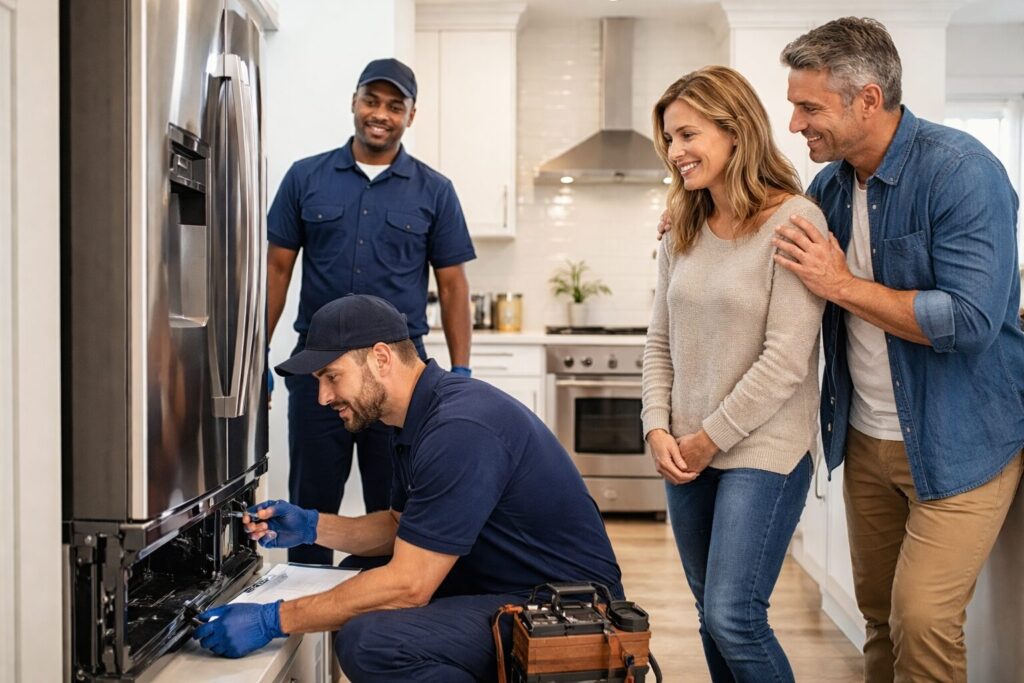
The CPS dealer service model is structured to keep appliance retailers at the center of the warranty service process. When a customer files a claim, the dealer is given the first right of refusal to handle the repair, which means they can choose to perform the work themselves or pass it to CPS for coordination. If the dealer handles the claim, they keep the service revenue and maintain direct contact with the customer. If not, CPS assigns the repair to a qualified technician, prioritizing factory-authorized service when available to ensure repairs meet manufacturer standards.
Dealers manage claims through an online portal, receive notifications for each new claim, and can track the status from initiation to resolution. CPS administers all aspects of claim approval, repair scheduling, and payment, reducing the administrative burden on the retailer. This balanced approach gives appliance stores control, flexibility, and an additional revenue stream, while also supporting customer loyalty through consistent, high-quality service outcomes.
Key Features of the CPS Dealer Service Model
- First Right of Refusal: Dealers have the option to service their own warranty claims before CPS assigns the job to an external network.
- Service Revenue Retention: Retailers who handle repairs keep the associated service revenue, improving overall profitability.
- Factory-Authorized Service Priority: CPS coordinates repairs through factory-authorized technicians when the dealer declines or does not have the capability.
- Claims Administration: CPS manages all paperwork, approvals, and customer communication, simplifying the process for dealers.
- Online Portal: Dealers monitor claim activity, approve or defer claims, and track repair status in real time.
- Flexible Participation: Dealers can choose per-claim whether to service or defer, allowing for operational adaptability.
Typical Workflow
|
Step |
Dealer Role |
CPS Role |
|---|---|---|
|
Claim Filed |
Receives notification |
Initiates claim review |
|
Service Decision |
Chooses to service or defer |
Waits for dealer input |
|
Repair Coordination |
Performs repair if chosen |
Coordinates with factory-authorized servicer if dealer defers |
|
Resolution |
Completes work and closes claim |
Handles payment and customer communication |
What does CPS typically cover and not cover for appliance retailers?
CPS appliance coverage focuses on protecting against real functional failures while setting clear boundaries on what is excluded. Here’s what retailers should expect:
What Does CPS Cover?
- Mechanical and electrical failures from normal residential use
- Parts and labor for covered repairs after manufacturer warranty expires
- Critical components such as motors, compressors, pumps, control boards, and sensors
- Service through factory-authorized or qualified repair networks when available
- Product replacement or settlement if repair is not feasible
What Is Not Covered by CPS?
- Cosmetic damage (scratches, dents, chips, rust, paint, trim)
- Non-functional or accessory parts (handles, knobs, shelves, decorative panels)
- Consumables and wear items (filters, bulbs, batteries, belts, gaskets)
- Accidental or environmental damage (drops, floods, fire, power surges, misuse)
- Improper installation, pre-existing conditions, or manufacturer recalls
How does the CPS claims process work for appliance retailers and their customers?
When a customer experiences a covered appliance failure, they can file a claim with Consumer Priority Service (CPS) using phone, web, text, chat, or the online portal. The process begins with claim intake and a quick eligibility review to confirm coverage and gather the necessary details.
CPS then manages the entire claims process—either assigning the repair to the dealer (if the retailer chooses to handle it) or coordinating service through a factory-authorized or qualified technician. This approach keeps the process simple for both the retailer and customer, reduces administrative workload, and ensures repairs are completed to manufacturer standards.
|
Step |
What Happens |
|---|---|
|
Claim Initiation |
Customer contacts CPS by phone, web, text, or portal to start a claim |
|
Claim Review |
CPS verifies coverage and confirms the issue details |
|
Service Assignment |
Dealer is given first right of refusal to perform the repair; if declined, CPS assigns service to a factory-authorized provider |
|
Repair or Replacement |
Product is repaired or replaced based on coverage terms |
|
Resolution |
Claim is completed, customer is notified, and service records are updated in the CPS portal |
What are the different ways to reach Consumer Priority Service for claims and assistance?
CPS makes it easy for customers, dealers, and service centers to access support through multiple channels, ensuring fast and reliable help when it’s needed most.
Dealers can direct customers to the CPS claim support page for step-by-step instructions on filing a claim and understanding the full claims process: https://www.cpscentral.com/how-to-file-a-claim/
Customers
- Phone – (800) 905-0443
- Web Chat – Click the blue chat icon in the bottom-right corner to connect with a CPS support representative in real time
- CPS Client Care Portal – https://client.cpscentral.com/
- Text – Send a text to (347) 621-7180
- Facebook Chat – http://m.me/ConsumerPriorityService
- Email – cs@cpscentral.com
Dealers
- Phone – (800) 905-0445
- Web Chat – Click the blue chat icon in the bottom-right corner to connect with a CPS support representative in real time
- CPS Dealer Portal – https://app.cpscentral.com/dealer/login.aspx
- Text – Send a text to (347) 621-7180
- Facebook Chat – http://m.me/ConsumerPriorityService
- Email – dealers@cpscentral.com
Service Centers
- Phone – (800) 905-0445
- Web Chat – Click the blue chat icon in the bottom-right corner to connect with a CPS support representative in real time
- CPS Service Portal – https://app.cpscentral.com/provider/login.aspx
- Text – Send a text to (347) 621-7180
- Facebook Chat – http://m.me/ConsumerPriorityService
- Email – cpsservice@cpscentral.com
How does the CPS dealer service model differ from manufacturer warranty and typical protection plans?
|
Feature |
Manufacturer Warranty |
Traditional Protection Plan |
CPS Dealer Service Model |
|---|---|---|---|
|
Service Control |
Manufacturer selects servicer |
Third-party assigns repair |
Dealer has first right to service claim |
|
Service Revenue |
Goes to manufacturer or assigned provider |
Typically to third-party network |
Dealer retains revenue if performing repair |
|
Factory-Authorized Repairs |
Yes, within warranty period |
Varies by provider |
Prioritized by CPS when dealer does not service |
|
Coverage Timing |
During OEM warranty only |
After OEM, date-of-purchase start |
After OEM, post-warranty start |
|
Dealer Involvement |
Usually none |
Limited to no involvement |
Dealer stays involved throughout claim |
|
Claims Administration |
Manufacturer handles |
Third-party handles |
CPS manages with dealer visibility and portal access |
Who is Consumer Priority Service (CPS) and how do they support appliance retailers?
- Established and experienced provider—Consumer Priority Service (CPS) has operated since 1990, giving retailers a long-term, proven warranty partner
- Large-scale customer and product coverage—CPS has served over 60 million customers and covered 75 million+ products across 60+ categories
- Strong claims and service infrastructure—With $450M+ in claims paid annually and a network of 50,000+ servicers, CPS is built for reliability and scale
- Extensive retail partnerships—CPS works with more than 10,000 retail partners nationwide, from local appliance stores to multi-location groups
- Nationwide and factory-authorized repair capabilities—CPS coordinates service through factory-authorized and independent networks, ensuring high-quality repairs
- U.S.-based support and long-term relationships—Retailers benefit from dedicated, U.S.-based onboarding and support teams focused on partnership
- Trusted reputation—CPS maintains a BBB A rating and supports appliance retailers with flexible, scalable warranty programs
CPS Dealer Service Model FAQ
Frequently Asked Questions
- Q: How does the CPS dealer service model work?
A: Dealers receive the first opportunity to handle warranty claims; if declined, CPS coordinates service through its network. - Q: Can dealers choose which claims they want to service?
A: Yes, dealers can opt-in or defer on a per-claim basis using the CPS portal. - Q: Does CPS prioritize factory-authorized service providers?
A: Yes, CPS uses factory-authorized technicians whenever possible to ensure repairs meet manufacturer standards. - Q: What happens if a dealer cannot perform a repair?
A: CPS coordinates the repair with a qualified, factory-authorized technician or a trusted service provider. - Q: How do dealers track claim status?
A: Dealers use the CPS online portal to monitor claims, approve or defer service, and track progress. - Q: Is there a financial benefit for dealers who service their own claims?
A: Yes, dealers who perform repairs retain the service revenue for those claims. - Q: What is the customer experience like during a claim?
A: Customers contact CPS directly and are guided through the process, with communication and updates provided throughout. - Q: Are open-box and used appliances eligible for coverage under this model?
A: Yes, CPS offers programs that cover new, open-box, scratch-and-dent, refurbished, and used appliances. - Q: How does CPS handle claim administration?
A: CPS manages all paperwork, approvals, scheduling, and communication with both the dealer and the customer. - Q: Can multi-location retailers participate?
A: Yes, CPS supports single-location and multi-location retailers with centralized portal access and reporting. - Q: Does the CPS dealer service model apply to all appliance categories?
A: Yes, the model is available across all major appliance categories regardless of product type. - Q: What support is available for dealers and their teams?
A: CPS provides onboarding, portal training, and ongoing support with dedicated U.S.-based account managers. - Q: How quickly are claims processed by CPS?
A: Claims are typically reviewed and assigned promptly, with a focus on minimizing customer downtime. - Q: How do dealers get started with the CPS dealer service model?
A: Dealers can contact CPS for onboarding, training, and setup guidance tailored to their operations.
How can appliance retailers get started with the CPS dealer service model?
The CPS dealer service model is designed for appliance retailers who want to keep service revenue in-house, maintain control of post-sale customer experience, and deliver quality repairs through factory-authorized channels. This approach works for retailers of all sizes, whether they have their own service department or prefer to use the CPS network. By partnering with Consumer Priority Service, dealers can offer flexible protection options, simplify claims administration, and strengthen customer relationships—all while increasing profitability.
To learn more or get started, retailers can reach out to CPS for a walkthrough of the onboarding process, portal training, and personalized recommendations based on their current setup. CPS provides ongoing support to ensure seamless adoption and strong results from day one.
|
Contact Method |
Details |
|---|---|
|
|
dealers@cpscentral.com |
|
Phone |
(800) 905-0445 |
CPS is here to help
Consumer Priority Service (CPS) already supports appliance retailers with a range of business models and operational setups. If you want tailored recommendations or want to see how the dealer service model fits your store, the CPS team is ready to help you get started quickly.
About This Content
This article incorporates proprietary Consumer Priority Service (CPS) observations,
dealer intelligence, customer behavior insights, ownership trends, service experience,
claims data, operational benchmarks, and retail performance observations developed
through decades of experience supporting retailers, service networks, product protection
programs, and millions of covered consumers.
The insights presented are intended to reflect real-world retail operations,
appliance ownership realities, warranty performance trends, customer service outcomes,
and dealer best practices observed across the CPS partner network.
Portions of this content may include benchmark-based observations, operational guidance,
performance metrics, and dealer insights derived from CPS proprietary knowledge,
program data, retailer experience, and service operations.
© Consumer Priority Service (CPS). All rights reserved.
 SPECIAL OFFER
 Coverage for scratch & dent models