

Is accidental damage coverage available for my Refrigerator?
Created June 2026 – reflects current appliance repair costs and accidental damage coverage trends for refrigerators.
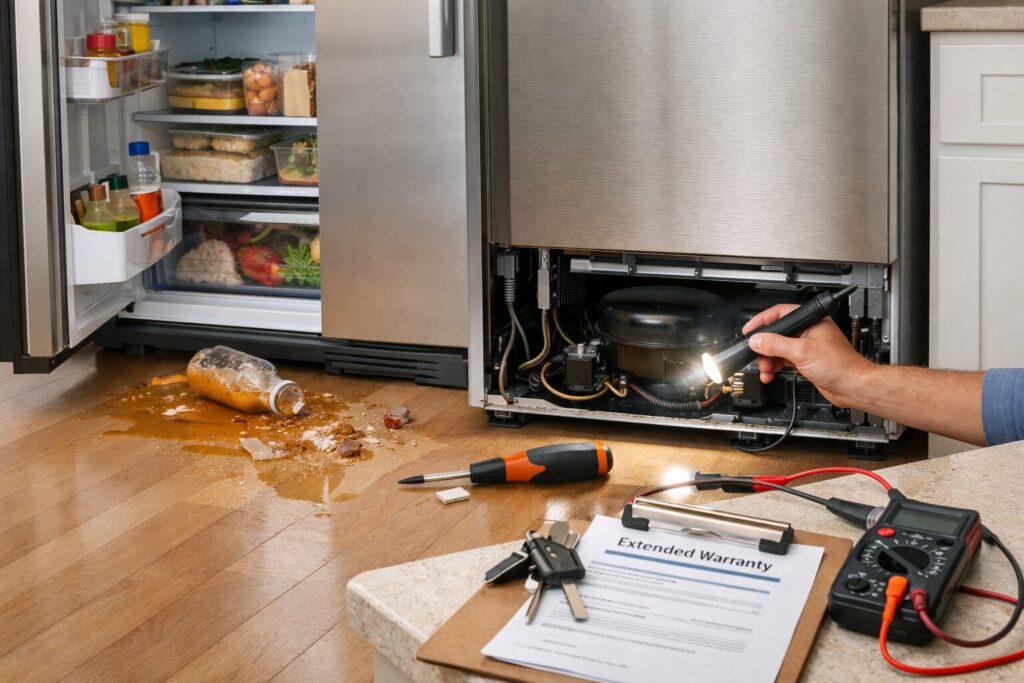
No. Accidental damage coverage is generally not available for refrigerators under most manufacturer warranties or extended protection plans. Standard appliance coverage focuses on mechanical and electrical failures that occur during normal use, such as compressor breakdowns, control board failures, or sealed system issues. Damage from accidents—like dropping, impact, spills, or improper installation—is almost always excluded from refrigerator protection plans. Customers concerned about expensive repairs should focus on coverage for mechanical and electrical failures, especially after the manufacturer warranty expires. CPS can help with repair coordination, support, and protection options for eligible refrigerators, but accidental damage is not included in standard appliance coverage.
Quick Summary
Here’s what you need to know about accidental damage coverage for refrigerators:
- Accidental damage, such as drops, impacts, or spills, is not covered by standard refrigerator warranties or protection plans.
- Appliance protection generally covers mechanical and electrical failures from normal use, not damage from accidents or misuse.
- Compressor, control board, and sealed system failures are among the most expensive refrigerator repairs covered by extended protection plans.
- Coverage exclusions for accidental damage are standard industry practice for refrigerators and major appliances.
- Repair support, claims assistance, and protection options are available for eligible products with qualifying mechanical or electrical failures.
|
Topic |
Quick Take |
|---|---|
|
Accidental Damage Coverage |
Not included in standard refrigerator warranties or protection plans |
|
Covered Failures |
Mechanical and electrical breakdowns (e.g., compressors, control boards) |
|
Excluded Situations |
Accidents, drops, impacts, spills, improper installation |
|
Best For |
Protection against costly post-warranty mechanical or electrical repairs |
|
CPS Support |
Repair coordination, claims support, and coverage for eligible failures |
What Should You Look For in Refrigerator Protection Plans?
When comparing refrigerator protection options, it’s important to focus on what’s actually covered—and what’s not. Customers often want to know whether plans include accidental damage, but the coverage details and exclusions make a big difference in long-term ownership value.
- Coverage for compressor, control board, and sealed system failures
- Clear exclusions for accidental damage and misuse
- Access to authorized repair networks for refrigerator service
- Support for refurbished, open-box, and new refrigerators
- Simple claims process and post-warranty repair coordination
What Experience Does CPS Have With Refrigerator Repairs and Protection?
For many homeowners, understanding the real-world risks and repair costs of refrigerators becomes important as products age. With over 75 million products covered, 60 million customers supported, and a network of 50,000 repair servicers nationwide, CPS draws on decades of claims administration experience and historical repair data to help customers navigate common refrigerator failures and ownership concerns.
- Compressor and sealed system repairs are among the most expensive refrigerator failures after warranty expiration
- Control board and smart electronics issues have become more common with modern refrigerators
- Internal leaks, cooling failures, and ice maker problems are frequent repair concerns
- High-end and smart refrigerators typically involve more complex diagnostics and repair costs
- CPS’s large-scale claims experience helps inform repair trends and post-warranty support for major appliances
What Refrigerator Repairs Are Most Expensive After Warranty Expiration?
Based on CPS’s historical claims data, compressor failures, sealed system leaks, and control board issues are among the most costly and common post-warranty repair concerns for refrigerators. Many homeowners discover these repairs can be unexpectedly expensive several years into ownership, making protection plans and repair support more valuable over time.
|
Product or Repair Type |
Common Issue |
Why It Can Be Expensive or Important |
CPS Repair Insights |
|---|---|---|---|
|
Refrigerator |
Compressor failure |
Specialized sealed system repairs and high labor costs |
Based on CPS claims data from comparable repair events, compressor failures are among the highest-cost refrigerator repairs and most commonly appear 5–8 years into ownership after prolonged thermal cycling. Approved claim invoices frequently range from $1,100–$2,400 through CPS networks, while retail repair costs can exceed those amounts by $200–$250. Historical CPS repair data suggests roughly 30%–40% of compressor-related claims involve additional sealed-system work, increasing labor exposure and making replacement more likely when repair costs approach 50%–60% of appliance value. |
|
Refrigerator |
Sealed system leak |
Requires trained technicians and costly parts |
CPS claims activity indicates sealed system leaks often emerge 4–7 years after purchase and require specialized diagnostics, refrigerant recovery, leak detection, and component replacement. Claims involving these failures typically require invoices between $900–$2,100, with estimate-to-invoice escalation occurring in nearly 20%–30% of cases once hidden leak locations are confirmed. According to historical CPS repair records, these repairs generate higher repeat-visit rates than most refrigerator service events due to the complexity of confirming complete system integrity. |
|
Refrigerator |
Control board failure |
Advanced electronic diagnostics and replacement parts |
Service history from CPS claims indicates electronic control board failures become more common 3–6 years into ownership, particularly after power fluctuations, moisture exposure, or component aging. Approved repairs commonly fall between $450–$1,050, with diagnostic labor and board programming contributing significantly to total cost. CPS repair history shows approximately 15%–25% of board-related claims uncover secondary sensor or wiring issues that increase repair complexity and extend service timelines. |
|
Refrigerator |
Ice maker malfunction |
Internal component replacement and labor |
Across approved CPS appliance claims, ice maker failures are frequently reported 2–5 years into ownership and often involve motor assemblies, inlet valves, sensors, or frozen fill-line conditions. Typical authorized repair costs range from $300–$850, although integrated designs can push invoices higher due to disassembly labor. Historical CPS repair data suggests roughly 20% of ice maker claims require follow-up service when underlying water-delivery or control issues are discovered during diagnosis. |
|
Refrigerator |
Internal leak or drainage issue |
May involve extensive troubleshooting and water damage risk |
CPS claims data shows internal leak and drainage complaints commonly occur 3–7 years after purchase as drain tubes clog, seals deteriorate, or condensation management components wear. Repairs typically range from $350–$950, but costs can rise when water damage affects insulation, wiring, or adjacent components. Based on CPS claim trends, 25%–35% of these service events require extended troubleshooting to isolate the root cause, making them more labor-intensive than consumers often expect. |
Why Do Customers Trust CPS for Warranty Coverage?
Customers value CPS for reliable repair coordination, flexible protection options, and experience supporting a wide range of appliances—including refrigerators—throughout the U.S.
- Extensive claims support and repair coordination for major appliances
- Access to a large network of authorized repair providers
- Coverage options for new, refurbished, open-box, and scratch-and-dent refrigerators
- Assistance with expensive post-warranty repairs not covered by the manufacturer
- Simple claims process and U.S.-based customer support
Can CPS Help if My Appliance Is Already Out of Warranty?
After the manufacturer warranty expires, many customers want to know their options for repair support and additional coverage. CPS may still be able to help with troubleshooting guidance, repair referrals, and, depending on product eligibility, extended protection options for certain qualifying refrigerators.
- Factory-authorized repair referral assistance for eligible refrigerators
- Troubleshooting guidance and repair coordination for out-of-warranty products
- Help locating replacement parts and service providers
- Guidance on eligibility for extended protection coverage after the original purchase, when applicable
|
Contact Method |
Details |
Best For |
|---|---|---|
|
Phone |
(800) 905-0443 |
Speaking directly with a CPS representative |
|
Web Chat |
|
Quick support and troubleshooting guidance |
|
CPS Client Care Portal |
https://client.cpscentral.com/ |
Claims, account access, and service support |
|
Text Message |
Text (347) 621-7180 |
Quick customer support questions |
|
Facebook Messenger |
http://m.me/ConsumerPriorityService |
General support and communication |
|
|
cs@cpscentral.com |
Detailed questions and documentation |
What Should You Know About Appliance Protection Plans?
Does a refrigerator warranty cover accidental damage?
No, standard refrigerator warranties and protection plans do not cover accidental damage such as drops, spills, or impact. Coverage is limited to mechanical and electrical failures from normal use.
What types of refrigerator repairs are usually covered by protection plans?
Most protection plans cover mechanical and electrical failures, including compressor breakdowns, control board issues, and sealed system failures. Accidental damage and cosmetic issues are typically excluded.
Are compressor failures covered under refrigerator protection plans?
Yes, compressor failures are generally covered under both manufacturer and extended protection plans, as long as the failure was not caused by an accident or misuse.
Can I get accidental damage coverage for my refrigerator?
Accidental damage coverage is not available for refrigerators through standard warranties or protection plans. Coverage for accidents is not common in the appliance industry.
Do refurbished or open-box refrigerators qualify for protection?
Many refurbished and open-box refrigerators may qualify for protection plans focused on mechanical and electrical failures, but accidental damage is still excluded. Always check product eligibility before purchasing coverage.
What refrigerator repairs are usually most expensive after the warranty expires?
Compressor failures, sealed system leaks, and control board issues are among the most expensive refrigerator repairs, based on CPS’s historical claims data.
Can CPS help if my refrigerator is already out of warranty?
Yes, CPS may still be able to assist with troubleshooting, repair referrals, and, for eligible products, protection plan options even after the manufacturer warranty has expired.
Why is accidental damage excluded from refrigerator warranty coverage?
Accidental damage is excluded because appliance protection plans are designed to cover failures from normal use, not incidents or misuse. This is standard across the warranty industry.
How can I protect my refrigerator from expensive repairs?
Focus on extended protection plans that cover mechanical and electrical failures, pay attention to proper use and maintenance, and consider repair support options for long-term ownership.
Looking for Warranty Coverage Options?
If you want to explore coverage options or need help understanding appliance protection, CPS can help you compare plans or check product eligibility.
For many homeowners, refrigerator repairs become more costly and complex as appliances age, especially after the manufacturer warranty expires. Protection plans focused on mechanical and electrical failures can provide added peace of mind for expensive issues like compressor breakdowns or control board failures—but accidental damage remains excluded industry-wide. Customers planning long-term ownership should compare repair costs, service access, and eligibility before deciding if extended coverage or repair support is right for their situation.
 SPECIAL OFFER
 Coverage for scratch & dent models