

Is accidental damage coverage available for my Range?
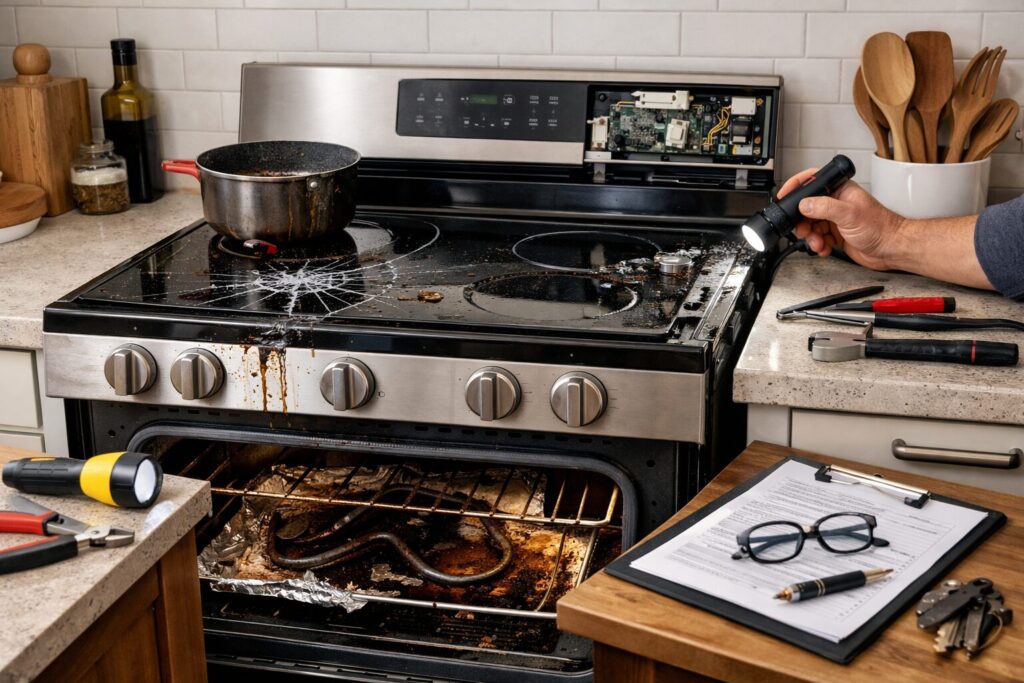
Created June 2026 – reflects current appliance repair trends and warranty coverage questions for ranges.
No. Accidental damage coverage is generally not available for ranges under most appliance protection plans, including those from CPS. Standard range warranties and extended protection plans typically focus on mechanical and electrical failures—such as control board malfunctions, heating element issues, or power supply breakdowns—rather than accidental events like drops, spills, or physical damage. Customers often ask about accidental coverage after experiencing cracked cooktops or physical damage, but these incidents are usually excluded. If you’re considering protection for your range, focus on plans that cover internal mechanical and electrical breakdowns after the manufacturer warranty expires, and always review the specific terms of any plan for coverage details.
Quick Summary: Range Accidental Damage Coverage
Here’s what you need to know about accidental damage coverage and protection plans for ranges:
- Accidental damage—like cracks, spills, or physical impact—is typically excluded from range protection plans.
- Most coverage focuses on mechanical and electrical failures, such as control board or heating element breakdowns.
- Repair professionals often see accidental damage claims denied due to standard warranty exclusions.
- It’s important to review plan details carefully, as accidental damage coverage is rarely included for appliances.
- CPS can assist with eligible mechanical or electrical range repairs after manufacturer warranty expiration.
|
Topic |
Quick Take |
|---|---|
|
Accidental Damage Coverage |
Not included for most ranges |
|
Standard Coverage |
Mechanical and electrical failures only |
|
Common Exclusions |
Physical damage, spills, and cosmetic issues |
|
Best For |
Internal breakdowns after warranty expires |
|
Repair Support |
CPS can help coordinate authorized repairs |
What Should You Look For in a Range Protection Plan?
When comparing range protection plans, it’s important to focus on the types of failures and repairs that are actually covered. Accidental damage is usually excluded, so customers should pay close attention to coverage for mechanical and electrical breakdowns and the quality of the repair network.
- Coverage for control boards, heating elements, and power supply failures
- Access to factory-authorized technicians for range repairs
- Clear exclusions for accidental or cosmetic damage
- Simple claims process and helpful repair coordination
- Eligibility for refurbished or open-box ranges, if needed
What Experience Does CPS Have With Range Repairs and Protection?
With more than 75 million products covered and 50,000 servicers nationwide, CPS draws on decades of claims experience and historical repair data to help range owners navigate mechanical and electrical breakdowns, claims administration, and post-warranty repair coordination.
- Control board and heating element failures are among the most common range repairs after warranty expiration
- Accidental damage, such as cracked cooktops or physical impact, is routinely excluded from coverage
- Repair costs for smart and induction ranges can be higher due to advanced electronics
- Mechanical failures often require specialized diagnostic tools and replacement parts
- Based on CPS’s historical claims data, most range repair claims involve internal electrical or control system issues, not accidental events
What Range Repairs Are Most Expensive or Common After Warranty Expiration?
Based on CPS’s historical claims data and real-world repair history, range repairs most often involve control board failures, heating element issues, and smart electronic breakdowns—while accidental or cosmetic damage claims are usually denied due to standard plan exclusions.
|
Product or Repair Type |
Common Issue |
Why It Can Be Expensive or Important |
CPS Repair Insights |
|---|---|---|---|
|
Electric Range |
Control board failure |
Advanced electronics and replacement part costs |
CPS claims data shows control board failures are among the most frequently approved post-warranty range repairs, often occurring 3–6 years after purchase as thermal cycling and electrical component wear accumulate. Historical CPS repair data suggests approved repairs typically range from $450–$950, with invoices occasionally exceeding $1,100 when relay boards, wiring harnesses, or display assemblies are replaced together. Claims involving these failures typically require advanced diagnostics, and repeat service visits occur in roughly 15%–25% of cases when intermittent electronic faults are present. |
|
Gas Range |
Igniter or burner issues |
Specialized labor and diagnostic time |
According to historical CPS repair records, igniter switches, flame sensors, spark modules, and burner valve components commonly fail 2–5 years into ownership, particularly in high-use cooking environments. CPS claims activity indicates approved repairs generally fall between $325–$850 depending on labor access and parts availability. Diagnostic complexity often drives costs higher than consumers expect, and estimate-to-invoice escalation occurs in approximately 20%–30% of approved claims when multiple ignition-related components are found to be worn. |
|
Induction Range |
Heating element malfunction |
Complex component replacement and calibration |
CPS repair history shows induction heating element and inverter board failures rank among the most expensive range repairs after warranty expiration, frequently appearing 4–7 years into ownership. Based on CPS claim trends, approved repair costs commonly range from $700–$1,600 due to calibration requirements, specialty parts sourcing, and electronic testing. When repair costs approach 50%–60% of replacement value, replacement consideration becomes more common across approved CPS appliance claims. |
|
Smart Range |
Touchscreen or connectivity problems |
Requires electronic diagnostics and part sourcing |
Service history from CPS claims indicates touchscreen failures, Wi-Fi communication errors, and interface board breakdowns become more common shortly after manufacturer warranty expiration and during mid-life ownership periods. Based on CPS claims data from comparable repair events, repairs typically range from $500–$1,300, with software diagnostics and control board replacement driving most costs. Repeat-visit rates can reach 20%–35% when firmware, connectivity, and hardware faults overlap, extending overall repair timelines. |
|
All Ranges |
Physical or accidental damage |
Typically excluded from coverage, not eligible for warranty repair |
CPS claims data shows physical damage, cracked glass surfaces, dented components, impact-related failures, and cosmetic issues are among the most commonly denied claim categories because they fall outside standard mechanical and electrical breakdown coverage. Historical CPS repair data suggests consumers facing uncovered damage often encounter retail repair costs between $400–$1,500+, particularly when cooktop assemblies, doors, or control panels require replacement. Coverage reviews consistently focus on whether the failure resulted from normal operational breakdown rather than accidental damage. |
Why Do Customers Trust CPS for Warranty Coverage?
Many customers choose CPS for range protection because of the company’s experience handling appliance repair claims, nationwide service coordination, and support for both new and eligible refurbished products.
- Support for a wide range of range and cooktop repairs
- Access to a large network of factory-authorized servicers
- Coverage options for new, refurbished, and open-box ranges
- Assistance with claims and repair coordination after manufacturer warranty expiration
- Transparent coverage terms and helpful customer support
Can CPS Help if My Range Is Already Out of Warranty?
If your range is out of warranty, CPS may still be able to help with troubleshooting guidance, repair referrals, and, for eligible products, options to purchase extended protection—depending on the age and condition of your appliance.
- Factory-authorized repair referral assistance for eligible ranges and cooktops
- Troubleshooting guidance and repair coordination support for out-of-warranty appliances
- Help finding replacement parts and authorized service for older or discontinued models
- Guidance on extended protection eligibility for certain ranges after the original purchase period
|
Contact Method |
Details |
Best For |
|---|---|---|
|
Phone |
(800) 905-0443 |
Speaking directly with a CPS representative |
|
Web Chat |
|
Quick support and troubleshooting guidance |
|
CPS Client Care Portal |
https://client.cpscentral.com/ |
Claims, account access, and service support |
|
Text Message |
Text (347) 621-7180 |
Quick customer support questions |
|
Facebook Messenger |
http://m.me/ConsumerPriorityService |
General support and communication |
|
|
cs@cpscentral.com |
Detailed questions and documentation |
What Should You Know About Range Protection and Warranty Coverage?
Does a range warranty cover accidental damage, like dropping a pan or cracking the cooktop?
No, accidental damage such as dropping items, spills, or cracked cooktops is generally excluded from range warranties and most extended protection plans.
What types of range repairs are usually covered by CPS protection plans?
CPS protection plans typically cover mechanical and electrical failures—like control board malfunctions, heating element breakdowns, and ignition issues—after the manufacturer warranty expires.
Are there any appliance protection plans that include accidental damage coverage for ranges?
Accidental damage coverage is generally not available for ranges; most plans exclude physical, cosmetic, or user-caused damage and only cover internal breakdowns.
Why do accidental damage claims for ranges often get denied?
Claims are commonly denied because accidental events, like spills or drops, fall outside standard protection plan terms, which focus on manufacturer defects and internal failures.
Does coverage differ for gas, electric, and induction ranges?
The main difference is which components are covered—igniters for gas, heating elements and control boards for electric and induction—but accidental and cosmetic damage exclusions apply to all types.
Can refurbished or open-box ranges qualify for CPS protection?
Yes, many refurbished and open-box ranges may be eligible for CPS protection, as long as they are in good working condition and meet plan requirements.
What should I do if my range is out of warranty and needs repair?
CPS can help with troubleshooting guidance, referrals to authorized repair providers, and in some cases, extended protection options for eligible ranges.
Are there any range repairs that protection plans do not cover?
Protection plans generally do not cover cosmetic issues, routine maintenance, accidental damage, or pre-existing problems that occurred before coverage began.
How can I check if my range qualifies for extended protection?
Contact CPS with your range’s details—such as model, age, and condition—to verify eligibility for protection coverage or repair support.
Want to Learn More About Range Protection Options?
If you’re considering coverage for your range or have questions about repair support, CPS can help you review your options and determine eligibility for protection plans.
For many homeowners, range repairs become more of a concern as appliances age and manufacturer warranties expire. Considering the cost of control board or heating element repairs—and the common exclusion of accidental damage—it’s important to review coverage details and focus on plans that address real-world mechanical and electrical risks. If you’re planning for long-term ownership or have a refurbished or open-box range, exploring protection and repair support options can help you avoid unexpected costs and keep your kitchen running smoothly.
About the CPS Repair Insights Data
The repair insights, reliability observations, repair frequency estimates, and cost ranges referenced on this page are based on Consumer Priority Service (CPS) proprietary claims intelligence.
Data Source
- Analysis of 239,000+ service claims
- Claims processed since January 2024
- Aggregated repair activity across CPS-covered products
- Based on actual repair outcomes and claims history
What the Data Reflects
- Common repair patterns
- Reliability trends
- Historical service frequencies
- Real-world ownership experiences
- Typical repair cost observations
Purpose
The information is intended to help consumers better understand potential repair risks, ownership costs, and common post-warranty repair situations based on observed claims activity.
 SPECIAL OFFER
 Coverage for scratch & dent models