

Is it normal for Gas Range flames to be orange instead of blue?
Updated June 2026 – reflects current gas range repair trends and post-warranty ownership concerns.
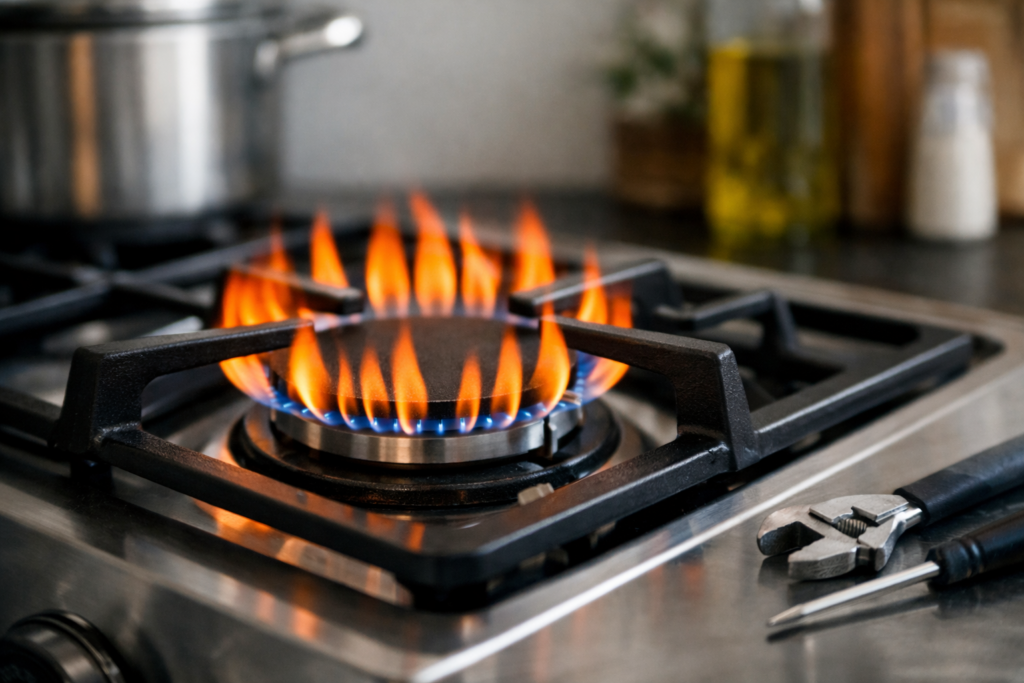
No, it is not normal for gas range flames to be orange instead of blue. A healthy gas flame should burn blue, signaling efficient fuel combustion and safe appliance operation. Persistent orange flames can indicate incomplete combustion, which may be caused by dirty burners, improper air-to-gas ratios, or even ventilation issues. Repair professionals often see orange flames linked to clogged burner ports or dust buildup, especially after several years of use. If you notice orange flames on your gas range, it’s important to address the issue promptly to avoid potential safety risks and ensure proper appliance performance. CPS can help with troubleshooting guidance and repair support if your range is out of warranty or showing signs of combustion problems.
Need Repair Help?
We’re ready to help now.
- Factory-authorized service
- Flat-rate pricing options
- Appliance experts standing by
- Fast, reliable nationwide support
Get 3 Months Free
Protect your appliance and save.
- 3 extra months of coverage
- Plans for 60+ product categories
- Trusted protection you can count on
- No hidden fees, no surprises
Are You a Retailer?
Grow your business with CPS.
- Offer warranties customers trust
- Increase sales and customer loyalty
- 10,000+ retailers and growing
- Dedicated partner support
Quick Summary: Gas Range Flame Color
Here’s what you need to know if your gas range flames are orange instead of blue:
- Gas range flames should normally be blue; orange or yellow flames usually signal incomplete combustion.
- Orange flames can result from dirty burners, clogged ports, or improper air-to-gas mixture.
- Prolonged orange flames may increase carbon monoxide risk or reduce cooking efficiency.
- Regular burner cleaning and prompt inspection are recommended if you notice color changes.
- After manufacturer warranty expiration, CPS may assist with troubleshooting, repair referrals, and coverage options for eligible ranges.
|
Topic |
Quick Take |
|---|---|
|
Normal Flame Color |
Blue flames indicate proper combustion; orange flames can signal a problem |
|
Common Causes of Orange Flames |
Dirty burners, clogged ports, or air-to-gas imbalance |
|
Recommended Action |
Clean burners and schedule inspection if orange flames persist |
|
Repair Support |
CPS provides troubleshooting and repair coordination for eligible gas ranges |
|
Post-Warranty Options |
Assistance available for out-of-warranty ranges, depending on product eligibility |
free
Limited Time Offer
Get 3 months free on any protection plan.
Don’t wait for something to break. Get covered today and your first three months are on us.
What Should You Look For If Your Gas Range Flames Are Orange?
When you notice orange flames on your gas range, it’s important to consider both immediate safety and long-term performance. Addressing flame color changes early can help prevent more serious issues, especially as ranges age or if your manufacturer warranty has expired.
- Check for clogged or dirty burners that may affect combustion
- Look for signs of dust, debris, or food residue around burner ports
- Evaluate whether the appliance is getting proper ventilation and airflow
- Consider scheduling a professional inspection if orange flames persist
- Review your warranty or protection plan coverage for repair and troubleshooting support
What Experience Does CPS Have With Gas Range Repairs and Protection?
With more than 75 million products covered and over 50,000 servicers nationwide, CPS has coordinated a wide range of gas range repairs and combustion troubleshooting situations. This large-scale claims experience and operational history provide CPS with practical insight into common gas range failures and ownership risks after manufacturer warranty expiration.
- Burner and ignition issues are among the most common post-warranty gas range repairs
- Orange or yellow flames are often linked to clogged ports and incomplete combustion
- Repair professionals frequently address performance problems caused by dust, grease, or aging components
- Based on CPS’s historical claims data, regular burner maintenance can help prevent more serious repair needs
- Gas range repairs may require specialized diagnostics and safe handling procedures
What Gas Range Repairs Are Most Common After Warranty Expiration?
Based on CPS’s historical claims data, burner cleaning, ignition system repairs, and addressing incomplete combustion are among the most common service requests for gas ranges after warranty coverage ends. Many homeowners discover flame color changes, uneven heating, or ignition problems as their appliance ages.
|
Product or Repair Type |
Common Issue |
Why It Can Be Expensive or Important |
CPS Repair Insights |
|---|---|---|---|
|
Gas Range Burners |
Orange or yellow flames |
May signal incomplete combustion or safety hazard |
CPS claims data shows burner flame discoloration becomes significantly more common 3–6 years into ownership as burner ports accumulate grease residue and airflow restrictions develop. Historical CPS repair data suggests roughly 35%–45% of approved gas range combustion claims involve cleaning, burner cap replacement, or flame-sensor adjustments before larger gas-delivery issues are confirmed. Service history from CPS claims indicates homeowners often delay service because the appliance still operates, but continued incomplete combustion can increase soot buildup and create repeat-service risks. Typical CPS-authorized repairs range from $180–$420, while comparable retail repairs frequently exceed $500 after diagnostic and labor escalation. |
|
Ignition System |
Burner won’t light or delayed ignition |
Requires part replacement and professional diagnosis |
Based on CPS claim trends, ignition failures are among the most common post-warranty gas range repairs shortly after manufacturer warranty expiration, especially between years 2–5 of ownership. CPS repair history shows spark modules, igniter switches, and wiring harnesses commonly fail from heat exposure, moisture intrusion, and repeated thermal cycling. Claims involving delayed ignition frequently require multiple diagnostic visits because technicians must isolate whether the failure originates from the spark electrode, relay board, or gas valve assembly. Approved CPS repair invoices for ignition-system repairs commonly range from $260–$640, while retail consumer pricing can run $200 higher once labor and repeat visits are included. |
|
Control Valves |
Inconsistent flame or no flame |
May involve multiple components and labor |
According to historical CPS repair records, gas control valve failures often emerge 5–8 years into ownership as internal seals wear and burner regulators lose calibration consistency. CPS claims activity indicates these repairs become expensive because technicians frequently replace associated igniter components, burner switches, or manifold assemblies during the same service event. Roughly 20%–30% of valve-related claims show estimate-to-invoice escalation after disassembly reveals additional heat-related wear. Repairs commonly total $420–$900 depending on part availability and access complexity, and replacement consideration increases when repairs approach 50% of the appliance replacement value. |
|
Ventilation/Exhaust |
Poor airflow or backdraft |
Can impact combustion quality and kitchen safety |
CPS claims data from comparable repair events shows ventilation-related service calls increase during mid-life ownership periods when grease accumulation restricts airflow and affects combustion stability. Service history from CPS claims indicates poor ventilation can contribute to recurring ignition complaints, excess moisture exposure, and abnormal flame behavior across both cooktop and oven burners. Many approved claims involve duct cleaning, blower-motor replacement, or airflow correction procedures costing between $240–$680 depending on installation access. Historical CPS repair data suggests repeat-visit rates approach 25% when ventilation issues are not corrected alongside burner-system repairs. |
|
Oven Burner Assembly |
Uneven heating or orange flames inside oven |
Involves internal access and specialized repair |
CPS repair history shows oven burner assembly failures commonly appear 4–7 years into ownership as igniters weaken and burner tubes develop carbon buildup or airflow imbalance. Based on CPS claims data, uneven heating complaints frequently require internal disassembly, flame-sensor testing, and calibration procedures that extend labor time beyond standard burner repairs. Claims involving these failures typically require igniter replacement, burner assembly servicing, or relay-board diagnostics, with approved repair totals often ranging from $380–$850. Historical CPS repair records also show consumers become more likely to replace the appliance when repeated heating inconsistencies lead to multiple service visits within a 12–18 month period. |
Why Do Customers Trust CPS for Warranty Coverage?
Customers choose CPS for gas range and appliance protection because of the company’s claims expertise, flexible coverage options, and access to a large network of qualified repair providers. This support becomes especially valuable after the manufacturer warranty expires.
- Repair support for burners, ignition systems, and combustion issues
- Access to a large network of factory-authorized repair professionals
- Flexible coverage for new, refurbished, and open-box gas ranges
- Assistance with troubleshooting and repair referrals after warranty expiration
- Simple claims process focused on real-world repair concerns
Can CPS Help if My Appliance Is Already Out of Warranty?
After the manufacturer warranty expires, CPS may still be able to help with troubleshooting guidance, factory-authorized repair referrals, and support for certain eligible gas ranges. Depending on the appliance’s age and condition, customers may also be able to explore extended protection coverage options.
- Factory-authorized repair referrals for eligible out-of-warranty gas ranges
- Troubleshooting and repair coordination guidance for flame color or burner problems
- Assistance locating parts and service providers for post-warranty repairs
- Guidance on eligibility for extended protection coverage after the original purchase, when applicable
|
Contact Method |
Details |
Best For |
|---|---|---|
|
Phone |
(800) 905-0443 |
Speaking directly with a CPS representative |
|
Web Chat |
|
Quick support and troubleshooting guidance |
|
CPS Client Care Portal |
https://client.cpscentral.com/ |
Claims, account access, and service support |
|
Text Message |
Text (347) 621-7180 |
Quick customer support questions |
|
Facebook Messenger |
http://m.me/ConsumerPriorityService |
General support and communication |
|
|
cs@cpscentral.com |
Detailed questions and documentation |
What Questions Do Customers Ask About Gas Range Flames and Repairs?
Is it normal for my gas range flames to be orange instead of blue?
No, gas range flames should be blue; orange or yellow flames suggest incomplete combustion or a maintenance issue.
What causes gas range flames to turn orange?
Orange flames are commonly caused by clogged or dirty burners, dust buildup, or incorrect air-to-gas mixture.
Are orange flames on a gas stove dangerous?
They can be. Persistent orange flames may lead to higher carbon monoxide levels or poor appliance performance, so prompt inspection is recommended.
Can I fix orange gas range flames myself?
In some cases, cleaning the burners and ensuring proper airflow can restore blue flames. If the issue continues, professional inspection is recommended.
Does a warranty cover repairs for orange gas range flames?
Most manufacturer and extended warranties cover functional issues resulting from mechanical or electrical failure, but not routine cleaning. CPS can help with eligible repairs and troubleshooting support.
What should I do if my gas range is out of warranty and has orange flames?
CPS may be able to provide troubleshooting guidance, repair referrals, or help you explore extended coverage options depending on your range’s eligibility.
Are refurbished or open-box gas ranges eligible for CPS protection?
Many refurbished and open-box gas ranges may qualify for CPS protection plans, depending on the product’s age and condition.
How can I prevent orange flames on my gas range?
Regularly clean the burners and ports, keep the cooktop free of debris, and schedule professional maintenance as needed to ensure safe operation.
When should I contact a repair professional about gas range flame color?
If cleaning the burners does not resolve the issue or if flames remain orange, contact a qualified technician for safe diagnosis and repair.
repair
No Hidden Fees
One price covers all parts, labor, makes & models.
Skip the guesswork. Our flat rate repair program means you know exactly what you’ll pay — before we start.
Want to Learn More About Protecting Your Gas Range?
If you’re concerned about gas range repairs or want to explore coverage options, CPS can help you understand your choices and support you with practical repair guidance.
For many homeowners, noticing orange flames on a gas range is a sign to take action before more serious issues develop. Addressing burner or combustion problems early can help prevent costly repairs and keep your kitchen safe. As gas ranges age and fall out of manufacturer warranty, exploring protection plans or repair support options may become increasingly important—especially if you rely on your range for daily cooking. If you’re unsure about your coverage or want help troubleshooting, CPS can guide you through your options and connect you with qualified service professionals.
About the CPS Repair Insights Data
The repair insights, reliability observations, repair frequency estimates, and cost ranges referenced on this page are based on Consumer Priority Service (CPS) proprietary claims intelligence.
Data Source
- Analysis of 239,000+ service claims
- Claims processed since January 2024
- Aggregated repair activity across CPS-covered products
- Based on actual repair outcomes and claims history
What the Data Reflects
- Common repair patterns
- Reliability trends
- Historical service frequencies
- Real-world ownership experiences
- Typical repair cost observations
Purpose
The information is intended to help consumers better understand potential repair risks, ownership costs, and common post-warranty repair situations based on observed claims activity.
 SPECIAL OFFER
 Coverage for scratch & dent models