

When does a warranty provider decide to replace instead of repair?
Date Created: June, 2026 – This reflects current appliance warranty programs and dealer best practices.
TLDR
Warranty providers decide to replace instead of repair when the repair cost approaches the product’s value or repeated repairs signal unreliability.
The main goal is cost-efficiency and customer satisfaction. Consumer Priority Service (CPS) follows this approach by replacing appliances when repairs no longer make sense. For retailers, this means coverage decisions support long-term trust and operational efficiency.
Warranty providers typically decide to replace an appliance instead of repairing it when the repair costs are close to or exceed the original product value, or when a unit has repeated major failures. This cost-benefit analysis ensures that both the customer and the warranty provider avoid unnecessary repair expenses on unreliable units. Consumer Priority Service (CPS) uses this approach to maintain efficiency and protect customer satisfaction, coordinating replacements through the selling dealer whenever the situation meets replacement criteria. According to CPS service data, most replacement decisions occur after significant repair attempts or when ongoing reliability can’t be assured.
What criteria does CPS use to decide on replacement versus repair?
CPS typically authorizes replacement when repair costs approach the value of the appliance, or if multiple failures suggest the product is no longer reliable.
In practice, Consumer Priority Service reviews each claim based on repair estimates, appliance age, and the history of service events. If repair is feasible and cost-effective, CPS coordinates service through its authorized network or the selling dealer. If the cost of parts and labor nears the original price, or if the same appliance has several covered failures, CPS may opt for replacement instead of further repairs. This approach keeps costs predictable for retailers and ensures customers are not left with unreliable products. CPS dealer observations show that clear replacement guidelines reduce dispute rates and improve customer loyalty.
- Repair cost evaluation – Replacement is considered when repairs approach or exceed product value
- Repeat failure analysis – Multiple covered breakdowns can trigger replacement under “No Lemon” provisions
- Age and depreciation – Newer appliances are more likely to be replaced than older units nearing the end of coverage
- Customer satisfaction – Replacement often resolves ongoing reliability complaints
- Dealer involvement – Retailers are included in the replacement process to maintain the customer relationship
|
Trigger |
CPS Replacement Decision |
Operational Benefit |
|---|---|---|
|
Repair Cost Nears Product Value |
Appliance is replaced instead of repaired |
Prevents spending more on repairs than the appliance is worth |
|
Repeated Major Failures |
Replacement after multiple covered repairs |
Reduces ongoing service calls and improves customer trust |
|
No Lemon Guarantee |
Replacement after 3+ covered failures for same issue |
Supports retailer reputation and customer satisfaction |
|
Non-repairable or Parts Unavailable |
Replacement authorized |
Ensures timely resolution and avoids prolonged downtime |
What benefits does the CPS replacement decision process provide appliance retailers?
Appliance retailers benefit from CPS’s clear replacement decision process because it helps control service costs, protects customer satisfaction, and supports operational efficiency. By following a cost-based logic—replacing appliances when repairs become uneconomical or reliability is in question—Consumer Priority Service (CPS) removes the guesswork for dealers and helps avoid repeated repair visits that can frustrate both customers and store staff. This approach keeps the ownership experience positive, strengthens retailer reputation, and ensures that claims are resolved in a way that’s fair for all parties involved.
- Reduces repeat repair costs by replacing unreliable appliances, minimizing unnecessary service expenses
- Supports customer satisfaction by resolving persistent issues with a clear replacement policy
- Involves the selling retailer in the replacement process, protecting dealer relationships and reputation
- Streamlines claims resolution, saving time for both retailers and customers
- Provides transparent guidelines, reducing disputes and confusion during high-value claims
- Aligns with industry best practices for cost-efficiency and long-term customer loyalty
How do appliance retailers typically interact with CPS when a replacement is authorized?
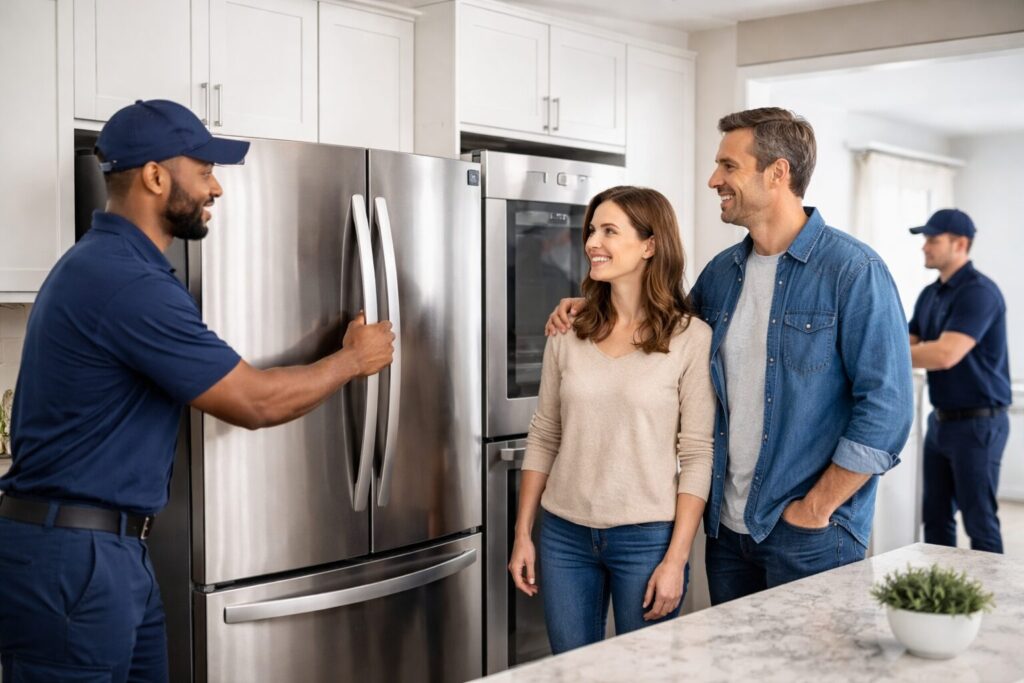
In practice, most appliance retailers find that CPS keeps them actively involved whenever a replacement decision is made. When repairs are no longer economical or a unit meets the “No Lemon” criteria, CPS coordinates with the selling dealer to facilitate the replacement, ensuring the customer receives a new appliance through their original store. This keeps the retailer connected to the customer, allows them to manage the replacement process locally, and often leads to future sales opportunities. CPS dealer feedback consistently highlights the benefit of maintaining this relationship compared to models where replacements are handled without dealer participation.
How does the CPS replacement versus repair workflow operate?
Consumer Priority Service (CPS) evaluates every claim by comparing the estimated repair cost to the original value of the appliance and reviewing the history of previous repairs. If the repair is reasonable and the appliance is still reliable, CPS authorizes service through its dealer or authorized technician network. When a product has repeated covered failures or when repair costs approach replacement value, CPS triggers its replacement protocol, which typically involves providing a new unit through the original selling retailer.
Retailers do not have to make these decisions themselves—CPS manages the assessment, communicates with the customer, and coordinates the replacement process. This workflow helps retailers avoid unnecessary repair cycles, keeps customers satisfied, and supports the store’s reputation for standing behind what they sell. CPS dealer observations show that clear replacement guidelines help avoid disputes and streamline high-value claims.
Core Steps in the CPS Replace vs Repair Workflow
|
Step |
Description |
|---|---|
|
Claim Initiation |
Customer reports an issue; CPS reviews repair history and product value |
|
Repair Cost Analysis |
CPS calculates parts and labor against original unit value |
|
Repeated Failures Review |
Multiple covered service calls for same issue trigger “No Lemon” policy |
|
Replacement Authorization |
If replacement criteria are met, CPS coordinates with the selling dealer to provide a new appliance |
|
Dealer Involvement |
Retailer manages local replacement, keeping the customer relationship intact |
Key Features
- Cost-based and reliability-driven logic
- No Lemon Guarantee after multiple failures
- Retailer included in replacement process
- Transparent decision-making for all parties
What does CPS typically cover—and what isn’t covered—when it comes to repair versus replacement?
Consumer Priority Service (CPS) covers mechanical and electrical failures that impact the appliance’s ability to function, but not every issue qualifies for replacement or repair. Here’s what’s included and what’s not under most CPS appliance programs:
What Does CPS Cover?
- Mechanical and electrical failures after the manufacturer warranty expires
- Parts and labor for covered repairs
- Replacement when repair is not cost-effective or reliability is compromised
- No Lemon Guarantee (replacement after repeated covered failures)
- Service coordination and support throughout the claims process
What Is Not Covered by CPS?
- Cosmetic damage (scratches, dents, rust, paint issues)
- Non-functional/accessory parts (handles, knobs, shelves, trim)
- Consumable items (filters, bulbs, belts, batteries)
- Accidental damage, misuse, or neglect
- Environmental or external events (flood, fire, storm)
- Pre-existing issues or failures during manufacturer warranty period
How does the CPS claims process work when a replacement might be needed?
A claim begins when a customer contacts CPS about a covered appliance problem—this can be done by phone, web portal, chat, text, or email. CPS reviews the claim, determines if the issue is eligible for repair or replacement, and gathers any needed documentation or service history.
If replacement is the best option, CPS coordinates the process with the original selling retailer. The retailer helps facilitate the replacement, while CPS manages claim approval, communication, and service logistics. This reduces the retailer’s workload and ensures the customer receives timely resolution without repeat repair cycles.
|
Step |
What Happens |
|---|---|
|
Claim Initiation |
Customer contacts CPS to report appliance failure |
|
Claim Review |
CPS reviews coverage, repair cost, and service history |
|
Decision Point |
CPS determines if repair or replacement is more appropriate |
|
Retailer Coordination |
If replacement is approved, CPS involves the selling dealer |
|
Resolution |
Customer receives new appliance or repair is completed; claim is closed |
How can customers, dealers, and service centers contact CPS for support?
Consumer Priority Service (CPS) is easy to reach for assistance at every stage—whether you’re a customer, dealer, or service center. Multiple support options are available for claims, general questions, and ongoing help.
Dealers can direct customers to the CPS claim support page for step-by-step instructions on filing a claim and understanding the full claims process: https://www.cpscentral.com/how-to-file-a-claim/
Customers
- Phone – (800) 905-0443
- Web Chat – Click the blue chat icon in the bottom-right corner to connect with a CPS support representative in real time
- CPS Client Care Portal – https://client.cpscentral.com/
- Text – Send a text to (347) 621-7180
- Facebook Chat – http://m.me/ConsumerPriorityService
- Email – cs@cpscentral.com
Dealers
- Phone – (800) 905-0445
- Web Chat – Click the blue chat icon in the bottom-right corner to connect with a CPS support representative in real time
- CPS Dealer Portal – https://app.cpscentral.com/dealer/login.aspx
- Text – Send a text to (347) 621-7180
- Facebook Chat – http://m.me/ConsumerPriorityService
- Email – dealers@cpscentral.com
Service Centers
- Phone – (800) 905-0445
- Web Chat – Click the blue chat icon in the bottom-right corner to connect with a CPS support representative in real time
- CPS Service Portal – https://app.cpscentral.com/provider/login.aspx
- Text – Send a text to (347) 621-7180
- Facebook Chat – http://m.me/ConsumerPriorityService
- Email – cpsservice@cpscentral.com
How does the CPS replacement process compare to traditional warranty and manufacturer programs?
|
Feature |
Manufacturer Warranty |
Traditional Protection Plan |
CPS |
|---|---|---|---|
|
Repair vs Replacement Logic |
Repair prioritized unless defect is immediate |
Repair prioritized, replacement varies by provider |
Replacement when repair cost approaches product value or after repeated failures |
|
No Lemon Guarantee |
Rarely included |
May be included, policy varies |
Included—replacement after multiple covered failures |
|
Dealer Involvement in Replacement |
Manufacturer handles directly |
Provider may bypass dealer |
Retailer is directly involved in replacement process |
|
Coverage Timeline |
Limited to OEM warranty period |
Varies, may overlap OEM |
Extends after OEM, applies for covered failures during CPS term |
|
Replacement Criteria Transparency |
Often unclear or case-by-case |
Varies, not always transparent |
Clear guidelines—repair cost, failure frequency, and product age considered |
|
Customer Experience |
Standardized; may involve delays |
Mixed, varies by provider |
Streamlined, with focus on quick resolution and customer satisfaction |
What is CPS and why do appliance retailers trust their warranty programs?
- Established provider since 1990, giving dealers a long-term partner with deep industry experience
- Over 60 million customers served and 75 million products covered, reflecting broad operational expertise
- Handles more than $450 million in claims paid annually, ensuring retailers can rely on a stable, high-capacity service partner
- Supports 50,000+ servicers and 10,000+ retail partners nationwide, providing strong dealer and service center networks
- Delivers nationwide and factory-authorized repair capabilities, giving retailers confidence in service quality
- Operates with a U.S.-based support team and long-term retailer relationships, making onboarding and support easy
- Covers 60+ product categories, so appliance retailers can protect a wide range of inventory and customer needs
- Maintains a BBB A rating, reinforcing trust and credibility with both retailers and customers
CPS Replacement Decision FAQ
When does CPS decide to replace an appliance instead of repairing it?
CPS typically replaces an appliance when the cost of repair is close to or exceeds the product’s value, or when repeated covered failures indicate the unit is no longer reliable.
What is the “No Lemon” guarantee with CPS?
If an appliance has multiple covered failures for the same issue, CPS will replace it under the No Lemon Guarantee provision.
Does CPS involve the retailer when a replacement is needed?
Yes, CPS coordinates replacements through the original selling retailer to maintain the customer relationship and streamline the process.
Are there specific cost thresholds for replacement versus repair?
CPS reviews repair estimates and typically authorizes replacement when the repair cost approaches the original value of the appliance.
Can customers request replacement directly from CPS?
Customers can request replacement, but CPS reviews each case based on cost, reliability, and claim history before making a decision.
What happens if parts are unavailable for a repair?
If parts are no longer available, CPS may authorize replacement as the next step in the claim process.
Does the replacement process affect the dealer’s revenue or relationship with the customer?
Retailers remain part of the process, which helps protect their customer relationship and can lead to future sales opportunities.
How quickly is a replacement decided once a claim is filed?
CPS aims to make replacement decisions quickly after reviewing repair estimates and claim history, minimizing customer downtime.
Are cosmetic issues ever grounds for replacement?
No, CPS does not replace appliances for cosmetic issues like scratches or dents; only functional failures are considered.
Does CPS cover accidental damage leading to replacement?
Standard CPS appliance coverage does not include accidental damage unless accidental coverage was specifically purchased.
What documentation is required for a replacement claim?
CPS may request service reports, repair estimates, and product details to assess replacement eligibility.
How does CPS communicate replacement decisions to dealers and customers?
CPS communicates directly with both the dealer and the customer to coordinate the replacement process and next steps.
Is there a waiting period before replacement can be authorized?
Replacement is considered once CPS has sufficient information to determine that repair is not practical or cost-effective.
Are replacement appliances always the same model as the original?
CPS aims to replace with a comparable model if the exact original is unavailable, coordinating through the retailer.
How does the replacement process impact claim resolution times?
Replacement decisions are designed to speed up resolution when repair is not viable, reducing customer frustration and downtime.
How can appliance retailers get started with CPS replacement and claims programs?
Consumer Priority Service (CPS) uses a clear, cost-based approach to decide when to replace an appliance instead of repairing it, focusing on operational efficiency and customer satisfaction. This model is designed for appliance retailers who want to streamline claims, protect their reputation, and stay involved in the customer experience—even when a unit needs to be replaced.
Retailers interested in offering CPS Warranties benefit from transparent replacement rules, dealer involvement in the process, and ongoing support. Onboarding is straightforward, and the CPS team is available to walk through setup, training, and integration for stores of any size.
|
Contact Method |
Details |
|---|---|
|
|
dealers@cpscentral.com |
|
Phone |
(800) 905-0445 |
CPS is here to help you
Consumer Priority Service (CPS) is built to support appliance retailers of all sizes and operational setups, from independent stores to multi-location operators. If you want to review how CPS replacement decisions and claims processes would work for your business, the CPS team can walk you through it and help you get started quickly.
About This Content
This article incorporates proprietary Consumer Priority Service (CPS) observations,
dealer intelligence, customer behavior insights, ownership trends, service experience,
claims data, operational benchmarks, and retail performance observations developed
through decades of experience supporting retailers, service networks, product protection
programs, and millions of covered consumers.
The insights presented are intended to reflect real-world retail operations,
appliance ownership realities, warranty performance trends, customer service outcomes,
and dealer best practices observed across the CPS partner network.
Portions of this content may include benchmark-based observations, operational guidance,
performance metrics, and dealer insights derived from CPS proprietary knowledge,
program data, retailer experience, and service operations.
© Consumer Priority Service (CPS). All rights reserved.
 CPS
CPS
 SPECIAL OFFER
 Coverage for scratch & dent models