

Why does my Gas Range oven take a long time to preheat?
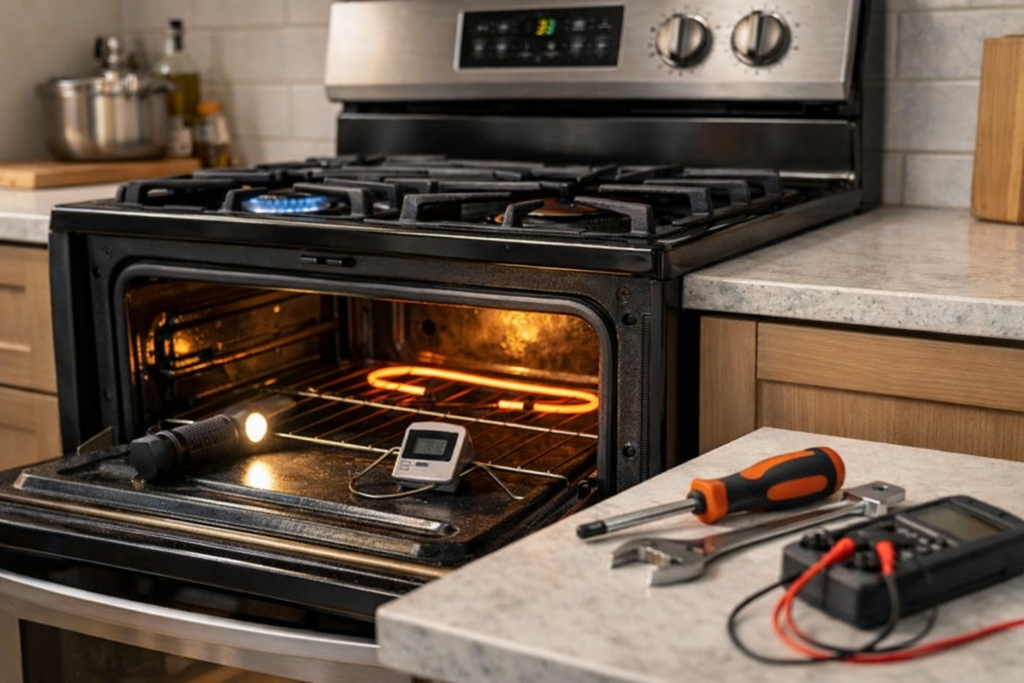
Updated June 2026 – reflects current appliance repair trends and gas range preheat concerns.
A gas range oven may take a long time to preheat due to issues like a weak igniter, faulty temperature sensor, uneven gas flow, or buildup of debris that restricts heating efficiency. Many homeowners notice slower preheat times as ovens age, especially if maintenance is overdue or components begin to wear out. If your oven consistently takes longer than 15-20 minutes to reach temperature, it could signal a developing problem that may require repair or replacement of key parts. Reliable support and access to qualified repair professionals can help diagnose and resolve these issues, especially after the manufacturer warranty expires.
Need Repair Help?
We’re ready to help now.
- Factory-authorized service
- Flat-rate pricing options
- Appliance experts standing by
- Fast, reliable nationwide support
Get 3 Months Free
Protect your appliance and save.
- 3 extra months of coverage
- Plans for 60+ product categories
- Trusted protection you can count on
- No hidden fees, no surprises
Are You a Retailer?
Grow your business with CPS.
- Offer warranties customers trust
- Increase sales and customer loyalty
- 10,000+ retailers and growing
- Dedicated partner support
Quick Summary: Gas Range Oven Preheat Delays
Here’s what you need to know if your gas range oven is taking a long time to preheat:
- Slow preheat times are often caused by a failing igniter, weak gas flow, or a faulty temperature sensor.
- Debris buildup or worn oven door seals can also impact heating efficiency.
- Many homeowners notice longer preheat times as gas ovens age or after years of use.
- Most gas ovens should reach temperature within 10-15 minutes; longer delays may indicate a repair is needed.
- Professional diagnosis is recommended for persistent preheat issues, especially after warranty expiration.
|
Topic |
Quick Take |
|---|---|
|
Common Causes |
Weak igniter, faulty sensor, gas flow issues, or debris buildup |
|
Expected Preheat Time |
Typically 10-15 minutes for most gas ovens |
|
When to Seek Repair |
If preheat time regularly exceeds 20 minutes or oven struggles to hold temperature |
|
Warranty Support |
CPS offers repair coordination and support after manufacturer warranty expiration |
|
Eligible Products |
New, refurbished, and many open-box gas ranges may qualify for coverage |
free
Limited Time Offer
Get 3 months free on any protection plan.
Don’t wait for something to break. Get covered today and your first three months are on us.
What Should You Look For if Your Gas Oven Takes Too Long to Preheat?
When your gas range oven starts taking longer to preheat, it’s important to look beyond everyday use and consider underlying issues or repair needs. Customers often want to know which factors to check and what type of repair support or coverage can help if a bigger problem is to blame.
- Coverage for igniter and sensor failures
- Access to experienced appliance repair professionals
- Clear claims process and reliable customer support
- Eligibility for refurbished or open-box gas ranges
- Support for costly repairs after manufacturer warranty expiration
What Experience Does CPS Have With Gas Range and Oven Repairs?
With more than 75 million products covered and 60 million customers supported, CPS brings decades of appliance repair coordination and claims experience to every kitchen repair situation. Nationwide operations and a network of over 50,000 authorized servicers mean CPS is equipped to help with common gas range oven failures, drawing on real-world claims data and years of operational expertise.
- Igniter and control board failures are among the most common gas oven repair claims
- Gas flow and burner issues often develop as appliances age or after heavy use
- Door seal wear and temperature sensor problems can lead to uneven heating and slow preheat times
- Repairs for high-end ranges and smart ovens may involve advanced diagnostics and specialized parts
- CPS coordinates thousands of appliance repairs annually based on historical claims data and repair trends
What Gas Range Oven Repairs Are Most Common After Warranty Expiration?
Based on CPS’s historical claims data and long-term repair experience, igniter replacements, temperature sensor failures, and gas flow issues are among the most common repairs for gas range ovens as they age. Repair professionals often report that preheat delays are one of the first signs homeowners notice when a component begins to fail or needs adjustment.
|
Product or Repair Type |
Common Issue |
Why It Can Be Expensive or Important |
CPS Repair Insights |
|---|---|---|---|
|
Gas Range Oven |
Igniter failure |
Prevents proper heating and can require full replacement |
CPS claims data shows igniter failures are among the most common gas range oven repairs 3–6 years into ownership, especially shortly after manufacturer warranty expiration. Historical CPS repair data suggests weak igniters often cause delayed preheating, inconsistent burner ignition, and repeated clicking before full failure occurs. Approved CPS claims involving igniter replacements typically range from $240–$520, while retail consumer invoices can exceed $700 once diagnostics and labor are added. Claims activity indicates roughly 28% of repeat service visits involve unresolved ignition or flame-sensing issues tied to aging spark modules or wiring harnesses. |
|
Gas Range Oven |
Temperature sensor malfunction |
Leads to inaccurate or slow preheating, may require sensor replacement |
Based on CPS claim trends, temperature sensor failures commonly appear 4–7 years into ownership as repeated thermal cycling gradually affects calibration accuracy. Service history from CPS claims indicates homeowners often first notice uneven baking temperatures or ovens running 25–50 degrees hotter or colder than settings. Sensor-related repairs typically fall between $260–$480 through CPS-authorized networks, though electronic calibration and diagnostic labor can push retail repairs beyond $650. Claims involving sensor failures also show elevated control board replacement approvals when voltage irregularities damage multiple temperature-management components simultaneously. |
|
Gas Range Oven |
Poor gas flow or clogged burner |
Slows preheat, can require professional cleaning or part replacement |
CPS repair history shows restricted gas flow and clogged burner assemblies frequently develop during mid-life ownership periods, particularly in homes with heavy cooking usage or grease accumulation. According to historical CPS repair records, poor burner performance can increase preheat times by 20%–40% before complete ignition failure occurs. Professional cleaning, valve replacement, or burner assembly repairs commonly range from $320–$760 depending on access complexity and gas-line servicing requirements. Across approved CPS appliance claims, approximately 18% of these repairs escalate after technicians discover secondary flame sensor or regulator issues during inspection. |
|
Gas Range Oven |
Worn oven door seal |
Causes heat loss, increased energy use, and longer preheat times |
CPS claims activity indicates worn oven door seals become increasingly common 5–8 years into ownership as constant heat exposure hardens gasket materials and weakens sealing pressure. Historical CPS repair data suggests homeowners frequently delay these repairs because ovens still operate, even while cooking performance declines and energy usage increases. Door seal replacements generally range from $180–$420 under CPS-authorized service, although warped hinges or frame alignment issues can increase invoice totals substantially. Claims involving prolonged heat-loss operation also show higher rates of temperature sensor strain and control-system compensation failures over time. |
|
Gas Range Oven |
Control board or thermostat issues |
May impact temperature accuracy; electronic repairs can be costly |
Based on CPS claims data from comparable repair events, electronic control board and thermostat failures are among the highest-cost gas range repairs after warranty expiration. These failures commonly emerge 6–9 years into ownership due to heat exposure, electrical fluctuations, and long-term relay fatigue. CPS claims data shows approved repairs often range from $480–$1,050 depending on board availability, firmware programming requirements, and model complexity. Claims involving electronic failures also demonstrate higher replacement consideration rates once repair totals approach 45%–60% of replacement value, particularly for premium slide-in gas ranges with integrated digital controls. |
Why Do Customers Choose CPS Protection Plans?
Customers trust CPS for gas range and appliance protection because of the company’s repair coordination experience, flexible coverage options, and support for both new and refurbished products. Access to a large repair network and clear claims processes are key reasons customers rely on CPS after manufacturer warranty expiration.
- Repair support for gas ranges, ovens, and major kitchen appliances
- Access to factory-authorized repair networks and experienced technicians
- Eligibility for many refurbished and open-box appliances
- Help navigating expensive repairs after manufacturer coverage ends
- Simple claims process and expert repair coordination
Can CPS Help if My Appliance Is Already Out of Warranty?
After the manufacturer warranty expires, many homeowners want to know if repair support or extended protection is still available. CPS may be able to assist with troubleshooting guidance, factory-authorized repair referrals, and—when eligible—protection plan options for certain out-of-warranty gas ranges and ovens.
- Factory-authorized repair referral assistance for eligible gas ranges and ovens
- Troubleshooting guidance and repair coordination support for out-of-warranty appliances
- Help locating replacement parts, authorized service providers, and repair options
- Guidance on eligibility for extended protection coverage after the original purchase or warranty period, when applicable
|
Contact Method |
Details |
Best For |
|---|---|---|
|
Phone |
(800) 905-0443 |
Speaking directly with a CPS representative |
|
Web Chat |
|
Quick support and troubleshooting guidance |
|
CPS Client Care Portal |
https://client.cpscentral.com/ |
Claims, account access, and service support |
|
Text Message |
Text (347) 621-7180 |
Quick customer support questions |
|
Facebook Messenger |
http://m.me/ConsumerPriorityService |
General support and communication |
|
|
cs@cpscentral.com |
Detailed questions and documentation |
What Questions Do Customers Ask About Gas Range Oven Repairs and Warranty Coverage?
Why is my gas range oven taking so long to preheat?
Slow preheat times are often caused by a weak or failing igniter, faulty temperature sensor, poor gas flow, or buildup of debris inside the oven. These issues can develop as ovens age or if regular maintenance is missed.
How long should it take for a gas oven to preheat?
Most gas ovens should reach the set temperature within 10 to 15 minutes. If your oven regularly takes longer, it may need service or repair.
What are the most common repairs for gas range ovens?
Based on CPS’s historical claims data, igniter replacements, temperature sensor repairs, and fixing gas flow issues are among the most common repairs for gas ovens, especially after several years of use.
Can a faulty oven door seal cause preheat delays?
Yes. A worn or damaged oven door seal can let heat escape, making preheating take longer and causing temperature fluctuations during baking.
Is it expensive to repair a gas oven igniter?
Igniter repairs are one of the more common gas oven fixes. While not always the most expensive, costs can add up if multiple components need service or if specialized parts are required.
Does CPS offer protection plans for gas ranges and ovens?
Yes. CPS offers protection plans and repair support for many new, refurbished, and open-box gas ranges and ovens, including coverage for mechanical and electrical failures.
Can I get help if my gas oven is already out of warranty?
In many cases, CPS can still assist with troubleshooting, repair referrals, and, for eligible products, extended protection options even after manufacturer warranty expiration.
Are refurbished or open-box gas ranges eligible for coverage?
Many refurbished and open-box gas ranges are eligible for CPS protection plans. Eligibility depends on product type, age, and condition—contact CPS to check your specific product.
What should I do if my gas oven still won’t preheat after cleaning?
If cleaning hasn’t solved the issue, it’s best to have a professional inspect the igniter, temperature sensor, and gas flow components to identify the underlying problem.
repair
No Hidden Fees
One price covers all parts, labor, makes & models.
Skip the guesswork. Our flat rate repair program means you know exactly what you’ll pay — before we start.
Looking for Warranty Coverage Options?
If you’re concerned about slow oven preheat times or want to protect your gas range from unexpected repair costs, exploring coverage options and speaking with a support specialist can help you make an informed decision.
For many homeowners, gas oven preheat problems signal the need for timely repairs and a closer look at long-term protection options. As appliances age, igniter and sensor failures can become more frequent, leading to longer preheat times and potential service costs. Customers often compare the expense of repairs versus replacement—and for those planning to keep their appliance for several more years, a protection plan or repair support program may offer valuable peace of mind. Explore your options, check product eligibility, or contact CPS for help navigating repair and coverage decisions.
About the CPS Repair Insights Data
The repair insights, reliability observations, repair frequency estimates, and cost ranges referenced on this page are based on Consumer Priority Service (CPS) proprietary claims intelligence.
Data Source
- Analysis of 239,000+ service claims
- Claims processed since January 2024
- Aggregated repair activity across CPS-covered products
- Based on actual repair outcomes and claims history
What the Data Reflects
- Common repair patterns
- Reliability trends
- Historical service frequencies
- Real-world ownership experiences
- Typical repair cost observations
Purpose
The information is intended to help consumers better understand potential repair risks, ownership costs, and common post-warranty repair situations based on observed claims activity.
 SPECIAL OFFER
 Coverage for scratch & dent models