

Is my Gas Range more reliable than similar ranges?
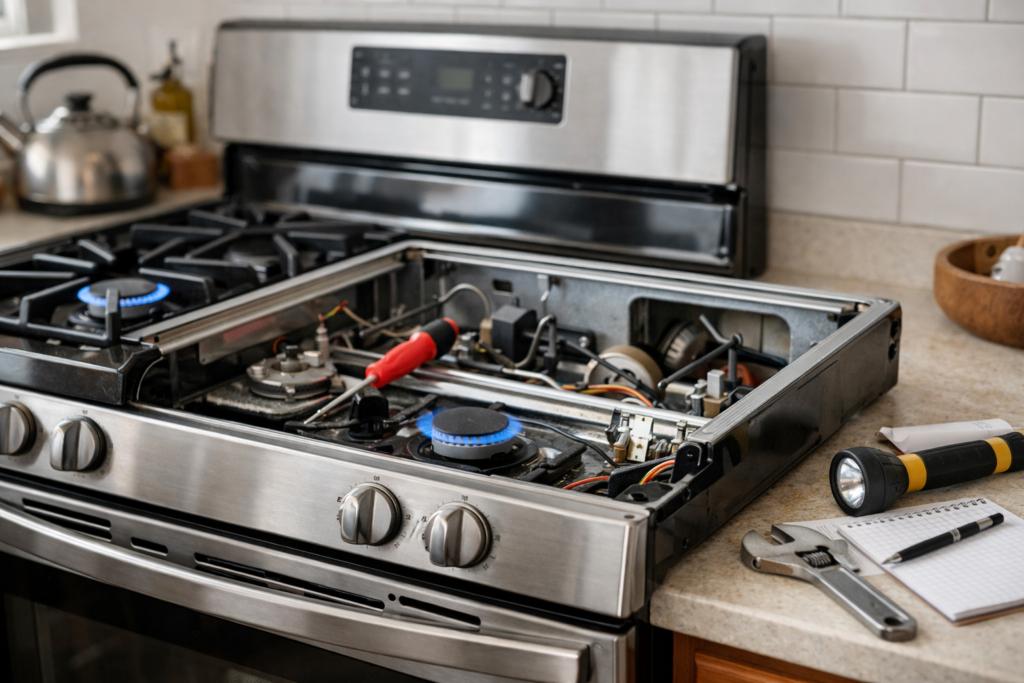
Updated June 2026 – reflects current gas range reliability trends and repair considerations.
No, your gas range is likely not significantly more reliable than similar ranges from major brands, as most modern gas ranges share similar reliability patterns and common repair risks. While some individual models may experience fewer issues, factors like usage habits, maintenance, and manufacturer support usually have a greater impact on long-term reliability than brand alone. Customers often find that issues such as igniter failures, burner problems, and electronic control malfunctions are common across most gas ranges after several years of use. CPS offers repair coordination and extended protection options to help with expensive or unexpected repairs that can arise outside the manufacturer warranty.
Need Repair Help?
We’re ready to help now.
- Factory-authorized service
- Flat-rate pricing options
- Appliance experts standing by
- Fast, reliable nationwide support
Get 3 Months Free
Protect your appliance and save.
- 3 extra months of coverage
- Plans for 60+ product categories
- Trusted protection you can count on
- No hidden fees, no surprises
Are You a Retailer?
Grow your business with CPS.
- Offer warranties customers trust
- Increase sales and customer loyalty
- 10,000+ retailers and growing
- Dedicated partner support
Quick Summary
Here’s what you need to know about gas range reliability, repairs, and coverage options:
- Most gas ranges from major brands show similar reliability and repair trends.
- Common issues include igniter failures, burner problems, and electronic control malfunctions.
- Repairs can become more frequent as gas ranges age, especially after the manufacturer warranty expires.
- Extended protection plans can help manage repair costs for both new and refurbished ranges.
- Factory-authorized repair access is important for complex or high-end gas range repairs.
|
Topic |
Quick Take |
|---|---|
|
Gas Range Reliability |
Most major brands have similar reliability patterns over time |
|
Common Repairs |
Igniters, burners, control boards, and oven temperature sensors |
|
Post-Warranty Concerns |
Repairs often become more frequent after manufacturer coverage ends |
|
Protection Options |
CPS offers coverage for new, refurbished, and open-box gas ranges |
|
Repair Support |
Nationwide service and factory-authorized repair access available |
free
Limited Time Offer
Get 3 months free on any protection plan.
Don’t wait for something to break. Get covered today and your first three months are on us.
What Should You Look For When Comparing Gas Range Reliability and Warranty Coverage?
When researching gas range reliability or deciding whether to add protection coverage, it helps to focus on the most common repair risks, service experiences, and long-term ownership costs. Customers often want to know which repairs are most frequent and how to protect against expensive failures after the manufacturer warranty expires.
- Coverage for igniter, burner, and control board failures
- Access to qualified and authorized service technicians
- Clear claims process and repair coordination support
- Eligibility for refurbished, open-box, and scratch-and-dent ranges
- Support for post-warranty repairs and expensive component replacements
What Experience Does CPS Have With Gas Range Repairs and Protection?
Based on long-term claims data, CPS has helped millions of customers with real-world gas range repairs, including coverage for over 75 million products and coordination with 50,000 service providers nationwide. This experience allows CPS to offer practical support and repair guidance for a wide range of reliability and ownership concerns.
- Igniter and burner failures are among the most common gas range repair claims
- Electronic control and temperature sensor issues often require specialized diagnostics
- Repair costs can increase for high-end or built-in gas ranges
- Post-warranty repairs are more frequent after several years of use
- Factory-authorized repair access helps ensure quality service and replacement parts
What Gas Range Repairs Are Most Common After Warranty Expiration?
Based on CPS’s historical claims data and real-world repair history, igniter failures, faulty burners, and control board malfunctions are among the most common repair concerns for gas ranges, especially after the original warranty ends. As ranges age, these issues can lead to unexpected repair costs and service needs.
|
Product or Repair Type |
Common Issue |
Why It Can Be Expensive or Important |
CPS Repair Insights |
|---|---|---|---|
|
Gas Range |
Igniter failure |
Igniters are essential for burner function and can require replacement |
Igniter-related claims are among the most consistent gas range service calls after manufacturer coverage expires. CPS repair history shows failures often escalate into multi-component diagnostics because technicians must verify spark modules, wiring harnesses, and gas flow systems before confirming the igniter itself. Built-in and slide-in gas ranges frequently require partial disassembly to access ignition assemblies, increasing labor time and repeat-visit risk when specialty OEM parts are delayed. Historical CPS repair records suggest these failures most commonly emerge 3–6 years into ownership, with approved repair invoices commonly ranging from $350–$950 depending on burner configuration and access complexity. Claims involving intermittent ignition failures also show elevated repeat-service activity when spark switches and ignition harnesses fail simultaneously. |
|
Gas Range |
Burner problems |
Uneven heating or non-functioning burners affect cooking performance |
Burner repairs can become labor-intensive when debris, warped burner heads, ignition crossover issues, or valve failures create intermittent performance problems that are difficult to duplicate during service appointments. Claims activity commonly increases on higher-end ranges with sealed burners and integrated cooktop designs because technicians may need extended diagnostics and multiple replacement parts before restoring proper flame distribution and ignition consistency. Historical CPS repair data suggests these failures most commonly emerge 5–8 years into ownership as grease buildup and repeated thermal exposure begin affecting burner efficiency. Approved repair invoices commonly range from $400–$1,200 depending on burner accessibility and gas-system involvement. |
|
Gas Range |
Control board malfunction |
Electronic repairs often involve costly parts and diagnostics |
Electronic control failures are increasingly common as gas ranges incorporate more digital temperature management and smart appliance features. CPS claims data shows control-board repairs often become high-friction service events due to model-specific electronics, firmware compatibility concerns, and limited part availability. Once boards fail, labor costs can rise quickly because technicians must rule out sensors, relays, and communication faults before replacing expensive electronic assemblies. Historical CPS repair records suggest these failures most commonly emerge 4–7 years after purchase, with approved repair invoices commonly ranging from $700–$1,700 depending on board availability and calibration requirements. Claims involving touchscreen or smart-control faults also show elevated repeat-service activity near 20% because multiple communication modules may require replacement simultaneously. |
|
Gas Range |
Oven temperature sensor failure |
Leads to inaccurate oven temperatures and unreliable cooking |
Temperature sensor claims frequently begin as minor cooking complaints but can expand into broader calibration and control-system diagnostics. Repair history shows inaccurate temperature readings are sometimes tied to wiring faults or failing control boards rather than the sensor alone, increasing troubleshooting time. Built-in units may also require significant disassembly to access sensor connections, especially in tightly installed kitchen cabinetry configurations. Historical CPS repair records suggest these failures most commonly emerge 4–7 years into ownership as repeated thermal cycling affects sensor accuracy and relay responsiveness. Approved repair invoices commonly range from $400–$1,200 depending on calibration complexity and electronic-control involvement. |
|
Gas Range |
Gas valve or regulator issues |
Can impact safety and require specialized repair service |
Gas valve and regulator failures typically involve higher repair severity because safety testing, leak verification, and calibrated pressure adjustments are required before the appliance can be returned to service. CPS historical claim trends show these repairs often require experienced technicians and specialized parts sourcing, particularly on premium dual-fuel or commercial-style ranges. Service delays are common when regulators or valve assemblies are manufacturer-restricted components rather than standard universal replacements. Historical CPS repair records suggest these failures most commonly emerge 5–8 years into ownership as repeated gas-flow stress and heat cycling affect regulators and shutoff systems. Approved repair invoices commonly range from $500–$1,400 depending on installation layout and safety-testing requirements. |
Why Do Customers Choose CPS Protection Plans?
Many customers choose CPS for gas range protection because of the company’s repair expertise, nationwide service network, support for new and refurbished products, and experience helping with post-warranty repair situations.
- Repair support for igniter, burner, and electronic control failures
- Access to a large network of authorized service technicians
- Eligibility for many refurbished, open-box, and scratch-and-dent ranges
- Assistance coordinating repairs after the manufacturer warranty expires
- Clear claims process and helpful service guidance
Can CPS Help if My Appliance Is Already Out of Warranty?
After the manufacturer warranty expires, CPS may still be able to help with troubleshooting guidance, repair referrals, replacement part assistance, and in some cases, extended protection options for eligible gas ranges.
- Factory-authorized repair referral assistance for out-of-warranty gas ranges
- Troubleshooting guidance and repair coordination support
- Help sourcing replacement parts and locating service providers
- Eligibility guidance for extended protection options on certain products after purchase
|
Contact Method |
Details |
Best For |
|---|---|---|
|
Phone |
(800) 905-0443 |
Speaking directly with a CPS representative |
|
Web Chat |
|
Quick support and troubleshooting guidance |
|
CPS Client Care Portal |
https://client.cpscentral.com/ |
Claims, account access, and service support |
|
Text Message |
Text (347) 621-7180 |
Quick customer support questions |
|
Facebook Messenger |
http://m.me/ConsumerPriorityService |
General support and communication |
|
|
cs@cpscentral.com |
Detailed questions and documentation |
What Should You Know About Gas Range Reliability and Warranty Coverage?
Are some gas range brands more reliable than others?
Most major gas range brands show similar reliability patterns over time. Individual models may vary, but common repairs and issues tend to affect most brands in similar ways, especially after a few years of regular use.
What are the most common gas range repairs after warranty expiration?
Igniter failures, burner problems, control board malfunctions, and oven temperature sensor issues are among the most frequent repair concerns for gas ranges after the manufacturer warranty expires.
Do refurbished or open-box gas ranges qualify for protection plans?
Yes, many refurbished, open-box, and scratch-and-dent gas ranges are eligible for CPS protection, depending on product age and condition at the time of plan purchase.
Does an extended warranty cover igniter or burner repairs?
Most extended protection plans, including those from CPS, cover mechanical and electrical failures like igniter, burner, and control board repairs after the manufacturer warranty expires.
Are electronic control board failures expensive to repair?
Yes, electronic control board failures can be costly due to the price of replacement parts and the need for specialized diagnostics. These issues are common with modern gas ranges as they age.
What should I do if my gas range is out of warranty and needs service?
CPS can assist with troubleshooting guidance, referrals to factory-authorized repair providers, and in some cases, offer protection plan options for certain eligible products after warranty expiration.
How long do gas ranges typically last before major repairs are needed?
Based on CPS’s historical claims data, many gas ranges begin to require more frequent repairs after five to seven years, though actual lifespan depends on usage, maintenance, and model quality.
Does a protection plan cover accidental damage to my gas range?
No, accidental damage is generally excluded from appliance protection plans. Coverage focuses on mechanical and electrical failures, not accidental breakage or cosmetic issues.
Is it worth getting extended coverage for a high-end or built-in gas range?
Many homeowners with premium or built-in gas ranges choose extended protection due to higher repair costs and the need for specialized service. Coverage can help manage expensive repairs that occur after the original warranty expires.
repair
No Hidden Fees
One price covers all parts, labor, makes & models.
Skip the guesswork. Our flat rate repair program means you know exactly what you’ll pay — before we start.
Want to Learn More About Protecting Your Gas Range?
If you’re considering long-term reliability or want help comparing coverage options for your gas range, CPS is here to assist with product eligibility questions and protection plan details.
For many homeowners, gas range repairs become more frequent and expensive after the manufacturer warranty expires, especially for igniters, burners, and electronic controls. Customers planning to keep their range for several years often compare the cost of potential repairs with the value of extended protection or repair support. If you’re weighing your options, exploring a protection plan or speaking with CPS can help you make an informed decision for your specific range and ownership situation.
About the CPS Repair Insights Data
The repair insights, reliability observations, repair frequency estimates, and cost ranges referenced on this page are based on Consumer Priority Service (CPS) proprietary claims intelligence.
Data Source
- Analysis of 239,000+ service claims
- Claims processed since January 2024
- Aggregated repair activity across CPS-covered products
- Based on actual repair outcomes and claims history
What the Data Reflects
- Common repair patterns
- Reliability trends
- Historical service frequencies
- Real-world ownership experiences
- Typical repair cost observations
Purpose
The information is intended to help consumers better understand potential repair risks, ownership costs, and common post-warranty repair situations based on observed claims activity.
 SPECIAL OFFER
 Coverage for scratch & dent models