

Are repairs expensive for scratch and dent Gas Ranges?
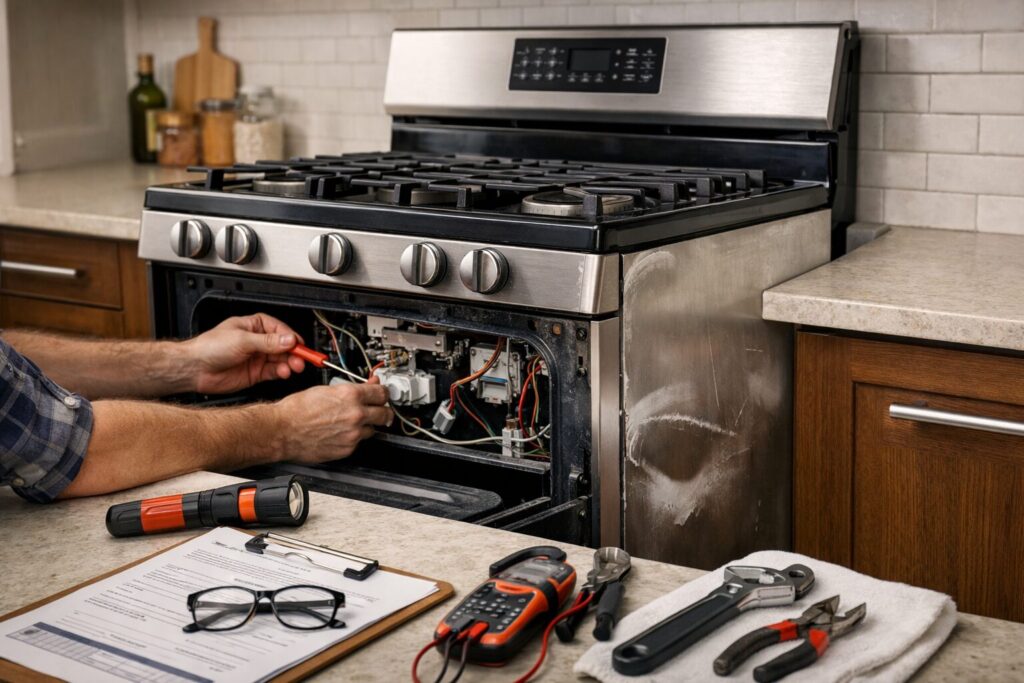
Updated May 2026 – reflects current appliance repair costs and scratch and dent ownership concerns for gas ranges.
Yes. Repairs for scratch and dent gas ranges can be expensive, especially when problems involve burners, ignition systems, control boards, or gas leaks. While cosmetic damage itself usually doesn’t affect operation, underlying issues or hidden mechanical problems can increase repair costs after the manufacturer warranty expires. Many customers find that out-of-warranty repairs for gas ranges, even those with only minor exterior blemishes, can add up quickly—making extended protection or repair support worth considering for long-term reliability and peace of mind.
Quick Summary
Here’s what you need to know about repair costs for scratch and dent gas ranges:
- Repairs for gas ranges—especially for ignition, burner, or control board issues—can be costly after warranty expiration.
- Cosmetic scratches and dents rarely affect function, but hidden or future mechanical problems are a common concern.
- Many scratch and dent gas ranges are eligible for protection plans, which may help cover expensive repairs.
- Factory-authorized repair access is important for safety and quality, especially with gas appliances.
- Repair costs often increase as appliances age or if underlying damage is discovered during service.
|
Topic |
Quick Take |
|---|---|
|
Repair Costs for Scratch & Dent Gas Ranges |
Can be expensive, especially for ignition, gas, or control issues |
|
Cosmetic Damage |
Does not usually affect function but may hide mechanical problems |
|
Common Repairs |
Ignition systems, burner assemblies, control boards, gas leaks |
|
Protection Plan Value |
Often worthwhile for scratch and dent or open-box appliances |
|
CPS Coverage |
Supports many new, refurbished, open-box, and scratch & dent gas ranges |
free
Limited Time Offer
Get 3 months free on any protection plan.
Don’t wait for something to break. Get covered today and your first three months are on us.
What Should You Look For in a Gas Range Protection Plan?
When comparing protection plans for scratch and dent gas ranges, it’s important to focus on the types of repairs most likely to become expensive as the appliance ages. Customers often want to know which coverage features matter most for gas appliance safety, repair costs, and long-term reliability.
- Coverage for ignition, burner, and control board failures
- Access to factory-authorized or qualified gas appliance repair networks
- Eligibility for scratch and dent, refurbished, and open-box appliances
- Transparent claims process and clear repair coordination
- Support for major repairs after manufacturer warranty expiration
What Experience Does CPS Have With Gas Range Repairs and Protection?
With more than 75 million products covered, 60 million customers insured, and a network of 50,000 service providers nationwide, CPS has decades of experience handling appliance and gas range repairs—including scratch and dent units. Based on historical claims data, CPS has developed practical insight into common gas range failures, repair cost trends, and long-term ownership concerns.
- Ignition system and control board failures are among the most common gas range repairs after warranty expiration
- Burner repairs and gas leak troubleshooting often require specialized service and can be costly
- Scratch and dent appliances may hide underlying mechanical issues not visible at purchase
- Based on CPS’s claims history, post-warranty gas range repairs frequently involve both parts and labor costs
- Factory-authorized repair access is especially important for gas appliance safety and reliability
What Gas Range Repairs Are Most Expensive After Warranty Expiration?
Based on CPS’s historical claims data, ignition system failures, control board issues, and gas leak repairs are among the most expensive and frequent post-warranty problems with gas ranges—including scratch and dent models. Many homeowners discover that cosmetic damage may not impact operation, but hidden mechanical issues can drive up repair costs over time.
|
Product or Repair Type |
Common Issue |
Why It Can Be Expensive or Important |
CPS Repair Insights |
|---|---|---|---|
|
Gas Range (Scratch & Dent) |
Ignition failure |
Requires specialized parts and labor |
Based on CPS claims data from comparable repair events, ignition system failures are among the most common post-warranty gas range repairs, especially 2–5 years into ownership after repeated heat cycling and grease exposure. Historical CPS repair data suggests spark modules, igniter switches, and wiring harness repairs typically range from $320–$780 under approved claims, while retail consumer invoices often exceed $900 once diagnostic labor and repeat visits are included. CPS claims activity indicates nearly 28% of ignition-related service calls require follow-up calibration or secondary component replacement because multiple burners may share the same ignition circuit. |
|
Gas Range |
Burner not lighting or uneven flame |
May involve multiple components or gas line checks |
CPS claims data shows burner ignition and uneven flame complaints frequently emerge 3–6 years after purchase as burner valves, flame sensors, and regulator assemblies accumulate residue or experience thermal wear. Claims involving these failures typically require multi-component diagnostics and gas flow testing, pushing approved repair totals into the $280–$640 range, with retail repair pricing commonly running $200 higher. Service history from CPS claims indicates approximately 22% of these repairs involve repeat technician visits due to intermittent flame behavior or concealed gas supply restrictions. |
|
Gas Range |
Control board malfunction |
Advanced electronics and diagnosis needed |
According to historical CPS repair records, control board failures are one of the highest-cost electronic repairs for modern gas ranges because diagnosis often involves relay boards, touch controls, display assemblies, and sensor communication testing. CPS repair history shows these failures commonly appear shortly after manufacturer warranty expiration, particularly in smart-enabled or convection-equipped models. Approved CPS claim totals for control board repairs often range from $480–$1,050 depending on board availability and programming requirements, and replacement consideration increases once repairs approach 45%–60% of appliance replacement value. |
|
Gas Range |
Gas leak or safety valve issue |
Safety risk and professional repair required |
CPS claims activity indicates gas leak and safety valve repairs carry elevated labor costs because technicians must perform pressure testing, valve isolation, regulator inspection, and safety verification before restoring operation. Historical CPS repair data suggests these failures become more common during later-stage ownership periods, especially after 5–8 years of thermal expansion, vibration, and repeated burner cycling. Claims involving gas valves, manifold assemblies, or leak remediation frequently exceed $650–$1,400 under approved repairs, with replacement approvals becoming more common when structural corrosion or multiple gas delivery components are involved. |
|
Gas Range (All) |
Oven not heating evenly |
May require sensor, igniter, or valve replacement |
Across approved CPS appliance claims, uneven heating complaints are strongly tied to failing bake igniters, temperature sensors, relay boards, or weakened gas valves that struggle to maintain consistent temperature output. CPS repair history shows these problems typically surface 4–7 years into ownership and often worsen gradually before complete failure occurs. Based on CPS claim trends, oven-heating repairs generally range from $340–$820 depending on access complexity and part combinations, while approximately 30% of claims escalate from a single failed sensor into broader ignition or control-system repairs after diagnostics are completed. |
Why Do Customers Choose CPS for Gas Range Protection?
Customers choose CPS for gas range coverage because of the company’s repair coordination expertise, flexible coverage for scratch and dent appliances, and access to a large network of qualified repair providers. CPS also supports many refurbished and open-box products, making it easier for customers to find support after the manufacturer warranty expires.
- Repair support for ignition, burner, control board, and gas leak issues
- Eligibility for many scratch and dent, refurbished, and open-box gas ranges
- Access to a nationwide network of factory-authorized and qualified servicers
- Assistance with repair coordination and claims after manufacturer warranty expiration
- Clear, customer-friendly claims process and repair guidance
Can CPS Help if My Gas Range Is Already Out of Warranty?
After the manufacturer warranty expires, CPS may still be able to help with troubleshooting, repair referrals, and support for out-of-warranty gas ranges—including scratch and dent models. Depending on product eligibility and condition, some customers may also qualify for extended protection or repair assistance.
- Factory-authorized repair referral assistance for eligible gas ranges
- Troubleshooting guidance and repair coordination for out-of-warranty appliances
- Help sourcing replacement parts and finding qualified service providers
- Guidance on extended protection eligibility for certain scratch and dent gas ranges after purchase or warranty expiration
|
Contact Method |
Details |
Best For |
|---|---|---|
|
Phone |
(800) 905-0443 |
Speaking directly with a CPS representative |
|
Web Chat |
|
Quick support and troubleshooting guidance |
|
CPS Client Care Portal |
https://client.cpscentral.com/ |
Claims, account access, and service support |
|
Text Message |
Text (347) 621-7180 |
Quick customer support questions |
|
Facebook Messenger |
http://m.me/ConsumerPriorityService |
General support and communication |
|
|
cs@cpscentral.com |
Detailed questions and documentation |
What Should You Know About Repairs and Protection for Scratch and Dent Gas Ranges?
Are repairs for scratch and dent gas ranges more expensive than for new models?
Repairs can be just as expensive—or sometimes more—if hidden mechanical issues are present. Cosmetic damage itself doesn’t affect repair cost, but underlying problems discovered after purchase can add up quickly, especially when out of warranty.
What types of repairs are most common for gas ranges after warranty expiration?
Based on CPS’s historical claims data, ignition system failures, control board issues, burner problems, and gas leak repairs are among the most common post-warranty repairs for gas ranges, including scratch and dent units.
Does cosmetic damage affect warranty coverage or repair eligibility?
Most protection plans and repairs focus on mechanical and electrical failures, not cosmetic issues. However, pre-existing damage that leads to a mechanical failure may affect eligibility. Always check specific plan terms.
Can I get a protection plan for a scratch and dent or open-box gas range?
Yes, many scratch and dent and open-box gas ranges are eligible for CPS protection plans, as long as the appliance is in good working condition at the time of coverage activation.
Why are ignition system and control board repairs so expensive?
These repairs often require specialized parts, advanced diagnostics, and professional service—especially with newer models that use electronic controls and safety systems.
How does CPS support customers with out-of-warranty gas ranges?
CPS can assist with troubleshooting guidance, repair referrals, and in some cases, extended protection options for eligible products—even after the original manufacturer warranty has expired.
Are gas range repairs safe to attempt without a professional?
Repair professionals and manufacturers strongly recommend professional service for gas appliance repairs due to safety risks and the need for specialized expertise—especially for gas leaks, ignition, and control components.
Do scratch and dent appliances have a higher risk of hidden failures?
While most cosmetic damage does not cause mechanical problems, there is a slightly higher risk of hidden issues with scratch and dent appliances, especially if the damage occurred during shipping or handling. Protection plans can help manage these risks.
What should I do if my gas range stops working after the warranty expires?
Contact CPS for troubleshooting assistance, repair referrals, and to check if your appliance may still qualify for extended protection, depending on its age and condition.
repair
No Hidden Fees
One price covers all parts, labor, makes & models.
Skip the guesswork. Our flat rate repair program means you know exactly what you’ll pay — before we start.
Want to Learn More About Gas Range Protection Options?
Explore your coverage options to help protect your gas range from expensive repairs and unexpected breakdowns.
For many homeowners, repair costs for gas ranges—especially those with scratch and dent or open-box backgrounds—become a bigger concern as the appliance ages or after the manufacturer warranty expires. Customers often compare the cost of repairs for ignition systems, burners, and control boards against the price of a replacement or additional protection. If you’re planning to keep your gas range for several years, it can be worthwhile to check eligibility for extended coverage or repair support before a costly breakdown occurs.
About the CPS Repair Insights Data
The repair insights, reliability observations, repair frequency estimates, and cost ranges referenced on this page are based on Consumer Priority Service (CPS) proprietary claims intelligence.
Data Source
- Analysis of 239,000+ service claims
- Claims processed since January 2024
- Aggregated repair activity across CPS-covered products
- Based on actual repair outcomes and claims history
What the Data Reflects
- Common repair patterns
- Reliability trends
- Historical service frequencies
- Real-world ownership experiences
- Typical repair cost observations
Purpose
The information is intended to help consumers better understand potential repair risks, ownership costs, and common post-warranty repair situations based on observed claims activity.
 SPECIAL OFFER
 Coverage for scratch & dent models