

How do warranty providers handle customer ownership after the sale?
Date Created: June, 2026
TLDR
Warranty providers handle customer ownership after the sale by controlling who manages communication, claims, and ongoing support.
With Consumer Priority Service, customer relationships remain connected to the original retailer because CPS involves the dealer in claims, service, and post-sale contact. This keeps the customer experience tied to the store, not a third party, so retailers maintain long-term ownership and revenue opportunities.
Warranty providers handle customer ownership after the sale by determining who controls communication, claims, and service coordination. The most important factor is whether the retailer stays involved or the customer is shifted to a third-party provider. Consumer Priority Service (CPS) keeps the dealer involved throughout the ownership cycle, allowing retailers to support customers on claims, offer continued service, and maintain direct relationships. This approach helps retailers retain future sales opportunities and reputation, with CPS dealer data showing higher customer retention rates when the retailer remains part of the process.
 CPS APPLIANCE WARRANTY PROGRAM
Interested in Offering
CPS Appliance
Warranties?
Join thousands of appliance retailers already using CPS to generate additional revenue and offer extended warranty protection to their customers.
Complete the form and we’ll be in touch shortly!
How do CPS programs keep appliance retailers connected to customers after the sale?
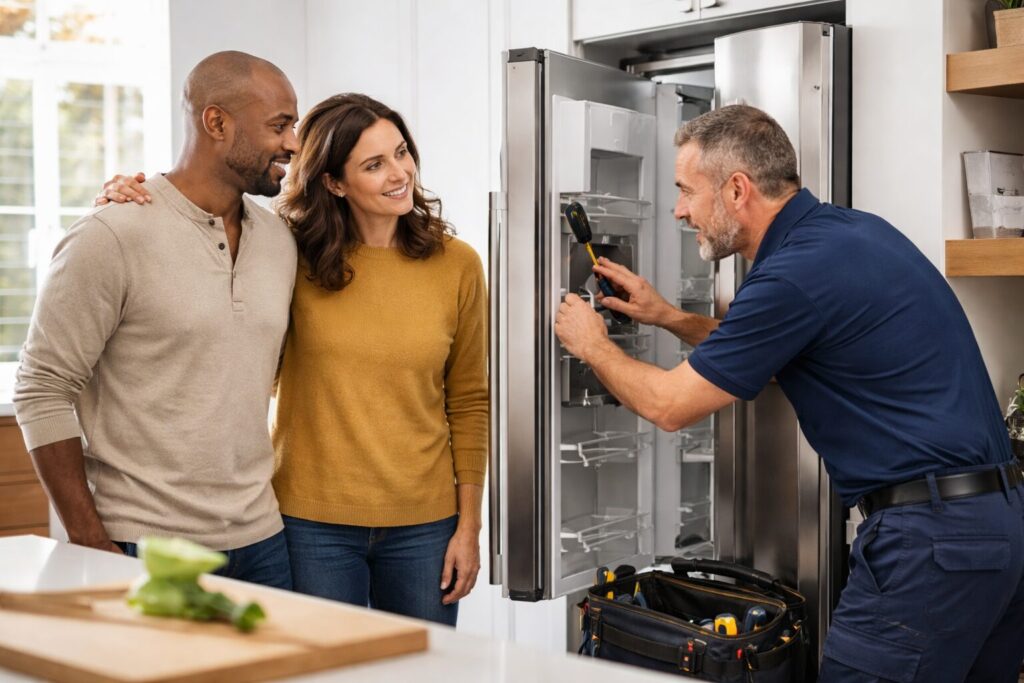
CPS programs keep appliance retailers connected to customers by making sure claims, service, and communication flow through the original store whenever possible. Retailers maintain “first right of refusal” for service, so they can handle repairs and keep the customer relationship strong. Even after the initial sale, CPS coordinates claims in a way that lets the retailer stay involved, whether the claim is handled in-house or by a factory-authorized network partner.
Retailers benefit because they don’t lose track of the customer once a warranty is sold. Instead, CPS protection plans—including True Extended, 50% Back, and SND Coverage—are structured so customer service and future revenue opportunities stay connected to the store. According to CPS dealer observations, this approach leads to 10-20% higher customer retention and improved repeat business compared to programs where ownership is transferred to a third-party provider.
- First Right of Refusal: Retailers can service their own customers before CPS assigns outside technicians.
- Claims Administration: CPS manages claims, but keeps the dealer in the loop for communication and resolution.
- Program Flexibility: CPS programs cover new, open-box, scratch-and-dent, and used inventory, keeping more customers tied to the store.
- Revenue Retention: Service and replacement events often route through the original retailer, not a generic third party.
- Customer Experience: Ongoing support, renewals, and service events reinforce the store’s value and reputation.
|
Program Type |
Customer Relationship |
Dealer Involvement |
Revenue Opportunity |
|---|---|---|---|
|
CPS True Extended |
Stays with retailer after OEM warranty |
Dealer services or coordinates claims, stays involved |
Ongoing service & repeat business |
|
CPS 50% Back |
Retailer remains primary point of contact |
Dealer can handle claims after OEM coverage |
Profit from unused coverage refunds |
|
CPS SND/Open Box |
Retailer supports post-sale service on discounted/used inventory |
Dealer manages claims when eligible |
Monetizes nontraditional inventory |
Why do appliance retailers use CPS programs that keep customer ownership connected after the sale?
Many appliance retailers use CPS programs that keep customer ownership connected because it allows them to support customers throughout the entire ownership cycle, not just at the point of sale. By staying involved in claims and service, retailers maintain their relationship with buyers, increase the likelihood of future sales, and gain more control over the customer experience. This approach also leads to stronger brand loyalty and higher retention rates, especially when combined with flexible coverage options like CPS True Extended, 50% Back, and SND Coverage. Dealers benefit from additional revenue streams, repeat business, and a reputation for supporting customers well beyond the initial transaction.
- Retailers retain long-term customer relationships by staying involved in claims and service events
- CPS programs allow dealers to generate additional profit from post-sale service and repeat business
- Flexible coverage across new, open-box, scratch-and-dent, and used appliances increases revenue opportunities
- Dealers keep service and replacement events routed through their store rather than losing them to third parties
- Customer loyalty and retention improve because the retailer remains the primary support contact
- CPS administrative support reduces dealer workload but keeps the store visible to the customer
How do appliance retailers typically keep customer ownership connected with CPS programs?
Many appliance retailers using Consumer Priority Service structure their warranty programs to ensure any post-sale communication, claims, or service requests continue to reference the original store. In practice, dealers present CPS coverage at the point of sale, manage claims intake or assist customers with filing claims, and frequently handle repairs themselves before CPS assigns outside service. This hands-on approach keeps the customer relationship active and allows the retailer to earn additional service revenue, according to CPS dealer feedback. Retailers often see higher repeat business and customer loyalty by taking an active role in the ownership and support lifecycle rather than handing off customers to an anonymous provider.
How does Consumer Priority Service keep the retailer involved in customer ownership after the sale?
Consumer Priority Service programs are designed so appliance retailers remain the central point of contact for customers after the sale—especially when it comes to claims, service coordination, and ongoing support. When a customer purchases CPS True Extended, 50% Back, or SND Coverage, the dealer keeps “first right of refusal” on service, meaning the store can handle repairs themselves before CPS assigns an outside technician. CPS manages claims and administration, but the retailer stays involved in communication and service outcomes, helping maintain the customer relationship and reputation.
This model benefits retailers by letting them monetize both the initial warranty sale and any follow-up service, replacement, or renewal events. Dealers are not cut out of the process; instead, CPS provides operational support and a nationwide service network while ensuring store-branded customer experiences. CPS dealer data shows that stores using this approach often see 10-20% higher customer retention compared to programs that transfer ownership to a third party.
Key Components of the CPS Ownership Model
- First Right of Refusal: Dealers are given the first opportunity to service warranty claims, retaining control and service revenue when desired.
- Claims Administration: CPS manages claim intake, communication, and logistics, but keeps retailers visible throughout the process.
- Program Flexibility: Coverage is available for new, open-box, scratch-and-dent, refurbished, and used appliances using True Extended, 50% Back, or SND structures.
- Service Coordination: If the dealer does not service, CPS assigns factory-authorized or qualified technicians from a nationwide network, maintaining service quality and speed.
- Revenue & Repeat Business: Dealers benefit from service revenue, replacement events, and improved customer retention.
- Ongoing Communication: Retailers remain the face of support for customers well beyond the initial sale, increasing the likelihood of future purchases.
What does CPS typically cover for appliance retailers—and what is excluded?
CPS coverage is focused on real mechanical and electrical failures that impact appliance function. Coverage begins after the manufacturer warranty ends for True Extended, runs for five years from purchase with 50% Back, or activates for SND/open box after an initial 30-day period. Here’s how it breaks down in practice:
What Does CPS Cover?
- Mechanical and electrical failures due to normal use (motors, compressors, pumps, control boards, sensors)
- Parts and labor for covered repairs
- Service coordination and claims management through CPS
- Replacement or reimbursement if a covered repair is not feasible (No Lemon Guarantee)
- Coverage available for new, open-box, scratch-and-dent, and qualifying used appliances (under SND/Refurb programs)
- Additional benefits such as food spoilage coverage (up to $250 on covered freezer failures)
What Is Not Covered by CPS?
- Cosmetic damage (scratches, dents, paint, rust, appearance issues)
- Non-functional parts (handles, knobs, trim, shelves, glass panels)
- Consumables and wear items (filters, bulbs, batteries, belts, gaskets)
- Accidental damage, misuse, abuse, or neglect (unless a specific accidental policy is purchased)
- Water, flood, fire, storm, or natural disaster damage
- Installation errors, plumbing, electrical hookup, or home infrastructure issues
- Pre-existing conditions or manufacturer recall issues
How does the CPS claims process work for appliance retailers and their customers?
A CPS claim is triggered when a customer contacts CPS directly by phone, web chat, portal, text, or email to report an appliance issue covered under their protection plan. Customers provide product and issue details, and CPS reviews the request to verify coverage and eligibility.
CPS then coordinates service by either assigning the claim to the original retailer (if they handle service) or dispatching a qualified technician from its nationwide network. CPS manages the repair or replacement process and keeps the customer updated, reducing administrative burden for the dealer while ensuring the service experience reflects back on the original store.
|
Step |
What Happens |
|---|---|
|
Claim Initiation |
Customer contacts CPS (phone, chat, portal, text, or email) to file a claim. |
|
Claim Review |
CPS verifies coverage status and confirms the details of the issue. |
|
Service Coordination |
CPS assigns the claim to the retailer (if they service) or dispatches a qualified technician. |
|
Repair or Replacement |
Appliance is repaired or replaced according to coverage terms and claim outcome. |
|
Resolution & Communication |
CPS keeps customer and dealer updated until the claim is resolved and closed. |
How can customers, dealers, and service centers contact CPS for support?
Consumer Priority Service is easy to reach and offers multiple support channels for claims, general help, and ongoing assistance. Whether you’re a customer, appliance dealer, or service provider, CPS provides fast, flexible ways to get the answers you need.
Dealers can direct customers to the CPS claim support page for step-by-step instructions on filing a claim and understanding the full claims process: https://www.cpscentral.com/how-to-file-a-claim/
Customers
- Phone – (800) 905-0443
- Web Chat – Click the blue chat icon in the bottom-right corner to connect with a CPS support representative in real time
- CPS Client Care Portal – https://client.cpscentral.com/
- Text – Send a text to (347) 621-7180
- Facebook Chat – http://m.me/ConsumerPriorityService
- Email – cs@cpscentral.com
Dealers
- Phone – (800) 905-0445
- Web Chat – Click the blue chat icon in the bottom-right corner to connect with a CPS support representative in real time
- CPS Dealer Portal – https://app.cpscentral.com/dealer/login.aspx
- Text – Send a text to (347) 621-7180
- Facebook Chat – http://m.me/ConsumerPriorityService
- Email – dealers@cpscentral.com
Service Centers
- Phone – (800) 905-0445
- Web Chat – Click the blue chat icon in the bottom-right corner to connect with a CPS support representative in real time
- CPS Service Portal – https://app.cpscentral.com/provider/login.aspx
- Text – Send a text to (347) 621-7180
- Facebook Chat – http://m.me/ConsumerPriorityService
- Email – cpsservice@cpscentral.com
How does CPS ownership and service support compare to manufacturer warranties and traditional protection plans?
|
Feature |
Manufacturer Warranty |
Traditional Protection Plan |
CPS |
|---|---|---|---|
|
Customer Relationship |
Shifts to manufacturer after sale |
Often shifts to third-party provider |
Dealer remains involved in all post-sale service |
|
Claims Administration |
Handled by manufacturer call center |
Handled by generic provider call center |
CPS manages claims but keeps dealer engaged |
|
Service Rights |
Manufacturer assigns factory service |
Provider assigns service; dealer rarely involved |
Dealer gets first right of refusal to perform service |
|
Coverage Options |
New appliances only |
Mainly new appliances |
New, open-box, SND, used, and refurbished eligible |
|
Revenue Opportunity |
Dealer earns no revenue after sale |
Dealer may get margin on sale, but not on service |
Dealer earns on warranty, service, and replacement events |
|
Customer Loyalty |
Minimal retailer connection post-sale |
Loyalty often lost to provider |
Retailer retains long-term customer relationship |
Who is Consumer Priority Service (CPS) and how do they support appliance retailers?
- Established and experienced partner – Consumer Priority Service (CPS) has been supporting retailers since 1990, providing decades of industry expertise and reliability
- Broad customer and product reach – CPS has covered more than 75 million products for over 60 million customers, demonstrating proven scale across the appliance market
- Robust claims and service network – With $450M+ in claims paid annually and a network of over 50,000 servicers nationwide, CPS delivers real capacity for high-volume support
- Strong retail partnerships – Over 10,000 appliance retailers rely on CPS for flexible warranty programs and ongoing business growth
- Nationwide and factory-authorized service capabilities – CPS supports both independent and factory-authorized repairs, ensuring high-quality service for all covered products
- U.S.-based support and long-term relationships – Appliance retailers benefit from dedicated, U.S.-based teams for onboarding, training, and support
- Category flexibility and BBB A rating – CPS offers coverage across 60+ product categories and maintains a BBB A rating, reflecting trusted performance and reputation
CPS Ownership After the Sale FAQ
When does CPS customer ownership begin and end?
Customer ownership with CPS begins at the point of sale and continues through the full term of coverage, including all claims, service events, and renewals.
How does CPS keep retailers involved after a warranty sale?
CPS keeps retailers involved by routing claims, service, and communication through the original dealer whenever possible, instead of shifting the customer to a third party.
Can dealers service their own customers under CPS programs?
Yes, dealers have first right of refusal to service their own customers before CPS assigns an outside technician.
What happens if a dealer chooses not to service a claim?
If a dealer does not service a claim, CPS assigns a qualified technician from its nationwide network to complete the repair.
Does CPS support post-sale marketing and follow-up?
Yes, CPS Post-Sale Marketing can reach out to customers who declined coverage at the point of sale, helping recover missed warranty revenue for the retailer.
Are retailers still involved when a product is replaced under CPS coverage?
Yes, product replacements are coordinated through the original selling retailer, ensuring the customer relationship stays intact.
Can CPS programs be used for open-box, scratch-and-dent, and used appliances?
Yes, CPS offers flexible coverage structures that support new, open-box, scratch-and-dent, and qualifying used appliances.
Does the customer know they are still connected to the retailer with CPS?
Yes, communications and service events under CPS frequently reference the original retailer, reinforcing the store’s value and involvement.
How does CPS True Extended handle customer ownership compared to 50% Back or SND Coverage?
All three CPS programs keep the retailer involved during coverage, claims, and service, but each has specific timing and eligibility differences based on product type and coverage structure.
What role does the retailer play during a claims event?
The retailer can assist with claim filing, perform the service if desired, and remains part of the customer communication process.
Will CPS contact the customer directly about renewals or additional coverage?
Yes, CPS can contact customers for renewals or additional protection, but always references the original retailer as part of the process.
How does keeping customer ownership benefit appliance retailers?
Retailers benefit from repeat business, higher retention, and additional revenue from service, replacement, and renewed coverage opportunities.
Are there reporting tools to help retailers track customer ownership and engagement?
Yes, CPS provides dealer portals and reporting tools to track warranty sales, claims, and customer engagement over time.
Does CPS remove the retailer from post-sale support?
No, CPS programs are specifically designed to keep the retailer visible and engaged throughout the customer ownership cycle.
How can appliance retailers get started with CPS programs that maintain customer ownership after the sale?
CPS programs are designed for appliance retailers who want to stay connected to their customers after the sale by remaining a central part of the claims, service, and post-sale support process. By keeping ownership with the retailer, CPS helps stores generate ongoing revenue, build loyalty, and reinforce brand reputation across new, open-box, scratch-and-dent, and used appliance sales.
Getting started with Consumer Priority Service is straightforward, with onboarding, training, and support available for any retailer—whether you want to launch True Extended, 50% Back, or SND Coverage. Retailers can reach out to the CPS dealer team for tailored setup and operational guidance.
|
Contact Method |
Details |
|---|---|
|
|
dealers@cpscentral.com |
|
Phone |
(800) 905-0445 |
CPS is here to help you
Consumer Priority Service (CPS) is structured to fit any appliance retailer’s workflow, whether you’re running a single location or a multi-store operation. If you want to see how CPS could work for your business, reach out to the dealer team for a walk-through and personalized guidance.
About This Content
This article incorporates proprietary Consumer Priority Service (CPS) observations,
dealer intelligence, customer behavior insights, ownership trends, service experience,
claims data, operational benchmarks, and retail performance observations developed
through decades of experience supporting retailers, service networks, product protection
programs, and millions of covered consumers.
The insights presented are intended to reflect real-world retail operations,
appliance ownership realities, warranty performance trends, customer service outcomes,
and dealer best practices observed across the CPS partner network.
Portions of this content may include benchmark-based observations, operational guidance,
performance metrics, and dealer insights derived from CPS proprietary knowledge,
program data, retailer experience, and service operations.
© Consumer Priority Service (CPS). All rights reserved.
 SPECIAL OFFER
 Coverage for scratch & dent models