

Which appliances are most expensive to repair out of warranty?
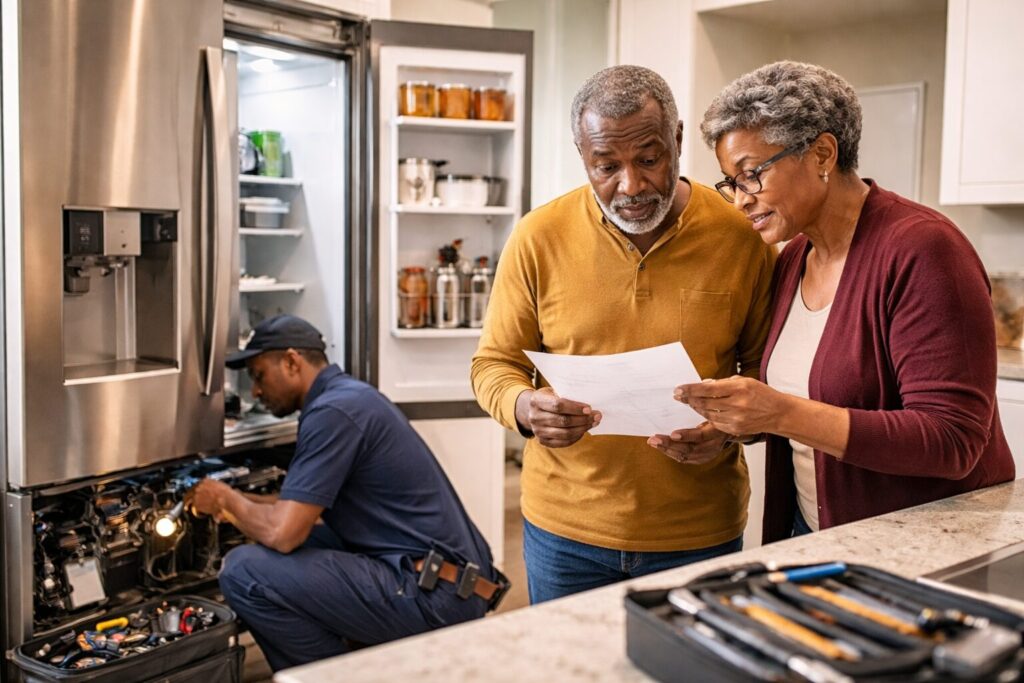
Date Created: June, 2026
TLDR
Refrigerators, built-in ovens, and laundry appliances are among the most expensive to repair out of warranty.
High repair costs are driven by complex electronic components, sealed systems, and rising labor rates. Consumer Priority Service offers extended protection plans that help retailers and their customers manage these risks—especially after the manufacturer warranty ends. Offering CPS coverage creates a revenue stream while protecting customers from major repair bills.
The appliances most expensive to repair out of warranty are refrigerators (especially built-in and smart models), high-end ranges, wall ovens, and laundry appliances with advanced controls. These products have costly parts like compressors, control boards, and motors, plus high labor fees due to complexity. Out-of-pocket repair costs often surprise owners, and most failures occur after the manufacturer warranty expires. Consumer Priority Service provides extended coverage options that protect against these repair risks and help retailers generate additional revenue from every sale. CPS dealer observations show these categories consistently drive the highest warranty attachment rates due to their financial exposure.
 CPS APPLIANCE WARRANTY PROGRAM
Interested in Offering
CPS Appliance
Warranties?
Join thousands of appliance retailers already using CPS to generate additional revenue and offer extended warranty protection to their customers.
Complete the form and we’ll be in touch shortly!
Which appliances have the highest post-warranty repair costs?
Refrigerators, especially built-in and smart models, consistently top the list for out-of-warranty repair expenses. Laundry appliances—front-load washers and dryers with advanced electronic controls—also carry high repair bills. Built-in ovens and premium ranges often require specialized labor and expensive parts, pushing costs even higher. According to CPS dealer data, these categories see the most claims and the largest out-of-pocket expenses when coverage lapses.
- Refrigerators: Compressor or sealed system failures can cost $600–$1,200+, and control board replacements add to the risk.
- Wall Ovens & Ranges: Main control board or electronic ignition repairs are common and costly, with labor often exceeding $300 per visit.
- Washers & Dryers: Electronic failures, drive system issues, or pump replacements are frequent, especially on high-efficiency models.
- Dishwashers: Pump, motor, or sensor repairs can add up quickly, especially with premium or integrated units.
Most appliance repairs happen after manufacturer coverage ends, and the cost curve steepens with age and complexity. CPS coverage lets retailers offer customers a practical way to manage these risks—generating margin for the store and peace of mind for the owner.
|
Appliance Category |
Typical Out-of-Warranty Repair Cost |
Key Cost Drivers |
Warranty Attachment Trend |
|---|---|---|---|
|
Refrigerators (incl. built-in, smart) |
$400–$1,200+ |
Sealed system, compressor, control boards |
Top 3 category (CPS data) |
|
Wall Ovens & Ranges |
$300–$900+ |
Control boards, heating elements, labor |
Above-average attachment rate |
|
Washers & Dryers |
$250–$800+ |
Motors, pumps, electronics |
High attachment (CPS dealer trend) |
|
Dishwashers |
$200–$700+ |
Pumps, sensors, electronic controls |
Growing attachment rate |
|
Smart Appliances (all types) |
$300–$1,000+ |
Advanced electronics, proprietary parts |
Rising attachment interest |
Why do appliance retailers offer CPS coverage for high-repair-cost appliances?
Appliance retailers offer CPS coverage for high-repair-cost appliances because it allows them to provide long-term protection on the products most likely to generate expensive service calls after the manufacturer warranty expires. By attaching CPS True Extended, 50% Back, or SND plans to refrigerators, wall ovens, washers, dryers, and smart appliances, retailers create an additional profit stream while giving customers real value in the form of repair risk reduction. Extended coverage improves customer trust, increases average order value, and helps retailers differentiate their offer in a competitive market—especially as more customers ask about post-warranty support for premium and complex appliances.
- Additional revenue from every high-risk appliance sale—CPS coverage lets retailers earn margin on products with the greatest repair exposure
- Coverage starts after manufacturer warranty ends—retailers offer real protection when customers need it most
- Flexible plan options for new, open-box, SND, and used inventory—retailers can monetize more of their floor
- Improved customer satisfaction—owners are protected from surprise repair bills on premium appliances
- Higher attachment rates on complex products—CPS data shows top-performing dealers attach coverage on nearly every refrigerator, wall oven, and smart appliance sale
- Simple claims process and dealer servicing—retailers retain service revenue and customer loyalty
How do appliance retailers typically incorporate CPS coverage for high-repair-cost appliances?
Many appliance retailers prioritize presenting CPS coverage on refrigerators, wall ovens, laundry appliances, and smart products because they know these categories generate the most out-of-pocket repair claims. Experienced retailers often train their teams to introduce extended protection after the customer selects a high-ticket or complex appliance, emphasizing ownership risk and repair realities. Offering multiple plan options—including True Extended and SND coverage—lets stores capture revenue from both new and discounted inventory, while also building customer trust through transparent coverage explanations. CPS dealer data shows that consistent presentation and education lead to higher attachment rates in these expensive-to-repair categories.
How does Consumer Priority Service (CPS) coverage work for high-repair-cost appliances?
Consumer Priority Service provides extended coverage that begins after the manufacturer warranty expires, protecting against mechanical and electrical failures in major appliances. Retailers can attach CPS True Extended, 50% Back, or SND coverage to new, scratch & dent, open-box, or qualifying used inventory. Coverage includes parts and labor for critical repairs—like compressors, control boards, motors, and pumps—that typically drive up repair costs in refrigerators, ovens, washers, and smart appliances.
The CPS program manages claims administration, coordinates factory-authorized or qualified service, and keeps retailers involved through first right of refusal. By offering coverage that specifically targets the categories with the highest repair exposure, dealers can increase average order value and customer satisfaction while reducing service-related headaches for both their team and their customers.
Key Components of CPS Appliance Coverage for High-Cost Repairs
- Coverage Timing: CPS True Extended starts after the manufacturer warranty ends (typically year 2 or 3), filling the post-OEM gap when most repairs occur.
- Eligible Inventory: New, scratch & dent, open box, and qualifying used appliances can all be covered under the right CPS plan.
- Covered Failures: Mechanical and electrical breakdowns—compressors, motors, control boards, pumps, sensors, and other critical parts
- Claims Administration: CPS manages claim intake, verification, and service assignment, keeping the process simple for both customers and retailers.
- Service Model: Factory-authorized and qualified technicians handle repairs; retailers can service their own claims if desired.
- Revenue Opportunity: Additional profit attached to every eligible sale, with higher attachment rates on top repair-risk categories
- Plan Options: True Extended, 50% Back (for new inventory), and SND/Refurb coverage (for discounted or used inventory)
What does CPS typically cover for high-repair-cost appliances?
CPS coverage is designed to protect customers from the most financially significant appliance failures, but it does not cover every scenario. Here’s what retailers and customers should know:
What Does CPS Cover?
- Mechanical and electrical failures after the manufacturer warranty expires
- Parts and labor for covered repairs (compressors, motors, pumps, control boards, sensors)
- Service coordination through CPS and access to factory-authorized or qualified technicians
- Product replacement or reimbursement if repairs are not economical
- Coverage available for new, scratch & dent, open-box, and eligible used appliances
What Is Not Covered by CPS?
- Cosmetic damage—scratches, dents, paint issues, rust, and finish problems
- Non-functional parts—handles, knobs, shelves, decorative trim
- Consumables—filters, bulbs, batteries, belts, gaskets
- Accidental damage, misuse, or improper installation
- Water, flood, fire, or natural disaster damage
- Pre-existing conditions or failures during the manufacturer warranty period
How does the CPS claims process work for high-repair-cost appliances?
A claim is triggered when a customer’s appliance experiences a covered mechanical or electrical failure after the manufacturer warranty period. Customers can file a claim through CPS by phone, online portal, web chat, text, or email—making it easy to get support quickly.
Once the claim is received, CPS verifies coverage, coordinates service with a qualified technician or the retailer’s service department, and manages the repair or replacement process. This model reduces administrative burden for the retailer and ensures the customer has a clear path to resolution.
|
Step |
What Happens |
|---|---|
|
Claim Initiation |
Customer contacts CPS by phone, portal, web chat, text, or email to report the issue |
|
Claim Review |
CPS verifies coverage eligibility and confirms problem details |
|
Service Coordination |
CPS assigns a factory-authorized or qualified technician, or the retailer if eligible |
|
Repair or Replacement |
Technician completes the repair or initiates replacement based on coverage terms |
|
Resolution |
Claim is closed and the customer is notified of the outcome |
How can customers, dealers, and service centers contact CPS for support?
Consumer Priority Service is easy to reach and provides multiple support channels for different needs. Whether you’re a customer, retailer, or service provider, CPS offers fast, flexible ways to get help, file claims, or ask questions.
Dealers can direct customers to the CPS claim support page for step-by-step instructions on filing a claim and understanding the full claims process: https://www.cpscentral.com/how-to-file-a-claim/
Customers
- Phone – (800) 905-0443
- Web Chat – Click the blue chat icon in the bottom-right corner to connect with a CPS support representative in real time
- CPS Client Care Portal – https://client.cpscentral.com/
- Text – Send a text to (347) 621-7180
- Facebook Chat – http://m.me/ConsumerPriorityService
- Email – cs@cpscentral.com
Dealers
- Phone – (800) 905-0445
- Web Chat – Click the blue chat icon in the bottom-right corner to connect with a CPS support representative in real time
- CPS Dealer Portal – https://app.cpscentral.com/dealer/login.aspx
- Text – Send a text to (347) 621-7180
- Facebook Chat – http://m.me/ConsumerPriorityService
- Email – dealers@cpscentral.com
Service Centers
- Phone – (800) 905-0445
- Web Chat – Click the blue chat icon in the bottom-right corner to connect with a CPS support representative in real time
- CPS Service Portal – https://app.cpscentral.com/provider/login.aspx
- Text – Send a text to (347) 621-7180
- Facebook Chat – http://m.me/ConsumerPriorityService
- Email – cpsservice@cpscentral.com
How does CPS coverage compare to manufacturer warranties and traditional protection plans for high-repair-cost appliances?
|
Feature |
Manufacturer Warranty |
Traditional Protection Plan |
CPS Coverage |
|---|---|---|---|
|
Coverage Start |
At purchase (1–3 years typical) |
Usually overlaps OEM, then extends |
Begins after OEM warranty expires |
|
Coverage Duration |
1–3 years typical |
3–5 years (may overlap OEM) |
Up to 8 years total (OEM + CPS term) |
|
Open-Box/SND/Used Eligibility |
No |
Rarely |
Yes – with SND/Refurb plans |
|
Covered Failures |
Manufacturer defects only |
Mechanical/electrical failures |
Mechanical/electrical failures, key components |
|
Claims Handling |
OEM service network |
Varies by provider |
CPS-managed, factory-authorized/qualified service |
|
Dealer Revenue |
None |
Usually fixed margin |
Dealer controls pricing (most programs) |
Who is Consumer Priority Service (CPS) and how do they support appliance retailers?
- Established and experienced—Consumer Priority Service (CPS) has been supporting appliance retailers since 1990, giving dealers a stable, long-term partner
- Proven scale—Over 60 million customers and 75 million products have been protected by CPS, demonstrating deep operational expertise
- Robust claims and service infrastructure—CPS pays over $450 million in claims annually with a nationwide network of 50,000+ servicers, supporting retailers and their customers
- Extensive retail network—CPS partners with over 10,000 retailers, from independents to multi-location groups, giving stores of all sizes access to coverage
- Nationwide and factory-authorized service—CPS supports both independent service techs and factory-authorized repairs, ensuring quality outcomes
- U.S.-based support—Dealers and customers work with a dedicated, U.S.-based team focused on onboarding, support, and ongoing partnership
- Broad coverage—CPS protection plans are available across 60+ product categories, so retailers can cover nearly any appliance in their inventory
- BBB A rating—CPS maintains a strong reputation with a BBB A rating, adding trust for retailers and customers alike
High-Repair-Cost Appliances FAQ
Which appliances are most expensive to repair out of warranty?
Refrigerators, built-in ovens, premium ranges, and smart laundry appliances have the highest out-of-warranty repair costs due to parts and labor complexity.
What repair costs do customers typically face for refrigerators or built-in appliances?
Compressor or sealed system repairs on refrigerators can range from $600 to over $1,200, while built-in ovens and premium ranges often exceed $700 for major electronic or heating repairs.
Why do most expensive appliance repairs happen after the manufacturer warranty expires?
Most major failures occur in years 3–7 of ownership, well after the typical 1–3 year manufacturer warranty ends, exposing owners to high out-of-pocket costs.
How does Consumer Priority Service (CPS) help protect customers from high repair bills?
CPS provides extended coverage for mechanical and electrical failures after OEM warranties expire, paying for covered parts and labor on costly repairs.
What is CPS True Extended coverage?
True Extended begins after the manufacturer warranty ends and can provide up to 5 additional years of protection, with total coverage up to 8 years depending on the OEM term.
Does CPS offer coverage for open-box, scratch & dent, or used appliances?
Yes, CPS offers SND/Refurb coverage plans specifically for open-box, scratch & dent, and qualifying used appliances.
What is the CPS 50% Back program?
50% Back provides 5 years of coverage from purchase and refunds 50% of the plan price if unused, but is only available for new appliances.
Who handles repairs or replacements under a CPS plan?
CPS manages claims and coordinates repairs through factory-authorized or qualified technicians, with dealers able to service their own customers if desired.
Can customers file a claim directly with CPS?
Yes, customers can initiate claims via phone, online portal, web chat, text, or email for fast support.
What is typically excluded from CPS coverage?
Cosmetic damage, consumable parts, accidental damage, misuse, installation issues, and failures during the OEM warranty period are not covered.
Do retailers make additional profit by selling CPS coverage?
Yes, retailers control the pricing in most CPS programs and earn margin on every qualified protection plan sold, especially for high-repair-risk appliances.
How does CPS coverage impact customer satisfaction?
CPS dealer data shows customers with extended coverage report higher satisfaction and trust, especially after using a claim for a major repair.
Are labor and diagnostic fees included in CPS coverage?
Yes, covered repairs include parts and labor costs, as well as diagnostic fees when performed by authorized technicians.
How do retailers get started with CPS coverage for expensive-to-repair appliances?
Retailers can contact CPS to set up their program, receive training, and begin attaching coverage to eligible appliance sales, including refrigerators, ovens, and laundry products.
Can CPS coverage be included in appliance financing offers?
Yes, many retailers include CPS protection in financing plans, improving acceptance rates and increasing average order value according to CPS program data.
How can appliance retailers get started with CPS coverage for high-repair-cost appliances?
CPS coverage for high-repair-cost appliances is built for retailers who want to offer long-term protection on the categories most likely to generate expensive claims. The program is flexible—supporting new, open-box, SND, and used inventory—and helps retailers create additional revenue while protecting their customers from major repair risks. Getting started is straightforward, with onboarding support, training, and dealer-focused tools available for stores of all sizes.
|
Contact Method |
Details |
|---|---|
|
|
dealers@cpscentral.com |
|
Phone |
(800) 905-0445 |
CPS is here to help retailers
Consumer Priority Service (CPS) is built to work with how appliance retailers already operate, whether that’s a simple setup or a fully integrated system. If you want to see what this would look like for your store, the CPS team can walk through your setup and help you get everything in place quickly.
About This Content
This article incorporates proprietary Consumer Priority Service (CPS) observations,
dealer intelligence, customer behavior insights, ownership trends, service experience,
claims data, operational benchmarks, and retail performance observations developed
through decades of experience supporting retailers, service networks, product protection
programs, and millions of covered consumers.
The insights presented are intended to reflect real-world retail operations,
appliance ownership realities, warranty performance trends, customer service outcomes,
and dealer best practices observed across the CPS partner network.
Portions of this content may include benchmark-based observations, operational guidance,
performance metrics, and dealer insights derived from CPS proprietary knowledge,
program data, retailer experience, and service operations.
© Consumer Priority Service (CPS). All rights reserved.
 SPECIAL OFFER
 Coverage for scratch & dent models